
 数据结构
数据结构 网络
网络 RDBMS
RDBMS 操作系统
操作系统 Java
Java MS Excel
 iOS
iOS HTML
HTML CSS
CSS Android
 Python
 C 编程
C 编程 C++
C++ C#
C# MongoDB
 MySQL
MySQL Javascript
 PHP
PHP 物理
物理 化学
化学 生物
生物 数学
数学 英语
英语 经济学
经济学 心理学
心理学 社会学
社会学 时尚学
时尚学 法学
法学解释链表中元素的删除
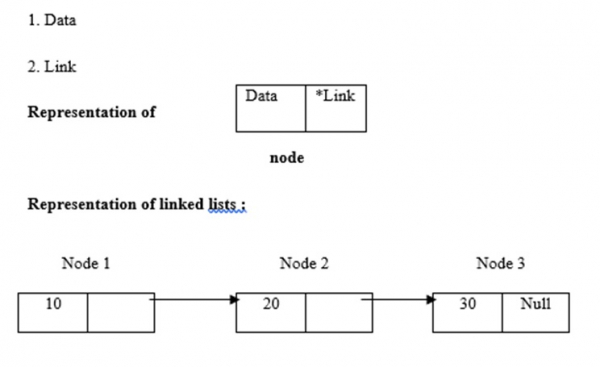
链表使用动态内存分配,即它们会相应增长和收缩。它们被定义为节点的集合。这里,节点有两个部分,即数据和链接。数据、链接和链表的表示如下 −
链表上的操作
C 语言中链表上的操作有三种类型,如下所示 −
- 插入
- 删除
- 遍历
删除
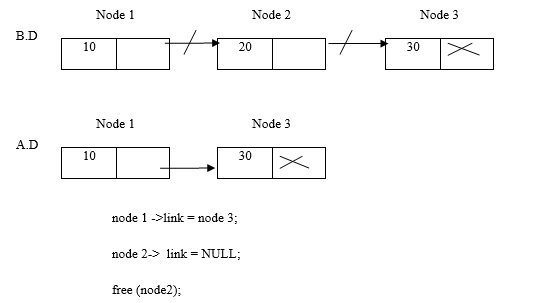
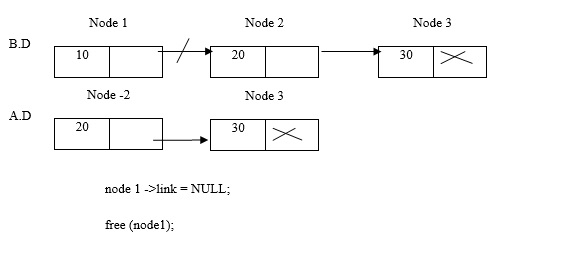
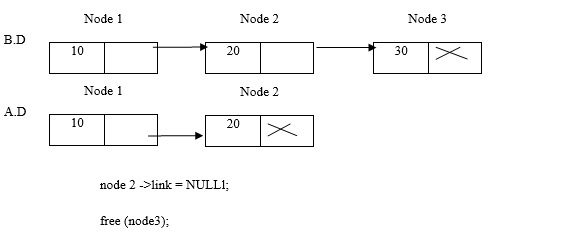
考虑以下给出的示例 −
删除节点 2
删除节点 1
删除节点 3
程序
以下是 C 语言中用于删除链表中元素的程序 −
#include <stdio.h>
#include <stdlib.h>
struct Node{
   int data;
   struct Node *next;
};
void push(struct Node** head_ref, int new_data){
   struct Node* new_node = (struct Node*) malloc(sizeof(struct Node));
   new_node->data = new_data;
   new_node->next = (*head_ref);
   (*head_ref) = new_node;
}
void deleteNode(struct Node **head_ref, int position){
   //if list is empty
   if (*head_ref == NULL)
      return;
   struct Node* temp = *head_ref;
   if (position == 0){
      *head_ref = temp->next;
      free(temp);
      return;
   }
   for (int i=0; temp!=NULL && i<position-1; i++)
      temp = temp->next;
   if (temp == NULL || temp->next == NULL)
      return;
   struct Node *next = temp->next->next;
   free(temp->next); // Free memory
   temp->next = next;
}
void printList(struct Node *node){
   while (node != NULL){
      printf(" %d ", node->data);
      node = node->next;
   }
}
int main(){
   struct Node* head = NULL;
   push(&head, 7);
   push(&head, 1);
   push(&head, 3);
   push(&head, 2);
   push(&head, 8);
   puts("Created List: ");
   printList(head);
   deleteNode(&head, 3);
   puts("
 List after Deletion at position 3: ");
   printList(head);
   return 0;
}
输出
当执行以上程序时,它会产生以下结果 −
Created List:
8 2 3 1 7
List after Deletion at position 3:
8 2 3 7

更新时间:2021 年 3 月 26 日
570 次浏览

广告