
 数据结构
数据结构 网络
网络 关系型数据库管理系统
 操作系统
操作系统 Java
Java MS Excel
 iOS
iOS HTML
HTML CSS
CSS Android
 Python
 C 编程
C 编程 C++
C++ C#
C# MongoDB
 MySQL
MySQL Javascript
 PHP
PHP 物理
物理 化学
化学 生物
生物 数学
数学 英语
英语 经济学
经济学 心理学
心理学 社会学
社会学 时尚研究
时尚研究 法律研究
法律研究在 express.js 中处理不同的路由
为了处理不同的路由,使用了 use() 函数。use() 函数有多个重载版本,其中一个版本将 url 路径作为参数。根据 url 路径,将筛选请求以获取各自的中间件。
const http = require('http');
const express = require('express');
const app = express();
app.use('/', (req, res,next)=>{
   console.log('first middleware');
   res.send('<h1> first midleware:
   Hello Tutorials Point </h1>');
});
const server = http.createServer(app);
server.listen(3000);
在上面的示例中,我们使用 ‘/’ 作为 url 路径,这是一个默认值。
现在,由于每个路由都以 ‘/’ 开始,因此上面的中间件将执行每个 http 请求。它适用于 ‘/’ 和 ‘/username’。
为了避免上述问题,在使用默认中间件之前,我们必须先使用特定于路径的中间件。
const http = require('http');
const express = require('express');
const app = express();
app.use('/username', (req, res,next)=>{
   res.send('<h1> My username </h1>');
});
app.use('/', (req, res,next)=>{
   console.log('first middleware');
   res.send('<h1> first midleware: Hello Tutorials Point </h1>');
});
const server = http.createServer(app);
server.listen(3000);
现在,我们首先使用 ‘/username’ 路径中间件,由于我们在其中没有使用 next(),因此它不会将 http 请求传递到下一个中间件。
因此,我们看到不同 url 的浏览器输出如下 −
localhost:3000

对于 localhost:3000/username
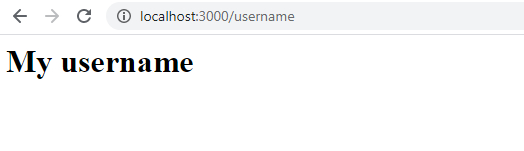
如果对所有内容都需要执行任何预处理,那么使用默认中间件 url 路径 ‘/’ 将很有用。我们只需在其中使用 next() 即可将处理后的请求传递到下一个中间件。
const http = require('http');
const express = require('express');
const app = express();
app.use('/', (req, res,next)=>{
   console.log('log request info', req);
   next();
});
app.use('/username', (req, res,next)=>{
   res.send('<h1> My username </h1>');
});
app.use('/', (req, res,next)=>{
   console.log('first middleware');
   res.send('<h1> first midleware: Hello Tutorials Point </h1>');
});
const server = http.createServer(app);
server.listen(3000);

更新于: 2020 年 5 月 13 日
417 次浏览

广告