
 数据结构
数据结构 网络
网络 RDBMS
RDBMS 操作系统
操作系统 Java
Java MS Excel
 iOS
iOS HTML
HTML CSS
CSS Android
 Python
 C 编程
C 编程 C++
C++ C#
C# MongoDB
 MySQL
MySQL Javascript
 PHP
PHP 物理
物理 化学
化学 生物
生物 数学
数学 英语
英语 经济
经济 心理学
心理学 社会学
社会学 时尚研究
时尚研究 法律研究
法律研究在 Tkinter(Python)中,root.destroy() 和 root.quit() 有什么区别?
当我们对 tkinter 窗口对象调用 destroy() 方法时,它将终止 mainloop 进程并销毁窗口中的所有小部件。Tkinter destroy() 方法主要用于终止销毁在后台运行的解释器。
然而,可以使用 quit() 方法来停止 mainloop() 函数之后的进程。我们可以通过创建一个按钮对象来演示这两种方法的功能。
示例
#Import the required libraries
from tkinter import *

#Create an instance of tkinter frame
win= Tk()

#Set the geometry of frame
win.geometry("650x450")

#Define a function for Button Object
def quit_win():
   win.quit()
def destroy_win():
   win.destroy()

#Button for Quit Method
Button(win,text="Quit", command=quit_win, font=('Helvetica
bold',20)).pack(pady=5)

#Button for Destroy Method
Button(win, text= "Destroy", command=destroy_win, font=('Helvetica
bold',20)).pack(pady=5)
win.mainloop()
输出
运行代码将显示一个窗口,其中分别有两个按钮“退出”和“销毁”。
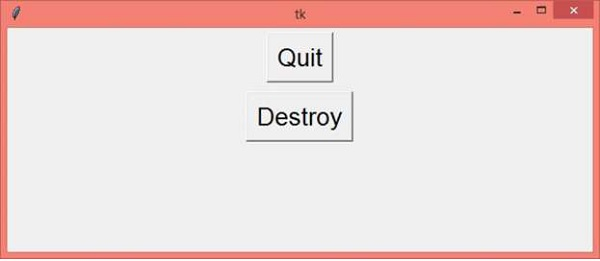
警告 - quit() 会突然终止应用程序,因此建议你在执行后从管理器中关闭应用程序。

更新于: 26-Mar-2021
5K+ 浏览

广告