
 数据结构
数据结构 网络
网络 关系数据库管理系统 (RDBMS)
 操作系统
操作系统 Java
Java MS Excel
 iOS
iOS HTML
HTML CSS
CSS Android
 Python
 C 编程
C 编程 C++
C++ C#
C# MongoDB
 MySQL
MySQL Javascript
 PHP
PHP 物理学
物理学 化学
化学 生物学
生物学 数学
数学 英语
英语 经济学
经济学 心理学
心理学 社会研究
社会研究 时尚研究
时尚研究 法律研究
法律研究Java 中 SwingUtilities 类的重要性是什么?
在 Java 中,Swing 组件显示在屏幕上后,只能由一个名为**事件处理线程**的线程操作。我们可以在单独的代码块中编写代码,并将此代码块的引用传递给**事件处理线程**。**SwingUtilities** 类有两个重要的静态方法,**invokeAndWait()** 和 **invokeLater()**,用于将代码块的引用放入**事件队列**。
语法
public static void invokeAndWait(Runnable doRun) throws InterruptedException, InvocationTargetException
public static void invokeLater(Runnable doRun)
参数 **doRun** 是 **Runnable** 接口实例的引用。在这种情况下,**Runnable** 接口不会传递给 Thread 的构造函数。**Runnable** 接口只是被用作标识事件线程入口点的一种方式。就像新生成的线程将调用 **run()** 一样,事件线程将在处理完队列中所有其他待处理事件后调用 **run()** 方法。如果在目标引用的代码块完成之前中断调用 **invokeAndWait()** 或 **invokeLater()** 的线程,则会抛出 **InterruptedException**。如果 **run()** 方法内部抛出未捕获的异常,则会抛出 **InvocationTargetException**。
示例
import javax.swing.*;
import java.lang.reflect.InvocationTargetException;
public class SwingUtilitiesTest {
   public static void main(String[] args) {
      final JButton button = new JButton("Not Changed");
      JPanel panel = new JPanel();
      panel.add(button);
      JFrame f = new JFrame("InvokeAndWaitMain");
      f.setContentPane(panel);
      f.setSize(300, 100);
      f.setVisible(true);
      f.setDefaultCloseOperation(JFrame.EXIT_ON_CLOSE);
      System.out.println(Thread.currentThread().getName()+" is going into sleep for 3 seconds");
      try {
         Thread.sleep(3000);
      } catch(Exception e){ }
      //Preparing code for label change
      Runnable r = new Runnable() {
         @Override
         public void run() {
            System.out.println(Thread.currentThread().getName()+"is going into sleep for 10 seconds");
            try {
               Thread.sleep(10000);
            } catch(Exception e){ }
          button.setText("Button Text Changed by "+ Thread.currentThread().getName());
          System.out.println("Button changes ended");
      }
    };
      System.out.println("Component changes put on the event thread by main thread");
          try {
            SwingUtilities.invokeAndWait(r);
         } catch (InvocationTargetException | InterruptedException e) {
            e.printStackTrace();
         }
      System.out.println("Main thread reached end");
   }
}
输出
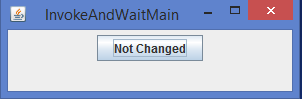
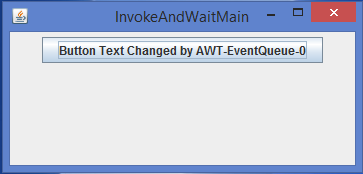

更新于:2020年2月7日
1K+ 次浏览

广告