
 数据结构
数据结构 网络
网络 关系型数据库管理系统
 操作系统
操作系统 Java
Java MS Excel
 iOS
iOS HTML
HTML CSS
CSS Android
 Python
 C 编程
C 编程 C++
C++ C#
C# MongoDB
 MySQL
MySQL Javascript
 PHP
PHP 物理学
物理学 化学
化学 生物学
生物学 数学
数学 英语
英语 经济学
经济学 心理学
心理学 社会学
社会学 服装设计
服装设计 法律研究
法律研究使用 JavaScript 将元素插入双向链表
我们需要创建一个函数 insert(data, position),该函数在链表的给定位置插入数据。我们将执行以下步骤:
- 创建一个新的节点
- 检查列表是否为空。如果是,则将节点添加到头部和尾部并返回。
- 如果不是,我们将使用 currElem 迭代到我们想要插入的位置。我们通过使 currElem 等于 currElem.next 来迭代链表。
现在,我们将以以下方式更改链接:
- 使新节点指向列表中的下一个节点
- 使下一个节点的上一个指向新节点
- 使我们的节点指向前一个节点
- 使前一个节点的下一个指向新节点
最后,我们断开 currElem 与列表其余部分的链接,并使其指向我们创建的节点。现在,该节点位于列表中给定位置。
这是一个相同的示例:
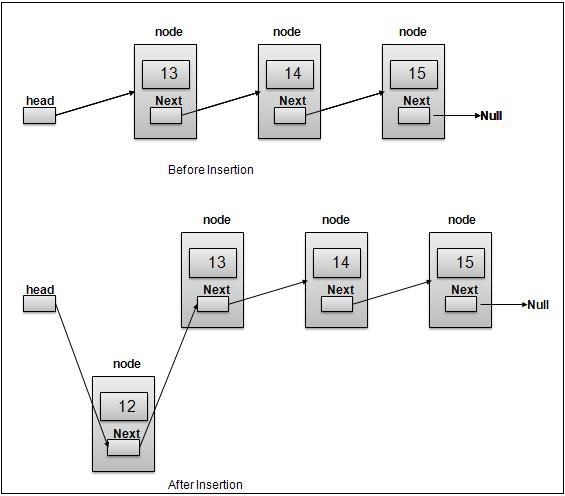
现在让我们看看我们将如何实现它:
示例
insert(data, position = this.length) {
   let node = new this.Node(data);
   this.length++;
   // List is currently empty
   if (this.head === null) {
      this.head = node;
      this.tail = node;
      return this.head;
   }
   // Insertion at head
   if (position == 0) {
      node.prev = null;
      node.next = this.head;
      this.head.prev = node;
      this.head = node;
      return this.head;
   }
   let iter = 1;
   let currNode = this.head;
   while (currNode.next != null && iter < position) {
      currNode = currNode.next;
      iter++;
   }
   // Make new node point to next node in list
   node.next = currNode.next;
   // Make next node's previous point to new node
   if (currNode.next != null) {
      currNode.next.prev = node;
   }
   // Make our node point to previous node
   node.prev = currNode;
   // Make previous node's next point to new node
   currNode.next = node;
   // check if inserted element was at the tail, if yes then make tail point to it
   if (this.tail.next != null) {
      this.tail = this.tail.next;
    }
    return node;
}
请注意,我们已将位置指定为最后一个元素。这是因为,如果您不提供位置,则默认情况下它将插入到末尾。
您可以使用以下方法进行测试:
示例
let list = new LinkedList();
list.insert(10);
list.insert(20);
list.insert(30);
list.insert(15, 2);
list.display();
输出
这将给出以下输出:
10 <->
30 <->
15 <->
20 <->
正如我们所看到的,所有元素都按我们预期的顺序排列。我们尝试在 2 之后的位置插入 15。

更新于: 2020年6月15日
447 次查看

广告