
 数据结构
数据结构 网络
网络 RDBMS
RDBMS 操作系统
操作系统 Java
Java MS Excel
 iOS
iOS HTML
HTML CSS
CSS Android
 Python
 C 编程
C 编程 C++
C++ C#
C# MongoDB
 MySQL
MySQL Javascript
 PHP
PHP 物理学
物理学 化学
化学 生物学
生物学 数学
数学 英语
英语 经济学
经济学 心理学
心理学 社会科学
社会科学 时装学
时装学 法律专业
法律专业如何在 Android 中动态添加 ListView 中的元素?
本示例演示了如何在 Android 中动态添加 ListView 中的元素。
步骤 1 − 在 Android Studio 中创建新项目,转到文件 ⇒ 新建项目,然后填写所有必需的详细信息以创建一个新项目。
步骤 2 − 将以下代码添加到 res/layout/activity_main.xml。
<RelativeLayout xmlns:android="http://schemas.android.com/apk/res/android"
   xmlns:tools="http://schemas.android.com/tools"
   android:layout_width="match_parent"
   android:layout_height="match_parent"
   tools:context=".MainActivity" >

   <Button
      android:id="@+id/button1"
      android:layout_width="fill_parent"
      android:layout_height="wrap_content"
      android:layout_below="@+id/editText1"
      android:layout_centerHorizontal="true"
      android:text="Add Values to listView" />

   <EditText
      android:id="@+id/editText1"
      android:layout_width="wrap_content"
      android:layout_height="wrap_content"
      android:layout_alignParentTop="true"
      android:layout_centerHorizontal="true"
      android:layout_marginTop="26dp"
      android:ems="10"
      android:hint="Add elements listView" />

   <ListView
      android:id="@+id/listView1"
      android:layout_width="match_parent"
      android:layout_height="wrap_content"
      android:layout_below="@+id/button1"
      android:layout_centerHorizontal="true" >
   </ListView>
</RelativeLayout>
步骤 3 − 将以下代码添加到 src/MainActivity.java
import java.util.ArrayList;
import java.util.Arrays;
import java.util.List;

import android.app.Activity;
import android.os.Bundle;
import android.view.View;
import android.widget.ArrayAdapter;
import android.widget.Button;
import android.widget.EditText;
import android.widget.ListView;

public class MainActivity extends Activity {

   ListView listview;
   Button addButton;
   EditText GetValue;
   String[] ListElements = new String[] {
      "Android",
      "PHP",
      "Python",
   };
   @Override
   protected void onCreate(Bundle savedInstanceState) {
      super.onCreate(savedInstanceState);
      setContentView(R.layout.activity_main);

      listview = findViewById(R.id.listView1);
      addButton = findViewById(R.id.button1);
      GetValue = findViewById(R.id.editText1);

      final List<String> ListElementsArrayList = new ArrayList<>(Arrays.asList(ListElements));
      final ArrayAdapter<String> adapter = new ArrayAdapter<>
      (MainActivity.this, android.R.layout.simple_list_item_1, ListElementsArrayList);
      listview.setAdapter(adapter);

      addButton.setOnClickListener(new View.OnClickListener() {
         @Override
         public void onClick(View v) {
            ListElementsArrayList.add(GetValue.getText().toString());
            adapter.notifyDataSetChanged();
         }
      });
   }
}
步骤 4 - 将以下代码添加到 androidManifest.xml
<?xml version="1.0" encoding="utf-8"?>
<manifest xmlns:android="http://schemas.android.com/apk/res/android"
   package="app.com.sample">

   <application
      android:allowBackup="true"
      android:icon="@mipmap/ic_launcher"
      android:label="@string/app_name"
      android:roundIcon="@mipmap/ic_launcher_round"
      android:supportsRtl="true"
      android:theme="@style/AppTheme">
      <activity android:name=".MainActivity">
         <intent-filter>
            <action android:name="android.intent.action.MAIN" />
            <category android:name="android.intent.category.LAUNCHER" />
         </intent-filter>
      </activity>
   </application>
</manifest>
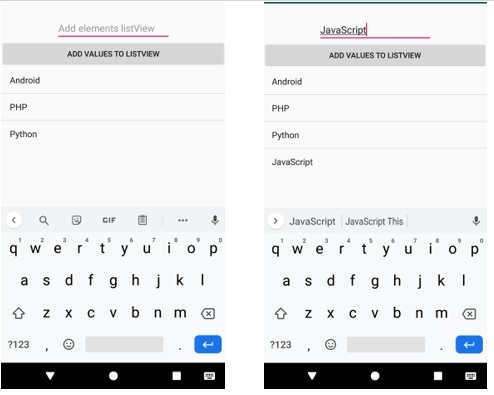
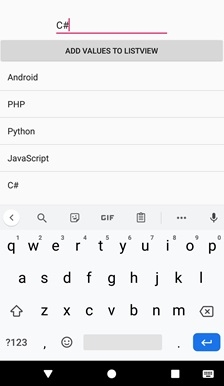
让我们尝试运行你的应用程序。我假设你已经将实际 Android 移动设备连接到了计算机。要从 Android Studio 运行应用程序,请打开项目的某个活动文件,然后单击工具栏上的“运行”  图标。选择你的移动设备作为选项,然后查看将显示默认屏幕的移动设备 –

更新日期:03-Jul-2020
3000+ 次查看

广告