
 数据结构
数据结构 网络
网络 RDBMS
RDBMS 操作系统
操作系统 Java
Java MS Excel
 iOS
iOS HTML
HTML CSS
CSS 安卓
安卓 Python
 C 编程
C 编程 C++
C++ C#
C# MongoDB
 MySQL
MySQL Javascript
 PHP
PHP 物理学
物理学 化学
化学 生物学
生物学 数学
数学 英语
英语 经济学
经济学 心理学
心理学 社会研究
社会研究 时尚研究
时尚研究 法律研究
法律研究用 Python 删除二叉树中所有具有偶数值的叶子的程序
假设我们有二叉树,我们会重复删除所有具有偶数值的叶子。删除完所有叶子后,如果只有根具有偶数值,根也会被删除。
因此,如果输入如下
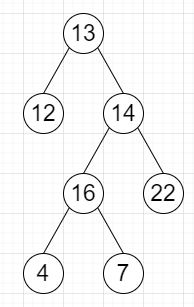
则输出将为
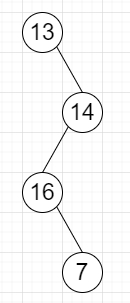
为了解决此问题,我们将遵循以下步骤
定义一个函数 solve() 。这将采用根
如果根为 null,则
返回 null
根的左节点 := solve(根的左节点)
根的右节点 := solve(根的右节点)
如果根是叶子并且根的数据为偶数,则
返回 null
返回根
我们来看看下面的实现,以便更好地理解
示例
class TreeNode:
   def __init__(self, data, left = None, right = None):
      self.data = data
      self.left = left
      self.right = right

def inorder(root):
   if root:
      inorder(root.left)
      print(root.data, end = ', ')
      inorder(root.right)

class Solution:
   def solve(self, root):
      if not root:
         return None

      root.left = self.solve(root.left)
      root.right = self.solve(root.right)

      if not root.left and not root.right and root.data % 2 == 0:
         return None
      return root

ob = Solution()
root = TreeNode(13)
root.left = TreeNode(12)
root.right = TreeNode(14)
root.right.left = TreeNode(16)
root.right.right = TreeNode(22)
root.right.left.left = TreeNode(4)
root.right.left.right = TreeNode(7)
ob.solve(root)
inorder(root)
输入
root = TreeNode(13)
root.left = TreeNode(12)
root.right = TreeNode(14)
root.right.left = TreeNode(16)
root.right.right = TreeNode(22)
root.right.left.left = TreeNode(4)
root.right.left.right = TreeNode(7)
输出
13, 16, 7, 14,

更新于:2020 年 10 月 7 日
349 次浏览

广告