
- Spring JDBC 教程
- Spring JDBC - 首页
- Spring JDBC - 概述
- Spring JDBC - 环境设置
- Spring JDBC - 配置数据源
- Spring JDBC - 第一个应用程序
- 基本CRUD示例
- Spring JDBC - 创建查询
- Spring JDBC - 读取查询
- Spring JDBC - 更新查询
- Spring JDBC - 删除查询
- 高级JDBC示例
- 调用存储过程
- Spring JDBC - 调用存储函数
- Spring JDBC - 处理BLOB
- Spring JDBC - 处理CLOB
- Spring JDBC 批处理示例
- Spring JDBC - 批处理操作
- 对象批处理操作
- 多个批处理操作
- Spring JDBC 对象
- Spring JDBC - JdbcTemplate
- PreparedStatementSetter
- Spring JDBC - ResultSetExtractor
- Spring JDBC - RowMapper
- NamedParameterJdbcTemplate
- Spring JDBC - SimpleJdbcInsert
- Spring JDBC - SimpleJdbcCall
- Spring JDBC - SqlQuery
- Spring JDBC - SqlUpdate
- Spring JDBC - StoredProcedure
- Spring JDBC 有用资源
- Spring JDBC 快速指南
- Spring JDBC - 有用资源
- Spring JDBC - 讨论
Spring JDBC 快速指南
Spring JDBC - 概述
使用普通的JDBC操作数据库时,编写不必要的代码来处理异常、打开和关闭数据库连接等会变得很麻烦。然而,Spring JDBC框架负责所有底层细节,从打开连接、准备和执行SQL语句、处理异常、处理事务,到最终关闭连接。
您只需要做的就是定义连接参数并指定要执行的SQL语句,并在从数据库提取数据时为每次迭代执行所需的工作。
Spring JDBC 提供了几种方法,以及相应的不同类来与数据库交互。在本教程中,我们将采用经典且最流行的方法,该方法使用框架的JdbcTemplate类。这是管理所有数据库通信和异常处理的中心框架类。
JdbcTemplate 类
JdbcTemplate类执行SQL查询、更新语句和存储过程调用,对ResultSet进行迭代并提取返回的参数值。它还会捕获JDBC异常并将它们转换为在org.springframework.dao包中定义的通用、更具信息量的异常层次结构。
一旦配置,JdbcTemplate类的实例是线程安全的。因此,您可以配置JdbcTemplate的单个实例,然后安全地将此共享引用注入到多个DAO中。
使用JdbcTemplate类时,一种常见的做法是在Spring配置文件中配置一个DataSource,然后将该共享DataSource bean依赖注入到您的DAO类中。JdbcTemplate是在DataSource的setter中创建的。
数据访问对象 (DAO)
DAO代表**数据访问对象**,通常用于数据库交互。DAO的存在是为了提供一种读取和写入数据库数据的方法,它们应该通过一个接口公开此功能,应用程序的其余部分将通过该接口访问它们。
Spring中的数据访问对象(DAO)支持使您可以以一致的方式使用JDBC、Hibernate、JPA或JDO等数据访问技术。
Spring JDBC - 环境设置
本教程中的所有示例都是使用Eclipse IDE编写的。因此,我们建议您应该在您的机器上安装最新版本的Eclipse。
要安装Eclipse IDE,请从www.eclipse.org/downloads下载最新的Eclipse二进制文件。下载安装程序后,将二进制分发版解压缩到方便的位置。例如,在Windows上为C:\eclipse,在Linux/Unix上为/usr/local/eclipse,最后适当地设置PATH变量。
可以通过在Windows机器上执行以下命令启动Eclipse,或者您可以简单地双击eclipse.exe
%C:\eclipse\eclipse.exe
可以通过在Unix(Solaris、Linux等)机器上执行以下命令启动Eclipse:
$/usr/local/eclipse/eclipse
成功启动后,如果一切正常,则应显示以下结果:
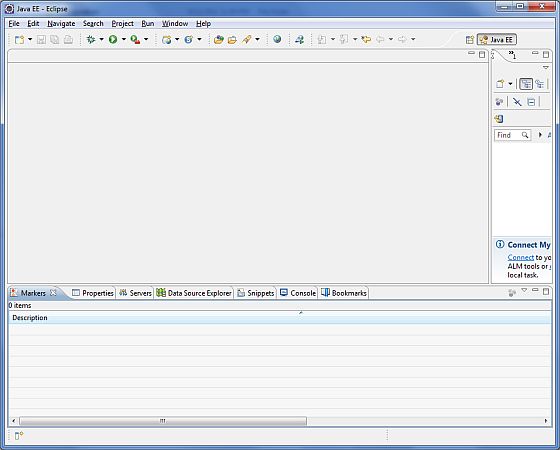
步骤3 - 下载Maven存档
从https://maven.apache.org/download.cgi下载Maven 3.8.4。
| 操作系统 | 存档名称 |
|---|---|
| Windows | apache-maven-3.8.4-bin.zip |
| Linux | apache-maven-3.8.4-bin.tar.gz |
| Mac | apache-maven-3.8.4-bin.tar.gz |
步骤4 - 解压Maven存档
将存档解压缩到您希望安装Maven 3.8.4的目录中。将从存档创建子目录apache-maven-3.8.4。
| 操作系统 | 位置(根据您的安装情况可能有所不同) |
|---|---|
| Windows | C:\Program Files\Apache Software Foundation\apache-maven-3.8.4 |
| Linux | /usr/local/apache-maven |
| Mac | /usr/local/apache-maven |
步骤5 - 设置Maven环境变量
将M2_HOME、M2、MAVEN_OPTS添加到环境变量中。
| 操作系统 | 输出 |
|---|---|
| Windows | 使用系统属性设置环境变量。 M2_HOME=C:\Program Files\Apache Software Foundation\apache-maven-3.8.4 M2=%M2_HOME%\bin MAVEN_OPTS=-Xms256m -Xmx512m |
| Linux | 打开命令终端并设置环境变量。 export M2_HOME=/usr/local/apache-maven/apache-maven-3.8.4 export M2=$M2_HOME/bin export MAVEN_OPTS=-Xms256m -Xmx512m |
| Mac | 打开命令终端并设置环境变量。 export M2_HOME=/usr/local/apache-maven/apache-maven-3.8.4 export M2=$M2_HOME/bin export MAVEN_OPTS=-Xms256m -Xmx512m |
步骤6 - 将Maven bin目录位置添加到系统路径
现在将M2变量附加到系统路径。
| 操作系统 | 输出 |
|---|---|
| Windows | 将字符串;%M2%附加到系统变量Path的末尾。 |
| Linux | export PATH=$M2:$PATH |
| Mac | export PATH=$M2:$PATH |
步骤7 - 验证Maven安装
现在打开控制台并执行以下**mvn**命令。
| 操作系统 | 任务 | 命令 |
|---|---|---|
| Windows | 打开命令控制台 | c:\> mvn --version |
| Linux | 打开命令终端 | $ mvn --version |
| Mac | 打开终端 | machine:~ joseph$ mvn --version |
最后,验证上述命令的输出,结果应如下所示:
| 操作系统 | 输出 |
|---|---|
| Windows | Apache Maven 3.8.4 (9b656c72d54e5bacbed989b64718c159fe39b537) Maven home: C:\Program Files\Apache Software Foundation\apache-maven-3.8.4 Java version: 11.0.11, vendor: Oracle Corporation, runtime: C:\Program Files\Java\jdk11.0.11\ Default locale: en_IN, platform encoding: Cp1252 OS name: "windows 10", version: "10.0", arch: "amd64", family: "windows" |
| Linux | Apache Maven 3.8.4 (9b656c72d54e5bacbed989b64718c159fe39b537) Java version: 11.0.11 Java home: /usr/local/java-current/jre |
| Mac | Apache Maven 3.8.4 (9b656c72d54e5bacbed989b64718c159fe39b537) Java version: 11.0.11 Java home: /Library/Java/Home/jre |
Spring JDBC - 配置数据源
让我们在我们的数据库**TEST**中创建一个数据库表**Student**。我假设您使用的是MySQL数据库,如果您使用的是任何其他数据库,则可以相应地更改您的DDL和SQL查询。
CREATE TABLE Student(
   ID   INT NOT NULL AUTO_INCREMENT,
   NAME VARCHAR(20) NOT NULL,
   AGE  INT NOT NULL,
   PRIMARY KEY (ID)
);
现在我们需要向JdbcTemplate提供一个DataSource,以便它可以自行配置以获得数据库访问权限。您可以使用如下所示的代码片段在XML文件中配置DataSource:
<bean id = "dataSource"
class = "org.springframework.jdbc.datasource.DriverManagerDataSource">
   <property name = "driverClassName" value = "com.mysql.cj.jdbc.Driver"/>
   <property name = "url" value = "jdbc:mysql://:3306/TEST"/>
   <property name = "username" value = "root"/>
   <property name = "password" value = "admin"/>
</bean>
在下一章中,我们将编写第一个使用已配置数据库的应用程序。
Spring JDBC - 第一个应用程序
概述
为了理解与使用JdbcTemplate类的Spring JDBC框架相关的概念,让我们编写一个简单的示例,该示例将在以下Student表上实现插入和读取操作。
CREATE TABLE Student(
   ID   INT NOT NULL AUTO_INCREMENT,
   NAME VARCHAR(20) NOT NULL,
   AGE  INT NOT NULL,
   PRIMARY KEY (ID)
);
让我们继续编写一个简单的基于控制台的Spring JDBC应用程序,它将演示JDBC概念。
创建项目
让我们打开命令控制台,转到C:\MVN目录并执行以下**mvn**命令。
C:\MVN>mvn archetype:generate -DgroupId=com.tutorialspoint
-DartifactId=Student -DarchetypeArtifactId=maven-archetype-quickstart
-DinteractiveMode=false
Maven将开始处理并将创建完整的Java应用程序项目结构。
[INFO] Scanning for projects...
[INFO]
[INFO] ------------------< org.apache.maven:standalone-pom >-------------------
[INFO] Building Maven Stub Project (No POM) 1
[INFO] --------------------------------[ pom ]---------------------------------
[INFO]
[INFO] >>> maven-archetype-plugin:3.2.0:generate (default-cli) > generate-sources @ standalone-pom >>>
[INFO]
[INFO] <<< maven-archetype-plugin:3.2.0:generate (default-cli) < generate-sources @ standalone-pom <<<
[INFO]
[INFO]
[INFO] --- maven-archetype-plugin:3.2.0:generate (default-cli) @ standalone-pom ---
[INFO] Generating project in Batch mode
[INFO] ----------------------------------------------------------------------------
[INFO] Using following parameters for creating project from Old (1.x) Archetype: maven-archetype-quickstart:1.0
[INFO] ----------------------------------------------------------------------------
[INFO] Parameter: basedir, Value: C:\MVN
[INFO] Parameter: package, Value: com.tutorialspoint
[INFO] Parameter: groupId, Value: com.tutorialspoint
[INFO] Parameter: artifactId, Value: Student
[INFO] Parameter: packageName, Value: com.tutorialspoint
[INFO] Parameter: version, Value: 1.0-SNAPSHOT
[INFO] project created from Old (1.x) Archetype in dir: C:\MVN\Student
[INFO] ------------------------------------------------------------------------
[INFO] BUILD SUCCESS
[INFO] ------------------------------------------------------------------------
[INFO] Total time:  6.842 s
[INFO] Finished at: 2022-01-01T13:49:20+05:30
[INFO] ------------------------------------------------------------------------
现在转到C:/MVN目录。您将看到一个名为student(如artifactId中指定)的已创建Java应用程序项目。更新POM.xml以包含Spring JDBC依赖项。添加Student.java、StudentMapper.java、MainApp.java、StudentDAO.java和StudentJDBCTemplate.java文件。
POM.xml
<project xmlns = "http://maven.apache.org/POM/4.0.0"
   xmlns:xsi = "http://www.w3.org/2001/XMLSchema-instance"
   xsi:schemaLocation = "http://maven.apache.org/POM/4.0.0
   http://maven.apache.org/maven-v4_0_0.xsd">

   <modelVersion>4.0.0</modelVersion>
   <groupId>com.tutorialspoint</groupId>
   <artifactId>Student</artifactId>
   <packaging>jar</packaging>
   <version>1.0-SNAPSHOT</version>
   <name>Student</name>
   <url>http://maven.apache.org</url>

   <dependencies>
      <dependency>
         <groupId>junit</groupId>
         <artifactId>junit</artifactId>
         <version>4.11</version>
         <scope>test</scope>
      </dependency>

      <dependency>
         <groupId>org.springframework</groupId>
         <artifactId>spring-jdbc</artifactId>
         <version>5.3.14</version>
      </dependency>

      <dependency>
         <groupId>org.springframework</groupId>
         <artifactId>spring-context</artifactId>
         <version>5.3.14</version>
      </dependency>

      <dependency>
         <groupId>mysql</groupId>
         <artifactId>mysql-connector-java</artifactId>
         <version>8.0.27</version>
      </dependency>
   </dependencies>
</project>
StudentDAO.java
以下是数据访问对象接口文件**StudentDAO.java**的内容。
package com.tutorialspoint;

import java.util.List;
import javax.sql.DataSource;

public interface StudentDAO {
   /**
    * This is the method to be used to initialize
    * database resources ie. connection.
   */
   public void setDataSource(DataSource ds);

   /**
    * This is the method to be used to create
    * a record in the Student table.
   */
   public void create(String name, Integer age);

   /**
    * This is the method to be used to list down
    * all the records from the Student table.
   */
   public List<Student> listStudents();
}
Student.java
以下是**Student.java**文件的内容。
package com.tutorialspoint;

// Student POJO for Student Table
public class Student {
   private Integer age;
   private String name;
   private Integer id;

   // setter/getter methods
   public void setAge(Integer age) {
      this.age = age;
   }
   public Integer getAge() {
      return age;
   }
   public void setName(String name) {
      this.name = name;
   }
   public String getName() {
      return name;
   }
   public void setId(Integer id) {
      this.id = id;
   }
   public Integer getId() {
      return id;
   }
}
StudentMapper.java
以下是**StudentMapper.java**文件的内容。
package com.tutorialspoint;

import java.sql.ResultSet;
import java.sql.SQLException;
import org.springframework.jdbc.core.RowMapper;

// Row Mapper Object to map Student table entry with Student Object
public class StudentMapper implements RowMapper<Student> {
   public Student mapRow(ResultSet rs, int rowNum) throws SQLException {
      Student student = new Student();
      student.setId(rs.getInt("id"));
      student.setName(rs.getString("name"));
      student.setAge(rs.getInt("age"));
      return student;
   }
}
StudentJDBCTemplate.java
以下是为已定义的DAO接口StudentDAO编写的实现类文件**StudentJDBCTemplate.java**。
package com.tutorialspoint;

import java.util.List;
import javax.sql.DataSource;
import org.springframework.jdbc.core.JdbcTemplate;

// DAO instance to persist Student values
public class StudentJDBCTemplate implements StudentDAO {
   private DataSource dataSource;
   private JdbcTemplate jdbcTemplateObject;

   // set the datasource and jdbctemplate
   public void setDataSource(DataSource dataSource) {
      this.dataSource = dataSource;
      this.jdbcTemplateObject = new JdbcTemplate(dataSource);
   }

   // create and persist a new student
   public void create(String name, Integer age) {
      String SQL = "insert into Student (name, age) values (?, ?)";

      jdbcTemplateObject.update( SQL, name, age);
      System.out.println("Created Record Name = " + name + " Age = " + age);
      return;
   }

   // get list of all students
   public List<Student> listStudents() {
      String SQL = "select * from Student";
      List <Student> students = jdbcTemplateObject.query(SQL, new StudentMapper());
      return students;
   }
}
MainApp.java
以下是**MainApp.java**文件的内容。
package com.tutorialspoint;

import java.util.List;
import org.springframework.context.ApplicationContext;
import org.springframework.context.support.ClassPathXmlApplicationContext;
import com.tutorialspoint.StudentJDBCTemplate;

public class MainApp {
   public static void main(String[] args) {

      // Create the application context by reading Beans.xml
      ApplicationContext context = new ClassPathXmlApplicationContext("Beans.xml");

      // Create the JDBCTemplate instance from spring context
      StudentJDBCTemplate studentJDBCTemplate = (StudentJDBCTemplate)
         context.getBean("studentJDBCTemplate");

	  // create and persist students
      System.out.println("------Records Creation--------" );
      studentJDBCTemplate.create("Zara", 11);
      studentJDBCTemplate.create("Nuha", 2);
      studentJDBCTemplate.create("Ayan", 15);

      // get list of all students from database
      System.out.println("------Listing Multiple Records--------" );
      List<Student> students = studentJDBCTemplate.listStudents();

      // print each student details
      for (Student record : students) {
         System.out.print("ID : " + record.getId() );
         System.out.print(", Name : " + record.getName() );
         System.out.println(", Age : " + record.getAge());
      }
   }
}
Beans.xml
以下是配置文件**Beans.xml**。
<?xml version = "1.0" encoding = "UTF-8"?>
<beans xmlns = "http://www.springframework.org/schema/beans"
   xmlns:xsi = "http://www.w3.org/2001/XMLSchema-instance"
   xsi:schemaLocation = "http://www.springframework.org/schema/beans
   http://www.springframework.org/schema/beans/spring-beans-3.0.xsd ">

   <!-- Initialization for data source -->
   <bean id = "dataSource"
      class = "org.springframework.jdbc.datasource.DriverManagerDataSource">
      <property name = "driverClassName" value = "com.mysql.cj.jdbc.Driver"/>
      <property name = "url" value = "jdbc:mysql://:3306/TEST"/>
      <property name = "username" value = "root"/>
      <property name = "password" value = "admin"/>
   </bean>

   <!-- Definition for studentJDBCTemplate bean -->
   <bean id = "studentJDBCTemplate"
      class = "com.tutorialspoint.StudentJDBCTemplate">
      <property name = "dataSource" ref = "dataSource" />
   </bean>

</beans>
输出
创建源文件和bean配置文件后,让我们运行应用程序。如果您的应用程序一切正常,它将打印以下消息。
------Records Creation--------
Created Record Name = Zara Age = 11
Created Record Name = Nuha Age = 2
Created Record Name = Ayan Age = 15
------Listing Multiple Records--------
ID : 1, Name : Zara, Age : 11
ID : 2, Name : Nuha, Age : 2
ID : 3, Name : Ayan, Age : 15
Spring JDBC - 创建查询
以下示例将演示如何使用Spring JDBC借助Insert查询创建查询。我们将在Student表中插入一些记录。
语法
String insertQuery = "insert into Student (name, age) values (?, ?)";
jdbcTemplateObject.update( insertQuery, name, age);
其中,
**insertQuery** - 包含占位符的Insert查询。
**jdbcTemplateObject** - 用于将学生对象插入数据库的StudentJDBCTemplate对象。
示例
为了理解上述与Spring JDBC相关的概念,让我们编写一个将插入查询的示例。为了编写我们的示例,让我们准备好一个可运行的Eclipse IDE,并使用以下步骤创建一个Spring应用程序。
| 步骤 | 描述 |
|---|---|
| 1 | 更新在章节Spring JDBC - 第一个应用程序下创建的项目Student。 |
| 2 | 更新bean配置并按如下所述运行应用程序。 |
StudentDAO.java
以下是数据访问对象接口文件**StudentDAO.java**的内容。
package com.tutorialspoint;

import java.util.List;
import javax.sql.DataSource;

public interface StudentDAO {
   /**
    * This is the method to be used to initialize
    * database resources ie. connection.
   */
   public void setDataSource(DataSource ds);

   /**
    * This is the method to be used to create
    * a record in the Student table.
   */
   public void create(String name, Integer age);

   /**
    * This is the method to be used to list down
    * all the records from the Student table.
   */
   public List<Student> listStudents();
}
Student.java
以下是**Student.java**文件的内容。
package com.tutorialspoint;

// Student POJO for Student Table
public class Student {
   private Integer age;
   private String name;
   private Integer id;

   // setter/getter methods
   public void setAge(Integer age) {
      this.age = age;
   }
   public Integer getAge() {
      return age;
   }
   public void setName(String name) {
      this.name = name;
   }
   public String getName() {
      return name;
   }
   public void setId(Integer id) {
      this.id = id;
   }
   public Integer getId() {
      return id;
   }
}
StudentMapper.java
以下是**StudentMapper.java**文件的内容。
package com.tutorialspoint;

import java.sql.ResultSet;
import java.sql.SQLException;
import org.springframework.jdbc.core.RowMapper;

// Row Mapper Object to map Student table entry with Student Object
public class StudentMapper implements RowMapper<Student> {
   public Student mapRow(ResultSet rs, int rowNum) throws SQLException {
      Student student = new Student();
      student.setId(rs.getInt("id"));
      student.setName(rs.getString("name"));
      student.setAge(rs.getInt("age"));
      return student;
   }
}
StudentJDBCTemplate.java
以下是为已定义的DAO接口StudentDAO编写的实现类文件**StudentJDBCTemplate.java**。
package com.tutorialspoint;

import java.util.List;
import javax.sql.DataSource;
import org.springframework.jdbc.core.JdbcTemplate;

// DAO instance to persist Student values
public class StudentJDBCTemplate implements StudentDAO {
   private DataSource dataSource;
   private JdbcTemplate jdbcTemplateObject;

   // set the datasource and jdbctemplate
   public void setDataSource(DataSource dataSource) {
      this.dataSource = dataSource;
      this.jdbcTemplateObject = new JdbcTemplate(dataSource);
   }

   // persist a new student
   public void create(String name, Integer age) {
      String insertQuery = "insert into Student (name, age) values (?, ?)";
      jdbcTemplateObject.update( insertQuery, name, age);
      System.out.println("Created Record Name = " + name + " Age = " + age);
      return;
   }

   // get list of all students
   public List<Student> listStudents() {
      String SQL = "select * from Student";
      List <Student> students = jdbcTemplateObject.query(SQL, new StudentMapper());
      return students;
   }
}
MainApp.java
以下是**MainApp.java**文件的内容。
package com.tutorialspoint;

import java.util.List;
import org.springframework.context.ApplicationContext;
import org.springframework.context.support.ClassPathXmlApplicationContext;
import com.tutorialspoint.StudentJDBCTemplate;

public class MainApp {
   public static void main(String[] args) {
      // Create the application context by reading Beans.xml
      ApplicationContext context = new ClassPathXmlApplicationContext("Beans.xml");

      // Create the JDBCTemplate instance from spring context
      StudentJDBCTemplate studentJDBCTemplate = (StudentJDBCTemplate)context.getBean("studentJDBCTemplate");

      // create and persist students
      System.out.println("------Records Creation--------" );
      studentJDBCTemplate.create("Zara", 11);
      studentJDBCTemplate.create("Nuha", 2);
      studentJDBCTemplate.create("Ayan", 15);

      // get all students
      System.out.println("------Listing Multiple Records--------" );
      List<Student> students = studentJDBCTemplate.listStudents();

      // print students
      for (Student record : students) {
         System.out.print("ID : " + record.getId() );
         System.out.print(", Name : " + record.getName() );
         System.out.println(", Age : " + record.getAge());
      }
   }
}
Beans.xml
以下是配置文件**Beans.xml**。
<?xml version = "1.0" encoding = "UTF-8"?>
<beans xmlns = "http://www.springframework.org/schema/beans"
   xmlns:xsi = "http://www.w3.org/2001/XMLSchema-instance"
   xsi:schemaLocation = "http://www.springframework.org/schema/beans
   http://www.springframework.org/schema/beans/spring-beans-3.0.xsd ">

   <!-- Initialization for data source -->
   <bean id = "dataSource"
      class = "org.springframework.jdbc.datasource.DriverManagerDataSource">
      <property name = "driverClassName" value = "com.mysql.cj.jdbc.Driver"/>
      <property name = "url" value = "jdbc:mysql://:3306/TEST"/>
      <property name = "username" value = "root"/>
      <property name = "password" value = "admin"/>
   </bean>

   <!-- Definition for studentJDBCTemplate bean -->
   <bean id = "studentJDBCTemplate"
      class = "com.tutorialspoint.StudentJDBCTemplate">
      <property name = "dataSource" ref = "dataSource" />
   </bean>
</beans>
输出
创建源文件和bean配置文件后,让我们运行应用程序。如果您的应用程序一切正常,它将打印以下消息。
------Records Creation--------
Created Record Name = Zara Age = 11
Created Record Name = Nuha Age = 2
Created Record Name = Ayan Age = 15
------Listing Multiple Records--------
ID : 1, Name : Zara, Age : 11
ID : 2, Name : Nuha, Age : 2
ID : 3, Name : Ayan, Age : 15
Spring JDBC - 读取查询
概述
以下示例将演示如何使用Spring JDBC读取查询。我们将读取Student表中可用的记录。
语法
String selectQuery = "select * from Student";
List <Student> students = jdbcTemplateObject.query(selectQuery, new StudentMapper());
其中,
**selectQuery** - 读取学生的Select查询。
**jdbcTemplateObject** - 用于从数据库读取学生对象的StudentJDBCTemplate对象。
**StudentMapper** - StudentMapper是一个RowMapper对象,用于将每个提取的记录映射到学生对象。
示例
为了理解上述与Spring JDBC相关的概念,让我们编写一个将选择查询的示例。为了编写我们的示例,让我们准备好一个可运行的Eclipse IDE,并使用以下步骤创建一个Spring应用程序。
| 步骤 | 描述 |
|---|---|
| 1 | 更新在章节Spring JDBC - 第一个应用程序下创建的项目Student。 |
| 2 | 更新bean配置并按如下所述运行应用程序。 |
StudentDAO.java
以下是数据访问对象接口文件**StudentDAO.java**的内容。
package com.tutorialspoint;

import java.util.List;
import javax.sql.DataSource;

public interface StudentDAO {
   /**
    * This is the method to be used to initialize
    * database resources ie. connection.
   */
   public void setDataSource(DataSource ds);

   /**
    * This is the method to be used to list down
    * all the records from the Student table.
   */
   public List<Student> listStudents();
}
Student.java
以下是**Student.java**文件的内容。
package com.tutorialspoint;

// Student POJO for Student Table
public class Student {
   private Integer age;
   private String name;
   private Integer id;

   // setter/getter methods
   public void setAge(Integer age) {
      this.age = age;
   }
   public Integer getAge() {
      return age;
   }
   public void setName(String name) {
      this.name = name;
   }
   public String getName() {
      return name;
   }
   public void setId(Integer id) {
      this.id = id;
   }
   public Integer getId() {
      return id;
   }
}
StudentMapper.java
以下是**StudentMapper.java**文件的内容。
package com.tutorialspoint;

import java.sql.ResultSet;
import java.sql.SQLException;
import org.springframework.jdbc.core.RowMapper;

// Row Mapper Object to map Student table entry with Student Object
public class StudentMapper implements RowMapper<Student> {
   public Student mapRow(ResultSet rs, int rowNum) throws SQLException {
      Student student = new Student();
      student.setId(rs.getInt("id"));
      student.setName(rs.getString("name"));
      student.setAge(rs.getInt("age"));
      return student;
   }
}
StudentJDBCTemplate.java
以下是为已定义的DAO接口StudentDAO编写的实现类文件**StudentJDBCTemplate.java**。
package com.tutorialspoint;

import java.util.List;
import javax.sql.DataSource;
import org.springframework.jdbc.core.JdbcTemplate;

// DAO instance to persist Student values
public class StudentJDBCTemplate implements StudentDAO {
   private DataSource dataSource;
   private JdbcTemplate jdbcTemplateObject;

   // set the datasource and jdbctemplate
   public void setDataSource(DataSource dataSource) {
      this.dataSource = dataSource;
      this.jdbcTemplateObject = new JdbcTemplate(dataSource);
   }

   // get all the students from the database
   public List<Student> listStudents() {
      String SQL = "select * from Student";
      List <Student> students = jdbcTemplateObject.query(SQL, new StudentMapper());
      return students;
   }
}
MainApp.java
以下是**MainApp.java**文件的内容。
package com.tutorialspoint;

import java.util.List;
import org.springframework.context.ApplicationContext;
import org.springframework.context.support.ClassPathXmlApplicationContext;
import com.tutorialspoint.StudentJDBCTemplate;

public class MainApp {
   public static void main(String[] args) {

      // Create the application context by reading Beans.xml
      ApplicationContext context = new ClassPathXmlApplicationContext("Beans.xml");

      // Create the JDBCTemplate instance from spring context
      StudentJDBCTemplate studentJDBCTemplate = (StudentJDBCTemplate)context.getBean("studentJDBCTemplate");

      // get all the students
      System.out.println("------Listing Multiple Records--------" );
      List<Student> students = studentJDBCTemplate.listStudents();

      // print all the students
      for (Student record : students) {
         System.out.print("ID : " + record.getId() );
         System.out.print(", Name : " + record.getName() );
         System.out.println(", Age : " + record.getAge());
      }
   }
}
Beans.xml
以下是配置文件**Beans.xml**。
<?xml version = "1.0" encoding = "UTF-8"?>
<beans xmlns = "http://www.springframework.org/schema/beans"
   xmlns:xsi = "http://www.w3.org/2001/XMLSchema-instance"
   xsi:schemaLocation = "http://www.springframework.org/schema/beans
   http://www.springframework.org/schema/beans/spring-beans-3.0.xsd ">

   <!-- Initialization for data source -->
   <bean id = "dataSource"
      class = "org.springframework.jdbc.datasource.DriverManagerDataSource">
      <property name = "driverClassName" value = "com.mysql.cj.jdbc.Driver"/>
      <property name = "url" value = "jdbc:mysql://:3306/TEST"/>
      <property name = "username" value = "root"/>
      <property name = "password" value = "admin"/>
   </bean>

   <!-- Definition for studentJDBCTemplate bean -->
   <bean id="studentJDBCTemplate"
      class = "com.tutorialspoint.StudentJDBCTemplate">
      <property name = "dataSource" ref = "dataSource" />
   </bean>
</beans>
输出
创建源文件和bean配置文件后,让我们运行应用程序。如果您的应用程序一切正常,它将打印以下消息。
------Listing Multiple Records--------
ID : 1, Name : Zara, Age : 11
ID : 2, Name : Nuha, Age : 2
ID : 3, Name : Ayan, Age : 15
Spring JDBC - 更新查询
概述
以下示例将演示如何使用Spring JDBC更新查询。我们将更新Student表中可用的记录。
语法
String updateQuery = "update Student set age = ? where id = ?";
jdbcTemplateObject.update(updateQuery, age, id);
其中,
**updateQuery** - 用于更新带有占位符的学生的Update查询。
**jdbcTemplateObject** - 用于在数据库中更新学生对象的StudentJDBCTemplate对象。
示例
为了理解上述与 Spring JDBC 相关的概念,让我们编写一个更新查询的示例。为了编写示例,让我们准备好一个可运行的 Eclipse IDE,并使用以下步骤创建一个 Spring 应用程序。
| 步骤 | 描述 |
|---|---|
| 1 | 更新在章节 Spring JDBC - 第一个应用程序 中创建的 Student 项目。 |
| 2 | 更新bean配置并按如下所述运行应用程序。 |
StudentDAO.java
以下是数据访问对象接口文件**StudentDAO.java**的内容。
package com.tutorialspoint;

import java.util.List;
import javax.sql.DataSource;

public interface StudentDAO {
   /**
    * This is the method to be used to initialize
    * database resources ie. connection.
   */
   public void setDataSource(DataSource ds);

   /**
    * This is the method to be used to update
    * a record into the Student table.
   */
   public void update(Integer id, Integer age);

   /**
    * This is the method to be used to list down
    * a record from the Student table corresponding
    * to a passed student id.
   */
   public Student getStudent(Integer id);
}
Student.java
以下是**Student.java**文件的内容。
package com.tutorialspoint;

// Student POJO for Student Table
public class Student {
   private Integer age;
   private String name;
   private Integer id;

   // setter/getter methods
   public void setAge(Integer age) {
      this.age = age;
   }
   public Integer getAge() {
      return age;
   }
   public void setName(String name) {
      this.name = name;
   }
   public String getName() {
      return name;
   }
   public void setId(Integer id) {
      this.id = id;
   }
   public Integer getId() {
      return id;
   }
}
StudentMapper.java
以下是**StudentMapper.java**文件的内容。
package com.tutorialspoint;

import java.sql.ResultSet;
import java.sql.SQLException;
import org.springframework.jdbc.core.RowMapper;

// Row Mapper Object to map Student table entry with Student Object
public class StudentMapper implements RowMapper<Student> {
   public Student mapRow(ResultSet rs, int rowNum) throws SQLException {
      Student student = new Student();
      student.setId(rs.getInt("id"));
      student.setName(rs.getString("name"));
      student.setAge(rs.getInt("age"));
      return student;
   }
}
StudentJDBCTemplate.java
以下是为已定义的DAO接口StudentDAO编写的实现类文件**StudentJDBCTemplate.java**。
package com.tutorialspoint;

import java.util.List;
import javax.sql.DataSource;
import org.springframework.jdbc.core.JdbcTemplate;

// DAO instance to persist Student values
public class StudentJDBCTemplate implements StudentDAO {
   private DataSource dataSource;
   private JdbcTemplate jdbcTemplateObject;

   // set the datasource and jdbctemplate
   public void setDataSource(DataSource dataSource) {
      this.dataSource = dataSource;
      this.jdbcTemplateObject = new JdbcTemplate(dataSource);
   }

   // update the student age based on id
   public void update(Integer id, Integer age){
      String SQL = "update Student set age = ? where id = ?";
      jdbcTemplateObject.update(SQL, age, id);
      System.out.println("Updated Record with ID = " + id );
      return;
   }

   // get the student based on id
   public Student getStudent(Integer id) {
      String SQL = "select * from Student where id = ?";
      Student student = jdbcTemplateObject.queryForObject(
         SQL, new Object[]{id}, new StudentMapper()
      );
      return student;
   }
}
MainApp.java
以下是**MainApp.java**文件的内容。
package com.tutorialspoint;

import java.util.List;
import org.springframework.context.ApplicationContext;
import org.springframework.context.support.ClassPathXmlApplicationContext;
import com.tutorialspoint.StudentJDBCTemplate;

public class MainApp {
   public static void main(String[] args) {
      // Create the application context by reading Beans.xml
      ApplicationContext context = new ClassPathXmlApplicationContext("Beans.xml");

	  // Create the JDBCTemplate instance from spring context
      StudentJDBCTemplate studentJDBCTemplate =
         (StudentJDBCTemplate)context.getBean("studentJDBCTemplate");

      // update the student based on id
      System.out.println("----Updating Record with ID = 2 -----" );
      studentJDBCTemplate.update(2, 20);

      // get the student based on id and print its details
      System.out.println("----Listing Record with ID = 2 -----" );
      Student student = studentJDBCTemplate.getStudent(2);
      System.out.print("ID : " + student.getId() );
      System.out.print(", Name : " + student.getName() );
      System.out.println(", Age : " + student.getAge());
   }
}
Beans.xml
以下是配置文件**Beans.xml**。
<?xml version = "1.0" encoding = "UTF-8"?>
<beans xmlns = "http://www.springframework.org/schema/beans"
   xmlns:xsi = "http://www.w3.org/2001/XMLSchema-instance"
   xsi:schemaLocation = "http://www.springframework.org/schema/beans
   http://www.springframework.org/schema/beans/spring-beans-3.0.xsd ">

   <!-- Initialization for data source -->
   <bean id = "dataSource"
      class = "org.springframework.jdbc.datasource.DriverManagerDataSource">
      <property name = "driverClassName" value = "com.mysql.cj.jdbc.Driver"/>
      <property name = "url" value = "jdbc:mysql://:3306/TEST"/>
      <property name = "username" value = "root"/>
      <property name = "password" value = "admin"/>
   </bean>

   <!-- Definition for studentJDBCTemplate bean -->
   <bean id = "studentJDBCTemplate"
      class = "com.tutorialspoint.StudentJDBCTemplate">
      <property name = "dataSource" ref = "dataSource" />
   </bean>

</beans>
输出
创建源文件和bean配置文件后,让我们运行应用程序。如果您的应用程序一切正常,它将打印以下消息。
----Updating Record with ID = 2 -----
Updated Record with ID = 2
----Listing Record with ID = 2 -----
ID : 2, Name : Nuha, Age : 20
Spring JDBC - 删除查询
概述
以下示例将演示如何使用 Spring JDBC 删除查询。我们将删除 Student 表中的一条可用记录。
语法
String deleteQuery = "delete from Student where id = ?";
jdbcTemplateObject.update(deleteQuery, id);
其中,
deleteQuery − 删除带有占位符的学生的删除查询。
jdbcTemplateObject − 用于在数据库中删除学生对象的 StudentJDBCTemplate 对象。
示例
为了理解上述与 Spring JDBC 相关的概念,让我们编写一个删除查询的示例。为了编写示例,让我们准备好一个可运行的 Eclipse IDE,并使用以下步骤创建一个 Spring 应用程序。
| 步骤 | 描述 |
|---|---|
| 1 | 更新在章节Spring JDBC - 第一个应用程序下创建的项目Student。 |
| 2 | 更新bean配置并按如下所述运行应用程序。 |
StudentDAO.java
以下是数据访问对象接口文件**StudentDAO.java**的内容。
package com.tutorialspoint;

import java.util.List;
import javax.sql.DataSource;

public interface StudentDAO {
   /**
    * This is the method to be used to initialize
    * database resources ie. connection.
   */
   public void setDataSource(DataSource ds);

   /**
    * This is the method to be used to list down
    * all the records from the Student table.
   */
   public List<Student> listStudents();

   /**
    * This is the method to be used to delete
    * a record from the Student table corresponding
    * to a passed student id.
   */
   public void delete(Integer id);
}
Student.java
以下是**Student.java**文件的内容。
package com.tutorialspoint;

// Student POJO for Student Table
public class Student {
   private Integer age;
   private String name;
   private Integer id;

   // setter/getter methods
   public void setAge(Integer age) {
      this.age = age;
   }
   public Integer getAge() {
      return age;
   }
   public void setName(String name) {
      this.name = name;
   }
   public String getName() {
      return name;
   }
   public void setId(Integer id) {
      this.id = id;
   }
   public Integer getId() {
      return id;
   }
}
StudentMapper.java
以下是**StudentMapper.java**文件的内容。
package com.tutorialspoint;

import java.sql.ResultSet;
import java.sql.SQLException;
import org.springframework.jdbc.core.RowMapper;


// Row Mapper Object to map Student table entry with Student Object
public class StudentMapper implements RowMapper<Student> {
   public Student mapRow(ResultSet rs, int rowNum) throws SQLException {
      Student student = new Student();
      student.setId(rs.getInt("id"));
      student.setName(rs.getString("name"));
      student.setAge(rs.getInt("age"));
      return student;
   }
}
StudentJDBCTemplate.java
以下是为已定义的DAO接口StudentDAO编写的实现类文件**StudentJDBCTemplate.java**。
package com.tutorialspoint;

import java.util.List;
import javax.sql.DataSource;
import org.springframework.jdbc.core.JdbcTemplate;

// DAO instance to persist Student values
public class StudentJDBCTemplate implements StudentDAO {
   private DataSource dataSource;
   private JdbcTemplate jdbcTemplateObject;

   // set the datasource and jdbctemplate
   public void setDataSource(DataSource dataSource) {
      this.dataSource = dataSource;
      this.jdbcTemplateObject = new JdbcTemplate(dataSource);
   }

   // get all the students from the database
   public List<Student> listStudents() {
      String SQL = "select * from Student";
      List <Student> students = jdbcTemplateObject.query(SQL, new StudentMapper());
      return students;
   }

   // delete a student based on id
   public void delete(Integer id){
      String SQL = "delete from Student where id = ?";
      jdbcTemplateObject.update(SQL, id);
      System.out.println("Deleted Record with ID = " + id );
      return;
   }
}
MainApp.java
以下是**MainApp.java**文件的内容。
package com.tutorialspoint;

import java.util.List;
import org.springframework.context.ApplicationContext;
import org.springframework.context.support.ClassPathXmlApplicationContext;
import com.tutorialspoint.StudentJDBCTemplate;

public class MainApp {
   public static void main(String[] args) {
      // Create the application context by reading Beans.xml
      ApplicationContext context = new ClassPathXmlApplicationContext("Beans.xml");

      // Create the JDBCTemplate instance from spring context
      StudentJDBCTemplate studentJDBCTemplate =
         (StudentJDBCTemplate)context.getBean("studentJDBCTemplate");

      // delete a record based on id
      System.out.println("----Delete Record with ID = 2 -----" );
      studentJDBCTemplate.delete(2);

      // get list of all students
      System.out.println("------Listing Multiple Records--------" );
      List<Student> students = studentJDBCTemplate.listStudents();

      // print all students
      for (Student record : students) {
         System.out.print("ID : " + record.getId() );
         System.out.print(", Name : " + record.getName() );
         System.out.println(", Age : " + record.getAge());
      }
   }
}
Beans.xml
以下是配置文件**Beans.xml**。
<?xml version = "1.0" encoding = "UTF-8"?>
<beans xmlns = "http://www.springframework.org/schema/beans"
   xmlns:xsi = "http://www.w3.org/2001/XMLSchema-instance"
   xsi:schemaLocation = "http://www.springframework.org/schema/beans
   http://www.springframework.org/schema/beans/spring-beans-3.0.xsd ">

   <!-- Initialization for data source -->
   <bean id = "dataSource"
      class = "org.springframework.jdbc.datasource.DriverManagerDataSource">
      <property name = "driverClassName" value = "com.mysql.cj.jdbc.Driver"/>
      <property name = "url" value = "jdbc:mysql://:3306/TEST"/>
      <property name = "username" value = "root"/>
      <property name = "password" value = "admin"/>
   </bean>

   <!-- Definition for studentJDBCTemplate bean -->
   <bean id = "studentJDBCTemplate"
      class = "com.tutorialspoint.StudentJDBCTemplate">
      <property name = "dataSource"  ref = "dataSource" />
   </bean>

</beans>
输出
创建源文件和bean配置文件后,让我们运行应用程序。如果您的应用程序一切正常,它将打印以下消息。
----Updating Record with ID = 2 -----
Updated Record with ID = 2
----Listing Record with ID = 2 -----
ID : 2, Name : Nuha, Age : 20
Spring JDBC - 调用存储过程
概述
以下示例将演示如何使用 Spring JDBC 调用存储过程。我们将通过调用存储过程来读取 Student 表中的一条可用记录。我们将传递一个 ID 并接收学生记录。
语法
SimpleJdbcCall jdbcCall = new SimpleJdbcCall(dataSource).withProcedureName("getRecord");
SqlParameterSource in = new MapSqlParameterSource().addValue("in_id", id);
Map<String, Object> out = jdbcCall.execute(in);

Student student = new Student();
student.setId(id);
student.setName((String) out.get("out_name"));
student.setAge((Integer) out.get("out_age"));
其中,
jdbcCall − 表示存储过程的 SimpleJdbcCall 对象。
in − 用于向存储过程传递参数的 SqlParameterSource 对象。
student − Student 对象。
out − 表示存储过程调用结果输出的 Map 对象。
SimpleJdbcCall 类可用于调用带有输入 (IN) 和输出 (OUT) 参数的存储过程。在使用 Apache Derby、DB2、MySQL、Microsoft SQL Server、Oracle 和 Sybase 等任何 RDBMS 时,都可以使用这种方法。
为了理解这种方法,请考虑以下 MySQL 存储过程,它接受学生 ID 并使用 OUT 参数返回相应学生的姓名和年龄。让我们使用 MySQL 命令提示符在 TEST 数据库中创建此存储过程:
DELIMITER $$

DROP PROCEDURE IF EXISTS 'TEST'.'getRecord' $$
CREATE PROCEDURE 'TEST'.'getRecord' (
IN in_id INTEGER,
OUT out_name VARCHAR(20),
OUT out_age  INTEGER)
BEGIN
   SELECT name, age
   INTO out_name, out_age
   FROM Student where id = in_id;
END $$

DELIMITER ;
示例
为了理解上述与 Spring JDBC 相关的概念,让我们编写一个调用存储过程的示例。为了编写示例,让我们准备好一个可运行的 Eclipse IDE,并使用以下步骤创建一个 Spring 应用程序。
| 步骤 | 描述 |
|---|---|
| 1 | 更新在章节Spring JDBC - 第一个应用程序下创建的项目Student。 |
| 2 | 更新bean配置并按如下所述运行应用程序。 |
StudentDAO.java
以下是数据访问对象接口文件**StudentDAO.java**的内容。
package com.tutorialspoint;

import java.util.List;
import javax.sql.DataSource;

public interface StudentDAO {
   /**
    * This is the method to be used to initialize
    * database resources ie. connection.
   */
   public void setDataSource(DataSource ds);

   /**
    * This is the method to be used to list down
    * a record from the Student table corresponding
    * to a passed student id.
   */
   public Student getStudent(Integer id);
}
Student.java
以下是**Student.java**文件的内容。
package com.tutorialspoint;

// Student POJO for Student Table
public class Student {
   private Integer age;
   private String name;
   private Integer id;

   // setter/getter methods
   public void setAge(Integer age) {
      this.age = age;
   }
   public Integer getAge() {
      return age;
   }
   public void setName(String name) {
      this.name = name;
   }
   public String getName() {
      return name;
   }
   public void setId(Integer id) {
      this.id = id;
   }
   public Integer getId() {
      return id;
   }
}
StudentMapper.java
以下是**StudentMapper.java**文件的内容。
package com.tutorialspoint;

import java.sql.ResultSet;
import java.sql.SQLException;
import org.springframework.jdbc.core.RowMapper;

// Row Mapper Object to map Student table entry with Student Object
public class StudentMapper implements RowMapper<Student> {
   public Student mapRow(ResultSet rs, int rowNum) throws SQLException {
      Student student = new Student();
      student.setId(rs.getInt("id"));
      student.setName(rs.getString("name"));
      student.setAge(rs.getInt("age"));
      return student;
   }
}
StudentJDBCTemplate.java
以下是为已定义的DAO接口StudentDAO编写的实现类文件**StudentJDBCTemplate.java**。
package com.tutorialspoint;

import java.util.List;
import javax.sql.DataSource;
import org.springframework.jdbc.core.JdbcTemplate;
import org.springframework.jdbc.core.namedparam.MapSqlParameterSource;
import org.springframework.jdbc.core.namedparam.SqlParameterSource;
import org.springframework.jdbc.core.simple.SimpleJdbcCall;

// DAO instance to persist Student values
public class StudentJDBCTemplate implements StudentDAO {
   private DataSource dataSource;
   private JdbcTemplate jdbcTemplateObject;

   // set the datasource and jdbctemplate
   public void setDataSource(DataSource dataSource) {
      this.dataSource = dataSource;
      this.jdbcTemplateObject = new JdbcTemplate(dataSource);
   }

   // get the student based on id
   public Student getStudent(Integer id) {
      SimpleJdbcCall jdbcCall = new SimpleJdbcCall(dataSource).withProcedureName("getRecord");

      SqlParameterSource in = new MapSqlParameterSource().addValue("in_id", id);
      Map<String, Object> out = jdbcCall.execute(in);

      Student student = new Student();
      student.setId(id);
      student.setName((String) out.get("out_name"));
      student.setAge((Integer) out.get("out_age"));
      return student;
   }
}
您为执行调用编写的代码涉及创建包含输入 (IN) 参数的 SqlParameterSource。务必使为输入值提供的名称与存储过程中声明的参数名称相匹配。execute 方法接受输入 (IN) 参数并返回一个 Map,其中包含任何按存储过程中指定的名称作为键的输出 (out) 参数。
MainApp.java
以下是**MainApp.java**文件的内容。
package com.tutorialspoint;

import java.util.List;
import org.springframework.context.ApplicationContext;
import org.springframework.context.support.ClassPathXmlApplicationContext;
import com.tutorialspoint.StudentJDBCTemplate;

public class MainApp {
   public static void main(String[] args) {
      // Create the application context by reading Beans.xml
      ApplicationContext context = new ClassPathXmlApplicationContext("Beans.xml");

      // Create the JDBCTemplate instance from spring context
      StudentJDBCTemplate studentJDBCTemplate = (StudentJDBCTemplate)context.getBean("studentJDBCTemplate");

      // get the student details based on id and print its details
	  Student student = studentJDBCTemplate.getStudent(1);
      System.out.print("ID : " + student.getId() );
      System.out.print(", Name : " + student.getName() );
      System.out.println(", Age : " + student.getAge());
   }
}
Beans.xml
以下是配置文件**Beans.xml**。
<?xml version = "1.0" encoding = "UTF-8"?>
<beans xmlns="http://www.springframework.org/schema/beans"
   xmlns:xsi = "http://www.w3.org/2001/XMLSchema-instance"
   xsi:schemaLocation = "http://www.springframework.org/schema/beans
   http://www.springframework.org/schema/beans/spring-beans-3.0.xsd ">

   <!-- Initialization for data source -->
   <bean id = "dataSource"
      class = "org.springframework.jdbc.datasource.DriverManagerDataSource">
      <property name = "driverClassName" value = "com.mysql.cj.jdbc.Driver"/>
      <property name = "url" value = "jdbc:mysql://:3306/TEST"/>
      <property name = "username" value = "root"/>
      <property name = "password" value = "admin"/>
   </bean>

   <!-- Definition for studentJDBCTemplate bean -->
   <bean id = "studentJDBCTemplate"
      class = "com.tutorialspoint.StudentJDBCTemplate">
      <property name = "dataSource" ref = "dataSource" />
   </bean>
</beans>
输出
创建源文件和bean配置文件后,让我们运行应用程序。如果您的应用程序一切正常,它将打印以下消息。
ID : 1, Name : Zara, Age : 11
Spring JDBC - 调用存储函数
概述
以下示例将演示如何使用 Spring JDBC 调用存储函数。我们将通过调用存储函数来读取 Student 表中的一条可用记录。我们将传递一个 ID 并接收学生姓名。
语法
SimpleJdbcCall jdbcCall = new SimpleJdbcCall(dataSource).withFunctionName("get_student_name");

SqlParameterSource in = new MapSqlParameterSource().addValue("in_id", id);
String name = jdbcCall.executeFunction(String.class, in);

Student student = new Student();
student.setId(id);
student.setName(name);
其中,
in − 用于向存储函数传递参数的 SqlParameterSource 对象。
jdbcCall − 表示存储函数的 SimpleJdbcCall 对象。
jdbcTemplateObject − 用于从数据库调用存储函数的 StudentJDBCTemplate 对象。
student − Student 对象。
SimpleJdbcCall 类可用于调用带有输入 (IN) 参数和返回值的存储函数。在使用 Apache Derby、DB2、MySQL、Microsoft SQL Server、Oracle 和 Sybase 等任何 RDBMS 时,都可以使用这种方法。
为了理解这种方法,请考虑以下 MySQL 存储函数,它接受学生 ID 并返回相应学生的姓名。因此,让我们使用 MySQL 命令提示符在您的 TEST 数据库中创建此存储函数:
DELIMITER $$

DROP FUNCTION IF EXISTS `TEST`.`get_student_name` $$
CREATE FUNCTION `get_student_name` (in_id INTEGER)
RETURNS varchar(200)
BEGIN
DECLARE out_name VARCHAR(200);
   SELECT name
   INTO out_name
   FROM Student where id = in_id;

RETURN out_name;

DELIMITER ;
示例
为了理解上述与 Spring JDBC 相关的概念,让我们编写一个调用存储函数的示例。为了编写示例,让我们准备好一个可运行的 Eclipse IDE,并使用以下步骤创建一个 Spring 应用程序。
| 步骤 | 描述 |
|---|---|
| 1 | 更新在章节Spring JDBC - 第一个应用程序下创建的项目Student。 |
| 2 | 更新bean配置并按如下所述运行应用程序。 |
StudentDAO.java
以下是数据访问对象接口文件**StudentDAO.java**的内容。
package com.tutorialspoint;

import java.util.List;
import javax.sql.DataSource;

public interface StudentDAO {
   /**
    * This is the method to be used to initialize
    * database resources ie. connection.
   */
   public void setDataSource(DataSource ds);

   /**
    * This is the method to be used to list down
    * a record from the Student table corresponding
    * to a passed student id.
   */
   public Student getStudent(Integer id);
}
Student.java
以下是**Student.java**文件的内容。
package com.tutorialspoint;

// Student POJO for Student Table
public class Student {
   private Integer age;
   private String name;
   private Integer id;

   // setter/getter methods
   public void setAge(Integer age) {
      this.age = age;
   }
   public Integer getAge() {
      return age;
   }
   public void setName(String name) {
      this.name = name;
   }
   public String getName() {
      return name;
   }
   public void setId(Integer id) {
      this.id = id;
   }
   public Integer getId() {
      return id;
   }
}
StudentMapper.java
以下是**StudentMapper.java**文件的内容。
package com.tutorialspoint;

import java.sql.ResultSet;
import java.sql.SQLException;
import org.springframework.jdbc.core.RowMapper;

// Row Mapper Object to map Student table entry with Student Object
public class StudentMapper implements RowMapper<Student> {
   public Student mapRow(ResultSet rs, int rowNum) throws SQLException {
      Student student = new Student();
      student.setId(rs.getInt("id"));
      student.setName(rs.getString("name"));
      student.setAge(rs.getInt("age"));
      return student;
   }
}
StudentJDBCTemplate.java
以下是为已定义的DAO接口StudentDAO编写的实现类文件**StudentJDBCTemplate.java**。
package com.tutorialspoint;

import java.util.List;
import javax.sql.DataSource;
import org.springframework.jdbc.core.JdbcTemplate;
import org.springframework.jdbc.core.namedparam.MapSqlParameterSource;
import org.springframework.jdbc.core.namedparam.SqlParameterSource;
import org.springframework.jdbc.core.simple.SimpleJdbcCall;

// DAO instance to persist Student values
public class StudentJDBCTemplate implements StudentDAO {
   private DataSource dataSource;
   private JdbcTemplate jdbcTemplateObject;

   // set the datasource and jdbctemplate
   public void setDataSource(DataSource dataSource) {
      this.dataSource = dataSource;
      this.jdbcTemplateObject = new JdbcTemplate(dataSource);
   }

   // get the student based on id
   public Student getStudent(Integer id) {
      SimpleJdbcCall jdbcCall = new SimpleJdbcCall(dataSource).withFunctionName("get_student_name");
      SqlParameterSource in = new MapSqlParameterSource().addValue("in_id", id);
      String name = jdbcCall.executeFunction(String.class, in);

      Student student = new Student();
      student.setId(id);
      student.setName(name);
      return student;
   }
}
您为执行调用编写的代码涉及创建包含输入 (IN) 参数的 SqlParameterSource。务必使为输入值提供的名称与存储函数中声明的参数名称相匹配。executeFunction 方法接受输入 (IN) 参数并返回存储函数中指定的字符串。
MainApp.java
以下是 MainApp.java 文件的内容
package com.tutorialspoint;

import java.util.List;
import org.springframework.context.ApplicationContext;
import org.springframework.context.support.ClassPathXmlApplicationContext;
import com.tutorialspoint.StudentJDBCTemplate;

public class MainApp {
   public static void main(String[] args) {
      // Create the application context by reading Beans.xml
      ApplicationContext context = new ClassPathXmlApplicationContext("Beans.xml");

      // Create the JDBCTemplate instance from spring context
      StudentJDBCTemplate studentJDBCTemplate = (StudentJDBCTemplate)context.getBean("studentJDBCTemplate");

      // get student details based on id and print its details
      Student student = studentJDBCTemplate.getStudent(1);
      System.out.print("ID : " + student.getId() );
      System.out.print(", Name : " + student.getName() );
   }
}
Beans.xml
以下是配置文件**Beans.xml**。
<?xml version = "1.0" encoding = "UTF-8"?>
<beans xmlns = "http://www.springframework.org/schema/beans"
   xmlns:xsi = "http://www.w3.org/2001/XMLSchema-instance"
   xsi:schemaLocation = "http://www.springframework.org/schema/beans
   http://www.springframework.org/schema/beans/spring-beans-3.0.xsd ">

   <!-- Initialization for data source -->
   <bean id = "dataSource"
      class = "org.springframework.jdbc.datasource.DriverManagerDataSource">
      <property name = "driverClassName" value = "com.mysql.cj.jdbc.Driver"/>
      <property name = "url" value = "jdbc:mysql://:3306/TEST"/>
      <property name = "username" value = "root"/>
      <property name = "password" value = "admin"/>
   </bean>

   <!-- Definition for studentJDBCTemplate bean -->
   <bean id = "studentJDBCTemplate"
      class = "com.tutorialspoint.StudentJDBCTemplate">
      <property name = "dataSource" ref = "dataSource" />
   </bean>
</beans>
输出
创建源文件和bean配置文件后,让我们运行应用程序。如果您的应用程序一切正常,它将打印以下消息。
ID : 1, Name : Zara
Spring JDBC - 处理BLOB
概述
以下示例将演示如何在 Spring JDBC 的帮助下使用更新查询更新 BLOB。我们将更新 Student 表中的可用记录。
Student 表
CREATE TABLE Student(
   ID INT NOT NULL AUTO_INCREMENT,
   NAME VARCHAR(20) NOT NULL,
   AGE INT NOT NULL,
   IMAGE BLOB,
   PRIMARY KEY (ID)
);
语法
MapSqlParameterSource in = new MapSqlParameterSource();
in.addValue("id", id);
in.addValue("image",  new SqlLobValue(new ByteArrayInputStream(imageData),
   imageData.length, new DefaultLobHandler()), Types.BLOB);

String SQL = "update Student set image = :image where id = :id";
NamedParameterJdbcTemplate jdbcTemplateObject = new NamedParameterJdbcTemplate(dataSource);
jdbcTemplateObject.update(SQL, in);
其中,
in − 用于向更新查询传递参数的 SqlParameterSource 对象。
SqlLobValue − 用于表示 SQL BLOB/CLOB 值参数的对象。
jdbcTemplateObject − 用于在数据库中更新学生对象的 NamedParameterJdbcTemplate 对象。
示例
为了理解上述与 Spring JDBC 相关的概念,让我们编写一个更新查询的示例。为了编写示例,让我们准备好一个可运行的 Eclipse IDE,并使用以下步骤创建一个 Spring 应用程序。
| 步骤 | 描述 |
|---|---|
| 1 | 更新在章节Spring JDBC - 第一个应用程序下创建的项目Student。 |
| 2 | 更新bean配置并按如下所述运行应用程序。 |
StudentDAO.java
以下是数据访问对象接口文件**StudentDAO.java**的内容。
package com.tutorialspoint;

import java.util.List;
import javax.sql.DataSource;

public interface StudentDAO {
   /**
    * This is the method to be used to initialize
    * database resources ie. connection.
   */
   public void setDataSource(DataSource ds);

   /**
    * This is the method to be used to update
    * a record into the Student table.
   */
   public void updateImage(Integer id, byte[] imageData);
}
Student.java
以下是**Student.java**文件的内容。
package com.tutorialspoint;

// Student POJO for Student Table
public class Student {
   private Integer age;
   private String name;
   private Integer id;
   private byte[] image;

   // setter/getter methods
   public void setAge(Integer age) {
      this.age = age;
   }
   public Integer getAge() {
      return age;
   }
   public void setName(String name) {
      this.name = name;
   }
   public String getName() {
      return name;
   }
   public void setId(Integer id) {
      this.id = id;
   }
   public Integer getId() {
      return id;
   }
   public byte[] getImage() {
      return image;
   }
   public void setImage(byte[] image) {
      this.image = image;
   }
}
StudentMapper.java
以下是**StudentMapper.java**文件的内容。
package com.tutorialspoint;

import java.sql.ResultSet;
import java.sql.SQLException;
import org.springframework.jdbc.core.RowMapper;

// Row Mapper Object to map Student table entry with Student Object
public class StudentMapper implements RowMapper<Student> {
   public Student mapRow(ResultSet rs, int rowNum) throws SQLException {
      Student student = new Student();
      student.setId(rs.getInt("id"));
      student.setName(rs.getString("name"));
      student.setAge(rs.getInt("age"));
      student.setImage(rs.getBytes("image"));
      return student;
   }
}
StudentJDBCTemplate.java
以下是为已定义的DAO接口StudentDAO编写的实现类文件**StudentJDBCTemplate.java**。
package com.tutorialspoint;

import java.util.List;
import javax.sql.DataSource;

import org.springframework.jdbc.core.JdbcTemplate;
import org.springframework.jdbc.core.namedparam.MapSqlParameterSource;
import org.springframework.jdbc.core.namedparam.NamedParameterJdbcTemplate;
import org.springframework.jdbc.core.namedparam.SqlParameterSource;
import org.springframework.jdbc.core.simple.SimpleJdbcCall;
import org.springframework.jdbc.core.support.SqlLobValue;
import org.springframework.jdbc.support.lob.DefaultLobHandler;
import java.io.ByteArrayInputStream;
import java.sql.Types;

// DAO instance to persist Student values
public class StudentJDBCTemplate implements StudentDAO {
   private DataSource dataSource;
   private JdbcTemplate jdbcTemplateObject;

   // set the datasource and jdbctemplate
   public void setDataSource(DataSource dataSource) {
      this.dataSource = dataSource;
	  this.jdbcTemplateObject = new NamedParameterJdbcTemplate(dataSource);
   }

   // update the image based on id
   public void updateImage(Integer id, byte[] imageData) {
      MapSqlParameterSource in = new MapSqlParameterSource();
      in.addValue("id", id);
      in.addValue("image",  new SqlLobValue(new ByteArrayInputStream(imageData),
         imageData.length, new DefaultLobHandler()), Types.BLOB);

      String SQL = "update Student set image = :image where id = :id";

      jdbcTemplateObject.update(SQL, in);
      System.out.println("Updated Record with ID = " + id );
   }
}
MainApp.java
以下是**MainApp.java**文件的内容。
package com.tutorialspoint;

import java.util.List;
import org.springframework.context.ApplicationContext;
import org.springframework.context.support.ClassPathXmlApplicationContext;
import com.tutorialspoint.StudentJDBCTemplate;

public class MainApp {
   public static void main(String[] args) {
      // Create the application context by reading Beans.xml
      ApplicationContext context = new ClassPathXmlApplicationContext("Beans.xml");

      // Create the JDBCTemplate instance from spring context
      StudentJDBCTemplate studentJDBCTemplate =
         (StudentJDBCTemplate)context.getBean("studentJDBCTemplate");

      // create an image data
      byte[] imageData = {0,1,0,8,20,40,95};
      // persist the image
      studentJDBCTemplate.updateImage(1, imageData);
   }
}
Beans.xml
以下是配置文件**Beans.xml**。
<?xml version = "1.0" encoding = "UTF-8"?>
<beans xmlns="http://www.springframework.org/schema/beans"
   xmlns:xsi = "http://www.w3.org/2001/XMLSchema-instance"
   xsi:schemaLocation = "http://www.springframework.org/schema/beans
   http://www.springframework.org/schema/beans/spring-beans-3.0.xsd ">

   <!-- Initialization for data source -->
   <bean id = "dataSource"
      class = "org.springframework.jdbc.datasource.DriverManagerDataSource">
      <property name = "driverClassName" value = "com.mysql.cj.jdbc.Driver"/>
      <property name = "url" value = "jdbc:mysql://:3306/TEST"/>
      <property name = "username" value = "root"/>
      <property name = "password" value = "admin"/>
   </bean>

   <!-- Definition for studentJDBCTemplate bean -->
   <bean id = "studentJDBCTemplate"
      class = "com.tutorialspoint.StudentJDBCTemplate">
      <property name = "dataSource" ref = "dataSource" />
   </bean>
</beans>
输出
创建源文件和bean配置文件后,让我们运行应用程序。如果您的应用程序一切正常,它将打印以下消息。
Updated Record with ID = 1
您可以通过查询数据库来检查存储的 byte[]。
Spring JDBC - 处理CLOB
概述
以下示例将演示如何在 Spring JDBC 的帮助下使用更新查询更新 CLOB。我们将更新 Student 表中的可用记录。
Student 表
CREATE TABLE Student(
   ID   INT NOT NULL AUTO_INCREMENT,
   NAME VARCHAR(20) NOT NULL,
   AGE  INT NOT NULL,
   DESCRIPTION LONGTEXT,
   PRIMARY KEY (ID)
);
语法
MapSqlParameterSource in = new MapSqlParameterSource();
in.addValue("id", id);
in.addValue("description",  new SqlLobValue(description, new DefaultLobHandler()), Types.CLOB);

String SQL = "update Student set description = :description where id = :id";
NamedParameterJdbcTemplate jdbcTemplateObject = new NamedParameterJdbcTemplate(dataSource);

jdbcTemplateObject.update(SQL, in);
其中,
in − 用于向更新查询传递参数的 SqlParameterSource 对象。
SqlLobValue − 用于表示 SQL BLOB/CLOB 值参数的对象。
jdbcTemplateObject − 用于在数据库中更新学生对象的 NamedParameterJdbcTemplate 对象。
示例
为了理解上述与 Spring JDBC 相关的概念,让我们编写一个更新查询的示例。为了编写示例,让我们准备好一个可运行的 Eclipse IDE,并使用以下步骤创建一个 Spring 应用程序。
| 步骤 | 描述 |
|---|---|
| 1 | 更新在章节Spring JDBC - 第一个应用程序下创建的项目Student。 |
| 2 | 更新bean配置并按如下所述运行应用程序。 |
StudentDAO.java
以下是数据访问对象接口文件**StudentDAO.java**的内容。
package com.tutorialspoint;

import java.util.List;
import javax.sql.DataSource;

public interface StudentDAO {
   /**
    * This is the method to be used to initialize
    * database resources ie. connection.
   */
   public void setDataSource(DataSource ds);

   /**
    * This is the method to be used to update
    * a record into the Student table.
   */
   public void updateDescription(Integer id, String description);
}
Student.java
以下是**Student.java**文件的内容。
package com.tutorialspoint;

// Student POJO for Student Table
public class Student {
   private Integer age;
   private String name;
   private Integer id;
   private String description;

   // setter/getter methods
   public void setAge(Integer age) {
      this.age = age;
   }
   public Integer getAge() {
      return age;
   }
   public void setName(String name) {
      this.name = name;
   }
   public String getName() {
      return name;
   }
   public void setId(Integer id) {
      this.id = id;
   }
   public Integer getId() {
      return id;
   }
   public String getDescription() {
      return description;
   }
   public void setDescription(String description) {
      this.description = description;
   }
}
StudentMapper.java
以下是**StudentMapper.java**文件的内容。
package com.tutorialspoint;

import java.sql.ResultSet;
import java.sql.SQLException;
import org.springframework.jdbc.core.RowMapper;

// Row Mapper Object to map Student table entry with Student Object
public class StudentMapper implements RowMapper<Student> {
   public Student mapRow(ResultSet rs, int rowNum) throws SQLException {
      Student student = new Student();
      student.setId(rs.getInt("id"));
      student.setName(rs.getString("name"));
      student.setAge(rs.getInt("age"));
      student.setDescription(rs.getString("description"));
      return student;
   }
}
StudentJDBCTemplate.java
以下是为已定义的DAO接口StudentDAO编写的实现类文件**StudentJDBCTemplate.java**。
package com.tutorialspoint;

import java.util.List;
import javax.sql.DataSource;
import org.springframework.jdbc.core.JdbcTemplate;
import org.springframework.jdbc.core.namedparam.MapSqlParameterSource;
import org.springframework.jdbc.core.namedparam.NamedParameterJdbcTemplate;
import org.springframework.jdbc.core.namedparam.SqlParameterSource;
import org.springframework.jdbc.core.simple.SimpleJdbcCall;
import org.springframework.jdbc.core.support.SqlLobValue;
import org.springframework.jdbc.support.lob.DefaultLobHandler;
import java.io.ByteArrayInputStream;
import java.sql.Types;

// DAO instance to persist Student values
public class StudentJDBCTemplate implements StudentDAO {
   private DataSource dataSource;
   private JdbcTemplate jdbcTemplateObject;

   // set the datasource and jdbctemplate
   public void setDataSource(DataSource dataSource) {
      this.dataSource = dataSource;
	  this.jdbcTemplateObject = new NamedParameterJdbcTemplate(dataSource);
   }

   // Update the description of student based on id
   public void updateDescription(Integer id, String description) {
      MapSqlParameterSource in = new MapSqlParameterSource();
      in.addValue("id", id);
      in.addValue("description",  new SqlLobValue(description, new DefaultLobHandler()), Types.CLOB);

      String SQL = "update Student set description = :description where id = :id";

      jdbcTemplateObject.update(SQL, in);
      System.out.println("Updated Record with ID = " + id );
   }
}
MainApp.java
以下是**MainApp.java**文件的内容。
package com.tutorialspoint;

import java.util.List;
import org.springframework.context.ApplicationContext;
import org.springframework.context.support.ClassPathXmlApplicationContext;
import com.tutorialspoint.StudentJDBCTemplate;

public class MainApp {
   public static void main(String[] args) {
      // Create the application context by reading Beans.xml
      ApplicationContext context = new ClassPathXmlApplicationContext("Beans.xml");

      // Create the JDBCTemplate instance from spring context
      StudentJDBCTemplate studentJDBCTemplate = (StudentJDBCTemplate)context.getBean("studentJDBCTemplate");

      // Update the description field
      studentJDBCTemplate.updateDescription(1, "This can be a very long text upto 4 GB of size.");
   }
}
Beans.xml
以下是配置文件**Beans.xml**。
<?xml version = "1.0" encoding = "UTF-8"?>
<beans xmlns = "http://www.springframework.org/schema/beans"
   xmlns:xsi = "http://www.w3.org/2001/XMLSchema-instance"
   xsi:schemaLocation = "http://www.springframework.org/schema/beans
   http://www.springframework.org/schema/beans/spring-beans-3.0.xsd ">

   <!-- Initialization for data source -->
   <bean id = "dataSource"
      class = "org.springframework.jdbc.datasource.DriverManagerDataSource">
      <property name = "driverClassName" value = "com.mysql.cj.jdbc.Driver"/>
      <property name = "url" value = "jdbc:mysql://:3306/TEST"/>
      <property name = "username" value = "root"/>
      <property name = "password" value = "admin"/>
   </bean>

   <!-- Definition for studentJDBCTemplate bean -->
   <bean id = "studentJDBCTemplate"
      class = "com.tutorialspoint.StudentJDBCTemplate">
      <property name = "dataSource" ref = "dataSource" />
   </bean>
</beans>
输出
创建源文件和bean配置文件后,让我们运行应用程序。如果您的应用程序一切正常,它将打印以下消息。
Updated Record with ID = 1
您可以通过查询数据库来检查存储的描述。
Spring JDBC - 批处理操作
概述
以下示例将演示如何使用 Spring JDBC 进行批量更新。我们将通过单个批量操作更新 Student 表中的可用记录。
语法
String SQL = "update Student set age = ? where id = ?";
int[] updateCounts = jdbcTemplateObject.batchUpdate(SQL, new BatchPreparedStatementSetter() {

   public void setValues(PreparedStatement ps, int i) throws SQLException {
      ps.setInt(1, students.get(i).getAge());
      ps.setInt(2, students.get(i).getId());
   }
   public int getBatchSize() {
      return students.size();
   }
});
其中,
SQL − 更新学生年龄的更新查询。
jdbcTemplateObject − 用于在数据库中更新学生对象的 StudentJDBCTemplate 对象。
BatchPreparedStatementSetter − 批量执行器,根据学生对象列表和索引 i 为 PerparedStatement 设置值。getBatchSize() 返回批处理的大小。
updateCounts − 包含每个更新查询的已更新行数的 int 数组。
示例
为了理解上述与 Spring JDBC 相关的概念,让我们编写一个批量操作更新的示例。为了编写示例,让我们准备好一个可运行的 Eclipse IDE,并使用以下步骤创建一个 Spring 应用程序。
| 步骤 | 描述 |
|---|---|
| 1 | 更新在章节Spring JDBC - 第一个应用程序下创建的项目Student。 |
| 2 | 更新bean配置并按如下所述运行应用程序。 |
StudentDAO.java
以下是数据访问对象接口文件**StudentDAO.java**的内容。
package com.tutorialspoint;

import java.util.List;
import javax.sql.DataSource;

public interface StudentDAO {
   /**
    * This is the method to be used to initialize
    * database resources ie. connection.
   */
   public void setDataSource(DataSource ds);

   /**
    * This is the method to be used to list down
    * all the records from the Student table.
   */
   public List<Student> listStudents();
   public void batchUpdate(final List<Student> students);
}
Student.java
以下是**Student.java**文件的内容。
package com.tutorialspoint;

// Student POJO for Student Table
public class Student {
   private Integer age;
   private String name;
   private Integer id;

   // setter/getter methods
   public void setAge(Integer age) {
      this.age = age;
   }
   public Integer getAge() {
      return age;
   }
   public void setName(String name) {
      this.name = name;
   }
   public String getName() {
      return name;
   }
   public void setId(Integer id) {
      this.id = id;
   }
   public Integer getId() {
      return id;
   }
}
StudentMapper.java
以下是**StudentMapper.java**文件的内容。
package com.tutorialspoint;

import java.sql.ResultSet;
import java.sql.SQLException;
import org.springframework.jdbc.core.RowMapper;

// Row Mapper Object to map Student table entry with Student Object
public class StudentMapper implements RowMapper<Student> {
   public Student mapRow(ResultSet rs, int rowNum) throws SQLException {
      Student student = new Student();
      student.setId(rs.getInt("id"));
      student.setName(rs.getString("name"));
      student.setAge(rs.getInt("age"));
      return student;
   }
}
StudentJDBCTemplate.java
以下是为已定义的DAO接口StudentDAO编写的实现类文件**StudentJDBCTemplate.java**。
package com.tutorialspoint;

import java.sql.PreparedStatement;
import java.util.List;
import javax.sql.DataSource;
import org.springframework.jdbc.core.JdbcTemplate;
import org.springframework.jdbc.core.BatchPreparedStatementSetter;
import java.sql.SQLException;

// DAO instance to persist Student values
public class StudentJDBCTemplate implements StudentDAO {
   private DataSource dataSource;
   private JdbcTemplate jdbcTemplateObject;

   // set the datasource and jdbctemplate
   public void setDataSource(DataSource dataSource) {
      this.dataSource = dataSource;
      this.jdbcTemplateObject = new JdbcTemplate(dataSource);
   }
   // get all the students from the database
   public List<Student> listStudents() {
      String SQL = "select * from Student";
      List <Student> students = jdbcTemplateObject.query(SQL, new StudentMapper());
      return students;
   }
   // update a batch of multiple students
   public void batchUpdate(final List<Student> students){
      String SQL = "update Student set age = ? where id = ?";
      // run the batch of multiple SQL commands
      int[] updateCounts = jdbcTemplateObject.batchUpdate(SQL,
         new BatchPreparedStatementSetter() {

         public void setValues(PreparedStatement ps, int i) throws SQLException {
            ps.setInt(1, students.get(i).getAge());
            ps.setInt(2, students.get(i).getId());
         }
         public int getBatchSize() {
            return students.size();
         }
      });
      System.out.println("Records updated!");
   }
}
MainApp.java
以下是**MainApp.java**文件的内容。
package com.tutorialspoint;

import java.util.ArrayList;
import java.util.List;
import org.springframework.context.ApplicationContext;
import org.springframework.context.support.ClassPathXmlApplicationContext;

public class MainApp {
   public static void main(String[] args) {
      // Create the application context by reading Beans.xml
      ApplicationContext context = new ClassPathXmlApplicationContext("Beans.xml");

      // Create the JDBCTemplate instance from spring context
      StudentJDBCTemplate studentJDBCTemplate = (StudentJDBCTemplate)context.getBean("studentJDBCTemplate");

      // get all the students
      List<Student> initialStudents = studentJDBCTemplate.listStudents();

      System.out.println("Initial Students");
      // print all the students
      for(Student student2: initialStudents){
         System.out.print("ID : " + student2.getId() );
         System.out.println(", Age : " + student2.getAge());
      }

      // create a new student to persist
      Student student = new Student();
      student.setId(1);
      student.setAge(10);

      // create another student to persist
      Student student1 = new Student();
      student1.setId(3);
      student1.setAge(10);

      // create a list of students to persist
      List<Student> students = new ArrayList<Student>();
      students.add(student);
      students.add(student1);

      // persist list of students
      studentJDBCTemplate.batchUpdate(students);

      // get updated list of students
      List<Student> updatedStudents = studentJDBCTemplate.listStudents();
      System.out.println("Updated Students");

      // print all the students including new students
      for(Student student3: updatedStudents){
         System.out.print("ID : " + student3.getId() );
         System.out.println(", Age : " + student3.getAge());
      }
   }
}
Beans.xml
以下是配置文件**Beans.xml**。
<?xml version = "1.0" encoding = "UTF-8"?>
<beans xmlns = "http://www.springframework.org/schema/beans"
   xmlns:xsi = "http://www.w3.org/2001/XMLSchema-instance"
   xsi:schemaLocation="http://www.springframework.org/schema/beans
   http://www.springframework.org/schema/beans/spring-beans-3.0.xsd ">

   <!-- Initialization for data source -->
   <bean id = "dataSource"
      class = "org.springframework.jdbc.datasource.DriverManagerDataSource">
      <property name = "driverClassName" value = "com.mysql.cj.jdbc.Driver"/>
      <property name = "url" value = "jdbc:mysql://:3306/TEST"/>
      <property name = "username" value = "root"/>
      <property name = "password" value = "admin"/>
   </bean>

   <!-- Definition for studentJDBCTemplate bean -->
   <bean id = "studentJDBCTemplate"
      class = "com.tutorialspoint.StudentJDBCTemplate">
      <property name = "dataSource" ref = "dataSource" />
   </bean>
</beans>
输出
创建源文件和bean配置文件后,让我们运行应用程序。如果您的应用程序一切正常,它将打印以下消息。
Initial Students
ID : 1, Age : 11
ID : 3, Age : 15
Records updated!
Updated Students
ID : 1, Age : 10
ID : 3, Age : 10
Spring JDBC - 对象批量操作
概述
以下示例将演示如何在 Spring JDBC 中使用对象进行批量更新。我们将通过单个批量操作更新 Student 表中的可用记录。
语法
String SQL = "update Student set age = :age where id = :id";
SqlParameterSource[] batch = SqlParameterSourceUtils.createBatch(students.toArray());

NamedParameterJdbcTemplate jdbcTemplateObject = new NamedParameterJdbcTemplate(dataSource);

int[] updateCounts = jdbcTemplateObject.batchUpdate(SQL,batch);
System.out.println("records updated!");
其中,
SQL − 更新学生年龄的更新查询。
jdbcTemplateObject − 用于在数据库中更新学生对象的 StudentJDBCTemplate 对象。
batch − 用于表示对象批处理的 SqlParameterSource 对象。
updateCounts − 包含每个更新查询的已更新行数的 int 数组。
示例
为了理解上述与 Spring JDBC 相关的概念,让我们编写一个批量操作更新的示例。为了编写示例,让我们准备好一个可运行的 Eclipse IDE,并使用以下步骤创建一个 Spring 应用程序。
| 步骤 | 描述 |
|---|---|
| 1 | 更新在章节Spring JDBC - 第一个应用程序下创建的项目Student。 |
| 2 | 更新bean配置并按如下所述运行应用程序。 |
StudentDAO.java
以下是数据访问对象接口文件**StudentDAO.java**的内容。
package com.tutorialspoint;

import java.util.List;
import javax.sql.DataSource;

public interface StudentDAO {
   /**
    * This is the method to be used to initialize
    * database resources ie. connection.
   */
   public void setDataSource(DataSource ds);

   /**
    * This is the method to be used to list down
    * all the records from the Student table.
   */
   public List<Student> listStudents();
   public void batchUpdate(final List<Student> students);
}
Student.java
以下是**Student.java**文件的内容。
package com.tutorialspoint;

// Student POJO for Student Table
public class Student {
   private Integer age;
   private String name;
   private Integer id;

   // setter/getter methods
   public void setAge(Integer age) {
      this.age = age;
   }
   public Integer getAge() {
      return age;
   }
   public void setName(String name) {
      this.name = name;
   }
   public String getName() {
      return name;
   }
   public void setId(Integer id) {
      this.id = id;
   }
   public Integer getId() {
      return id;
   }
}
StudentMapper.java
以下是**StudentMapper.java**文件的内容。
package com.tutorialspoint;

import java.sql.ResultSet;
import java.sql.SQLException;
import org.springframework.jdbc.core.RowMapper;

// Row Mapper Object to map Student table entry with Student Object
public class StudentMapper implements RowMapper<Student> {
   public Student mapRow(ResultSet rs, int rowNum) throws SQLException {
      Student student = new Student();
      student.setId(rs.getInt("id"));
      student.setName(rs.getString("name"));
      student.setAge(rs.getInt("age"));
      return student;
   }
}
StudentJDBCTemplate.java
以下是为已定义的DAO接口StudentDAO编写的实现类文件**StudentJDBCTemplate.java**。
package com.tutorialspoint;

import java.util.List;
import javax.sql.DataSource;
import org.springframework.jdbc.core.JdbcTemplate;
import org.springframework.jdbc.core.namedparam.SqlParameterSource;
import org.springframework.jdbc.core.namedparam.SqlParameterSourceUtils;
import org.springframework.jdbc.core.namedparam.NamedParameterJdbcTemplate;

// DAO instance to persist Student values
public class StudentJDBCTemplate implements StudentDAO {
   private DataSource dataSource;
   private JdbcTemplate jdbcTemplateObject;

   // set the datasource and jdbctemplate
   public void setDataSource(DataSource dataSource) {
      this.dataSource = dataSource;
      this.jdbcTemplateObject = new JdbcTemplate(dataSource);
   }
   // get all the students from the database
   public List<Student> listStudents() {
      String SQL = "select * from Student";
      List <Student> students = jdbcTemplateObject.query(SQL, new StudentMapper());
      return students;
   }
   // update a batch of multiple students
   public void batchUpdate(final List<Student> students){
      String SQL = "update Student set age = :age where id = :id";
      SqlParameterSource[] batch = SqlParameterSourceUtils.createBatch(students.toArray());
      NamedParameterJdbcTemplate jdbcTemplateObject = new NamedParameterJdbcTemplate(dataSource);

      int[] updateCounts = jdbcTemplateObject.batchUpdate(SQL,batch);
      System.out.println("Records updated!");
   }
}
MainApp.java
以下是**MainApp.java**文件的内容。
package com.tutorialspoint;

import java.util.ArrayList;
import java.util.List;
import org.springframework.context.ApplicationContext;
import org.springframework.context.support.ClassPathXmlApplicationContext;

public class MainApp {
   public static void main(String[] args) {
      // Create the application context by reading Beans.xml
      ApplicationContext context = new ClassPathXmlApplicationContext("Beans.xml");

      // Create the JDBCTemplate instance from spring context
      StudentJDBCTemplate studentJDBCTemplate = (StudentJDBCTemplate)context.getBean("studentJDBCTemplate");

      // get all the students
      List<Student> initialStudents = studentJDBCTemplate.listStudents();
      System.out.println("Initial Students");

      // print all the students
      for(Student student2: initialStudents){
         System.out.print("ID : " + student2.getId() );
         System.out.println(", Age : " + student2.getAge());
      }

      // create a new student to persist
      Student student = new Student();
      student.setId(1);
      student.setAge(15);

      // create another student to persist
      Student student1 = new Student();
      student1.setId(3);
      student1.setAge(16);

      // create a list of students to persist
      List<Student> students = new ArrayList<Student>();
      students.add(student);
      students.add(student1);

      // persist list of students
      studentJDBCTemplate.batchUpdate(students);

      // get updated list of students
      List<Student> updatedStudents = studentJDBCTemplate.listStudents();
      System.out.println("Updated Students");

      // print all the students including new students
      for(Student student3: updatedStudents){
         System.out.print("ID : " + student3.getId() );
         System.out.println(", Age : " + student3.getAge());
      }
   }
}
Beans.xml
以下是配置文件**Beans.xml**。
<?xml version = "1.0" encoding = "UTF-8"?>
<beans xmlns="http://www.springframework.org/schema/beans"
   xmlns:xsi = "http://www.w3.org/2001/XMLSchema-instance"
   xsi:schemaLocation = "http://www.springframework.org/schema/beans
   http://www.springframework.org/schema/beans/spring-beans-3.0.xsd ">

   <!-- Initialization for data source -->
   <bean id = "dataSource"
      class = "org.springframework.jdbc.datasource.DriverManagerDataSource">
      <property name = "driverClassName" value = "com.mysql.cj.jdbc.Driver"/>
      <property name = "url" value = "jdbc:mysql://:3306/TEST"/>
      <property name = "username" value = "root"/>
      <property name = "password" value = "admin"/>
   </bean>

   <!-- Definition for studentJDBCTemplate bean -->
   <bean id = "studentJDBCTemplate"
      class = "com.tutorialspoint.StudentJDBCTemplate">
      <property name = "dataSource" ref = "dataSource" />
   </bean>
</beans>
输出
创建源文件和bean配置文件后,让我们运行应用程序。如果您的应用程序一切正常,它将打印以下消息。
Initial Students
ID : 1, Age : 10
ID : 3, Age : 10
Records updated!
Updated Students
ID : 1, Age : 15
ID : 3, Age : 16
Spring JDBC - 对象批量操作
概述
以下示例将演示如何在 Spring JDBC 中使用对象进行批量更新。我们将通过单个批量操作更新 Student 表中的可用记录。
语法
String SQL = "update Student set age = :age where id = :id";
SqlParameterSource[] batch = SqlParameterSourceUtils.createBatch(students.toArray());

NamedParameterJdbcTemplate jdbcTemplateObject = new NamedParameterJdbcTemplate(dataSource);

int[] updateCounts = jdbcTemplateObject.batchUpdate(SQL,batch);
System.out.println("records updated!");
其中,
SQL − 更新学生年龄的更新查询。
jdbcTemplateObject − 用于在数据库中更新学生对象的 StudentJDBCTemplate 对象。
batch − 用于表示对象批处理的 SqlParameterSource 对象。
updateCounts − 包含每个更新查询的已更新行数的 int 数组。
示例
为了理解上述与 Spring JDBC 相关的概念,让我们编写一个批量操作更新的示例。为了编写示例,让我们准备好一个可运行的 Eclipse IDE,并使用以下步骤创建一个 Spring 应用程序。
| 步骤 | 描述 |
|---|---|
| 1 | 更新在章节Spring JDBC - 第一个应用程序下创建的项目Student。 |
| 2 | 更新bean配置并按如下所述运行应用程序。 |
StudentDAO.java
以下是数据访问对象接口文件**StudentDAO.java**的内容。
package com.tutorialspoint;

import java.util.List;
import javax.sql.DataSource;

public interface StudentDAO {
   /**
    * This is the method to be used to initialize
    * database resources ie. connection.
   */
   public void setDataSource(DataSource ds);

   /**
    * This is the method to be used to list down
    * all the records from the Student table.
   */
   public List<Student> listStudents();
   public void batchUpdate(final List<Student> students);
}
Student.java
以下是**Student.java**文件的内容。
package com.tutorialspoint;

// Student POJO for Student Table
public class Student {
   private Integer age;
   private String name;
   private Integer id;

   // setter/getter methods
   public void setAge(Integer age) {
      this.age = age;
   }
   public Integer getAge() {
      return age;
   }
   public void setName(String name) {
      this.name = name;
   }
   public String getName() {
      return name;
   }
   public void setId(Integer id) {
      this.id = id;
   }
   public Integer getId() {
      return id;
   }
}
StudentMapper.java
以下是**StudentMapper.java**文件的内容。
package com.tutorialspoint;

import java.sql.ResultSet;
import java.sql.SQLException;
import org.springframework.jdbc.core.RowMapper;

// Row Mapper Object to map Student table entry with Student Object
public class StudentMapper implements RowMapper<Student> {
   public Student mapRow(ResultSet rs, int rowNum) throws SQLException {
      Student student = new Student();
      student.setId(rs.getInt("id"));
      student.setName(rs.getString("name"));
      student.setAge(rs.getInt("age"));
      return student;
   }
}
StudentJDBCTemplate.java
以下是为已定义的DAO接口StudentDAO编写的实现类文件**StudentJDBCTemplate.java**。
package com.tutorialspoint;

import java.util.List;
import javax.sql.DataSource;
import org.springframework.jdbc.core.JdbcTemplate;
import org.springframework.jdbc.core.namedparam.SqlParameterSource;
import org.springframework.jdbc.core.namedparam.SqlParameterSourceUtils;
import org.springframework.jdbc.core.namedparam.NamedParameterJdbcTemplate;

// DAO instance to persist Student values
public class StudentJDBCTemplate implements StudentDAO {
   private DataSource dataSource;
   private JdbcTemplate jdbcTemplateObject;

   // set the datasource and jdbctemplate
   public void setDataSource(DataSource dataSource) {
      this.dataSource = dataSource;
      this.jdbcTemplateObject = new JdbcTemplate(dataSource);
   }
   // get all the students from the database
   public List<Student> listStudents() {
      String SQL = "select * from Student";
      List <Student> students = jdbcTemplateObject.query(SQL, new StudentMapper());
      return students;
   }
   // update a batch of multiple students
   public void batchUpdate(final List<Student> students){
      String SQL = "update Student set age = :age where id = :id";
      SqlParameterSource[] batch = SqlParameterSourceUtils.createBatch(students.toArray());
      NamedParameterJdbcTemplate jdbcTemplateObject = new NamedParameterJdbcTemplate(dataSource);

      int[] updateCounts = jdbcTemplateObject.batchUpdate(SQL,batch);
      System.out.println("Records updated!");
   }
}
MainApp.java
以下是**MainApp.java**文件的内容。
package com.tutorialspoint;

import java.util.ArrayList;
import java.util.List;
import org.springframework.context.ApplicationContext;
import org.springframework.context.support.ClassPathXmlApplicationContext;

public class MainApp {
   public static void main(String[] args) {
      // Create the application context by reading Beans.xml
      ApplicationContext context = new ClassPathXmlApplicationContext("Beans.xml");

      // Create the JDBCTemplate instance from spring context
      StudentJDBCTemplate studentJDBCTemplate = (StudentJDBCTemplate)context.getBean("studentJDBCTemplate");

      // get all the students
      List<Student> initialStudents = studentJDBCTemplate.listStudents();
      System.out.println("Initial Students");

      // print all the students
      for(Student student2: initialStudents){
         System.out.print("ID : " + student2.getId() );
         System.out.println(", Age : " + student2.getAge());
      }

      // create a new student to persist
      Student student = new Student();
      student.setId(1);
      student.setAge(15);

      // create another student to persist
      Student student1 = new Student();
      student1.setId(3);
      student1.setAge(16);

      // create a list of students to persist
      List<Student> students = new ArrayList<Student>();
      students.add(student);
      students.add(student1);

      // persist list of students
      studentJDBCTemplate.batchUpdate(students);

      // get updated list of students
      List<Student> updatedStudents = studentJDBCTemplate.listStudents();
      System.out.println("Updated Students");

      // print all the students including new students
      for(Student student3: updatedStudents){
         System.out.print("ID : " + student3.getId() );
         System.out.println(", Age : " + student3.getAge());
      }
   }
}
Beans.xml
以下是配置文件**Beans.xml**。
<?xml version = "1.0" encoding = "UTF-8"?>
<beans xmlns="http://www.springframework.org/schema/beans"
   xmlns:xsi = "http://www.w3.org/2001/XMLSchema-instance"
   xsi:schemaLocation = "http://www.springframework.org/schema/beans
   http://www.springframework.org/schema/beans/spring-beans-3.0.xsd ">

   <!-- Initialization for data source -->
   <bean id = "dataSource"
      class = "org.springframework.jdbc.datasource.DriverManagerDataSource">
      <property name = "driverClassName" value = "com.mysql.cj.jdbc.Driver"/>
      <property name = "url" value = "jdbc:mysql://:3306/TEST"/>
      <property name = "username" value = "root"/>
      <property name = "password" value = "admin"/>
   </bean>

   <!-- Definition for studentJDBCTemplate bean -->
   <bean id = "studentJDBCTemplate"
      class = "com.tutorialspoint.StudentJDBCTemplate">
      <property name = "dataSource" ref = "dataSource" />
   </bean>
</beans>
输出
创建源文件和bean配置文件后,让我们运行应用程序。如果您的应用程序一切正常,它将打印以下消息。
Initial Students
ID : 1, Age : 10
ID : 3, Age : 10
Records updated!
Updated Students
ID : 1, Age : 15
ID : 3, Age : 16
Spring JDBC - 多个批处理操作
概述
以下示例将演示如何在 Spring JDBC 中使用单个调用执行多个批量更新。我们将通过多个批处理操作更新 Student 表中的可用记录,其中批处理大小为 1。
语法
String SQL = "update Student set age = ? where id = ?";
int[][] updateCounts = jdbcTemplateObject.batchUpdate(SQL,students,1,
   new ParameterizedPreparedStatementSetter<Student>() {

   public void setValues(PreparedStatement ps, Student student)
      throws SQLException {
      ps.setInt(1, student.getAge());
      ps.setInt(2, student.getId());
   }
});
其中,
SQL − 更新学生年龄的更新查询。
**jdbcTemplateObject** - 用于在数据库中更新学生对象的StudentJDBCTemplate对象。
ParameterizedPreparedStatementSetter − 批量执行器,根据学生对象列表为 PerparedStatement 设置值。
updateCounts − 包含每个更新查询的每个批处理的已更新行数的 int[][] 数组。
示例
为了理解上述与 Spring JDBC 相关的概念,让我们编写一个多个批量操作更新的示例。为了编写示例,让我们准备好一个可运行的 Eclipse IDE,并使用以下步骤创建一个 Spring 应用程序。
| 步骤 | 描述 |
|---|---|
| 1 | 更新在章节Spring JDBC - 第一个应用程序下创建的项目Student。 |
| 2 | 更新bean配置并按如下所述运行应用程序。 |
StudentDAO.java
以下是数据访问对象接口文件**StudentDAO.java**的内容。
package com.tutorialspoint;

import java.util.List;
import javax.sql.DataSource;

public interface StudentDAO {
   /**
    * This is the method to be used to initialize
    * database resources ie. connection.
   */
   public void setDataSource(DataSource ds);

   /**
    * This is the method to be used to list down
    * all the records from the Student table.
   */
   public List<Student> listStudents();
   public void batchUpdate(final List<Student> students);
}
Student.java
以下是**Student.java**文件的内容。
package com.tutorialspoint;

// Student POJO for Student Table
public class Student {
   private Integer age;
   private String name;
   private Integer id;

   // setter/getter methods
   public void setAge(Integer age) {
      this.age = age;
   }
   public Integer getAge() {
      return age;
   }
   public void setName(String name) {
      this.name = name;
   }
   public String getName() {
      return name;
   }
   public void setId(Integer id) {
      this.id = id;
   }
   public Integer getId() {
      return id;
   }
}
StudentMapper.java
以下是**StudentMapper.java**文件的内容。
package com.tutorialspoint;

import java.sql.ResultSet;
import java.sql.SQLException;
import org.springframework.jdbc.core.RowMapper;

// Row Mapper Object to map Student table entry with Student Object
public class StudentMapper implements RowMapper<Student> {
   public Student mapRow(ResultSet rs, int rowNum) throws SQLException {
      Student student = new Student();
      student.setId(rs.getInt("id"));
      student.setName(rs.getString("name"));
      student.setAge(rs.getInt("age"));
      return student;
   }
}
StudentJDBCTemplate.java
以下是为已定义的DAO接口StudentDAO编写的实现类文件**StudentJDBCTemplate.java**。
package com.tutorialspoint;

import java.sql.PreparedStatement;
import java.util.List;
import javax.sql.DataSource;
import org.springframework.jdbc.core.JdbcTemplate;
import org.springframework.jdbc.core.ParameterizedPreparedStatementSetter;
import java.sql.SQLException;

// DAO instance to persist Student values
public class StudentJDBCTemplate implements StudentDAO {
   private DataSource dataSource;
   private JdbcTemplate jdbcTemplateObject;

   // set the datasource and jdbctemplate
   public void setDataSource(DataSource dataSource) {
      this.dataSource = dataSource;
      this.jdbcTemplateObject = new JdbcTemplate(dataSource);
   }

   // get all the students from the database
   public List<Student> listStudents() {
      String SQL = "select * from Student";
      List <Student> students = jdbcTemplateObject.query(SQL, new StudentMapper());
      return students;
   }

   // update a batch of multiple students
   public void batchUpdate(final List<Student> students){
      String SQL = "update Student set age = ? where id = ?";
      int[][] updateCounts = jdbcTemplateObject.batchUpdate(
         SQL,students,1,new ParameterizedPreparedStatementSetter<Student>() {
            public void setValues(PreparedStatement ps, Student student)
               throws SQLException {
               ps.setInt(1, student.getAge());
               ps.setInt(2, student.getId());
            }
         }
      );
      System.out.println("Records updated!");
   }
}
MainApp.java
以下是**MainApp.java**文件的内容。
package com.tutorialspoint;

import java.util.ArrayList;
import java.util.List;
import org.springframework.context.ApplicationContext;
import org.springframework.context.support.ClassPathXmlApplicationContext;

public class MainApp {
   public static void main(String[] args) {
      // Create the application context by reading Beans.xml
      ApplicationContext context = new ClassPathXmlApplicationContext("Beans.xml");

      // Create the JDBCTemplate instance from spring context
      StudentJDBCTemplate studentJDBCTemplate = (StudentJDBCTemplate)context.getBean("studentJDBCTemplate");

      // get all the students
      List<Student> initialStudents = studentJDBCTemplate.listStudents();
      System.out.println("Initial Students");

      // print all the students
      for(Student student2: initialStudents){
         System.out.print("ID : " + student2.getId() );
         System.out.println(", Age : " + student2.getAge());
      }

      // create a new student to persist
      Student student = new Student();
      student.setId(1);
      student.setAge(17);

      // create another student to persist
      Student student1 = new Student();
      student1.setId(3);
      student1.setAge(18);

      // create a list of students to persist
      List<Student> students = new ArrayList<Student>();
      students.add(student);
      students.add(student1);

      // persist list of students
      studentJDBCTemplate.batchUpdate(students);

      // get updated list of students
      List<Student> updatedStudents = studentJDBCTemplate.listStudents();
      System.out.println("Updated Students");

      // print all the students including new students
      for(Student student3: updatedStudents){
         System.out.print("ID : " + student3.getId() );
         System.out.println(", Age : " + student3.getAge());
      }
   }
}
Beans.xml
以下是配置文件**Beans.xml**。
<?xml version = "1.0" encoding = "UTF-8"?>
<beans xmlns = "http://www.springframework.org/schema/beans"
   xmlns:xsi = "http://www.w3.org/2001/XMLSchema-instance"
   xsi:schemaLocation = "http://www.springframework.org/schema/beans
   http://www.springframework.org/schema/beans/spring-beans-3.0.xsd ">

   <!-- Initialization for data source -->
   <bean id = "dataSource"
      class = "org.springframework.jdbc.datasource.DriverManagerDataSource">
      <property name = "driverClassName" value = "com.mysql.cj.jdbc.Driver"/>
      <property name = "url" value = "jdbc:mysql://:3306/TEST"/>
      <property name = "username" value = "root"/>
      <property name = "password" value = "admin"/>
   </bean>

   <!-- Definition for studentJDBCTemplate bean -->
   <bean id = "studentJDBCTemplate"
      class = "com.tutorialspoint.StudentJDBCTemplate">
      <property name = "dataSource" ref = "dataSource" />
   </bean>
</beans>
输出
创建源文件和bean配置文件后,让我们运行应用程序。如果您的应用程序一切正常,它将打印以下消息。
Initial Students
ID : 1, Age : 15
ID : 3, Age : 16
records updated!
Updated Students
ID : 1, Age : 17
ID : 3, Age : 18
Spring JDBC - JdbcTemplate 类
概述
org.springframework.jdbc.core.JdbcTemplate 类是 JDBC 核心包中的核心类。它简化了 JDBC 的使用,并有助于避免常见错误。它执行核心 JDBC 工作流程,让应用程序代码提供 SQL 并提取结果。此类执行 SQL 查询或更新,启动对 ResultSet 的迭代,并捕获 JDBC 异常并将它们转换为在 org.springframework.dao 包中定义的通用、更具信息量的异常层次结构。
类声明
以下是 org.springframework.jdbc.core.JdbcTemplate 类的声明:
public class JdbcTemplate
   extends JdbcAccessor
      implements JdbcOperations
用法
步骤 1 − 使用已配置的数据源创建 JdbcTemplate 对象。
步骤 2 − 使用 JdbcTemplate 对象方法进行数据库操作。
示例
以下示例将演示如何使用 JdbcTemplate 类读取查询。我们将读取 Student 表中的可用记录。
语法
String selectQuery = "select * from Student";
List <Student> students = jdbcTemplateObject.query(selectQuery, new StudentMapper());
其中,
**selectQuery** - 读取学生的Select查询。
jdbcTemplateObject − 用于从数据库读取学生对象的 StudentJDBCTemplate 对象。
StudentMapper − StudentMapper 是一个 RowMapper 对象,用于将每个提取的记录映射到学生对象。
为了理解上述与 Spring JDBC 相关的概念,让我们编写一个选择查询的示例。为了编写示例,让我们准备好一个可运行的 Eclipse IDE,并使用以下步骤创建一个 Spring 应用程序。
| 步骤 | 描述 |
|---|---|
| 1 | 更新在章节Spring JDBC - 第一个应用程序下创建的项目Student。 |
| 2 | 更新bean配置并按如下所述运行应用程序。 |
StudentDAO.java
以下是数据访问对象接口文件**StudentDAO.java**的内容。
package com.tutorialspoint;

import java.util.List;
import javax.sql.DataSource;

public interface StudentDAO {
   /**
    * This is the method to be used to initialize
    * database resources ie. connection.
   */
   public void setDataSource(DataSource ds);

   /**
    * This is the method to be used to list down
    * all the records from the Student table.
   */
   public List<Student> listStudents();
}
Student.java
以下是**Student.java**文件的内容。
package com.tutorialspoint;

// Student POJO for Student Table
public class Student {
   private Integer age;
   private String name;
   private Integer id;

   // setter/getter methods
   public void setAge(Integer age) {
      this.age = age;
   }
   public Integer getAge() {
      return age;
   }
   public void setName(String name) {
      this.name = name;
   }
   public String getName() {
      return name;
   }
   public void setId(Integer id) {
      this.id = id;
   }
   public Integer getId() {
      return id;
   }
}
StudentMapper.java
以下是**StudentMapper.java**文件的内容。
package com.tutorialspoint;

import java.sql.ResultSet;
import java.sql.SQLException;
import org.springframework.jdbc.core.RowMapper;

// Row Mapper Object to map Student table entry with Student Object
public class StudentMapper implements RowMapper<Student> {
   public Student mapRow(ResultSet rs, int rowNum) throws SQLException {
      Student student = new Student();
      student.setId(rs.getInt("id"));
      student.setName(rs.getString("name"));
      student.setAge(rs.getInt("age"));
      return student;
   }
}
StudentJDBCTemplate.java
以下是为已定义的DAO接口StudentDAO编写的实现类文件**StudentJDBCTemplate.java**。
package com.tutorialspoint;

import java.util.List;
import javax.sql.DataSource;
import org.springframework.jdbc.core.JdbcTemplate;

// DAO instance to persist Student values
public class StudentJDBCTemplate implements StudentDAO {
   private DataSource dataSource;
   private JdbcTemplate jdbcTemplateObject;

   // set the datasource and jdbctemplate
   public void setDataSource(DataSource dataSource) {
      this.dataSource = dataSource;
      this.jdbcTemplateObject = new JdbcTemplate(dataSource);
   }

   // get all the students from the database
   public List<Student> listStudents() {
      String SQL = "select * from Student";
      List <Student> students = jdbcTemplateObject.query(SQL, new StudentMapper());
      return students;
   }
}
MainApp.java
以下是**MainApp.java**文件的内容。
package com.tutorialspoint;

import java.util.List;
import org.springframework.context.ApplicationContext;
import org.springframework.context.support.ClassPathXmlApplicationContext;
import com.tutorialspoint.StudentJDBCTemplate;

public class MainApp {
   public static void main(String[] args) {
      // Create the application context by reading Beans.xml
	  ApplicationContext context = new ClassPathXmlApplicationContext("Beans.xml");

      // Create the JDBCTemplate instance from spring context
      StudentJDBCTemplate studentJDBCTemplate = (StudentJDBCTemplate)context.getBean("studentJDBCTemplate");

      // get all the students
      System.out.println("------Listing Multiple Records--------" );
      List<Student> students = studentJDBCTemplate.listStudents();

	  // print all the students
      for (Student record : students) {
         System.out.print("ID : " + record.getId() );
         System.out.print(", Name : " + record.getName() );
         System.out.println(", Age : " + record.getAge());
      }
   }
}
Beans.xml
以下是配置文件**Beans.xml**。
<?xml version = "1.0" encoding = "UTF-8"?>
<beans xmlns = "http://www.springframework.org/schema/beans"
   xmlns:xsi = "http://www.w3.org/2001/XMLSchema-instance"
   xsi:schemaLocation = "http://www.springframework.org/schema/beans
   http://www.springframework.org/schema/beans/spring-beans-3.0.xsd ">

   <!-- Initialization for data source -->
   <bean id="dataSource"
      class = "org.springframework.jdbc.datasource.DriverManagerDataSource">
      <property name = "driverClassName" value = "com.mysql.cj.jdbc.Driver"/>
      <property name = "url" value = "jdbc:mysql://:3306/TEST"/>
      <property name = "username" value = "root"/>
      <property name = "password" value = "admin"/>
   </bean>

   <!-- Definition for studentJDBCTemplate bean -->
   <bean id="studentJDBCTemplate"
      class = "com.tutorialspoint.StudentJDBCTemplate">
      <property name = "dataSource" ref = "dataSource" />
   </bean>
</beans>
输出
创建源文件和bean配置文件后,让我们运行应用程序。如果您的应用程序一切正常,它将打印以下消息。
------Listing Multiple Records--------
ID : 1, Name : Zara, Age : 11
ID : 2, Name : Nuha, Age : 2
ID : 3, Name : Ayan, Age : 15
Spring JDBC - PreparedStatementSetter 接口
概述
org.springframework.jdbc.core.PreparedStatementSetter 接口充当 JdbcTemplate 类使用的通用回调接口。此接口使用相同的 SQL 为批量中的多个更新中的每一个设置 JdbcTemplate 类提供的 PreparedStatement 上的值。
实现负责设置任何必要的参数。带有占位符的 SQL 已经提供。使用此接口比 PreparedStatementCreator 更容易。JdbcTemplate 将创建 PreparedStatement,回调只负责设置参数值。
接口声明
以下是 org.springframework.jdbc.core.PreparedStatementSetter 接口的声明:
public interface PreparedStatementSetter
用法
步骤 1 − 使用已配置的数据源创建 JdbcTemplate 对象。
步骤 2 − 使用 JdbcTemplate 对象方法进行数据库操作,同时传递 PreparedStatementSetter 对象以替换查询中的占位符。
示例
以下示例将演示如何使用 JdbcTemplate 类和 PreparedStatementSetter 接口读取查询。我们将读取 Student 表中学生的一条可用记录。
语法
final String SQL = "select * from Student where id = ? ";
List <Student> students = jdbcTemplateObject.query(
   SQL, new PreparedStatementSetter() {

   public void setValues(PreparedStatement preparedStatement) throws SQLException {
      preparedStatement.setInt(1, id);
   }
},
new StudentMapper());
其中,
SQL − 读取学生的查询。
**jdbcTemplateObject** - 用于从数据库读取学生对象的StudentJDBCTemplate对象。
PreparedStatementSetter − 用于在查询中设置参数的 PreparedStatementSetter 对象。
**StudentMapper** - StudentMapper是一个RowMapper对象,用于将每个提取的记录映射到学生对象。
为了理解上述与 Spring JDBC 相关的概念,让我们编写一个选择查询的示例。为了编写示例,让我们准备好一个可运行的 Eclipse IDE,并使用以下步骤创建一个 Spring 应用程序。
| 步骤 | 描述 |
|---|---|
| 1 | 更新在章节Spring JDBC - 第一个应用程序下创建的项目Student。 |
| 2 | 更新bean配置并按如下所述运行应用程序。 |
StudentDAO.java
以下是数据访问对象接口文件**StudentDAO.java**的内容。
package com.tutorialspoint;

import java.util.List;
import javax.sql.DataSource;

public interface StudentDAO {
   /**
    * This is the method to be used to initialize
    * database resources ie. connection.
   */
   public void setDataSource(DataSource ds);

   /**
    * This is the method to be used to list down
    * a record from the Student table corresponding
    * to a passed student id.
   */
   public Student getStudent(Integer id);
}
Student.java
以下是**Student.java**文件的内容。
package com.tutorialspoint;

// Student POJO for Student Table
public class Student {
   private Integer age;
   private String name;
   private Integer id;

   // setter/getter methods
   public void setAge(Integer age) {
      this.age = age;
   }
   public Integer getAge() {
      return age;
   }
   public void setName(String name) {
      this.name = name;
   }
   public String getName() {
      return name;
   }
   public void setId(Integer id) {
      this.id = id;
   }
   public Integer getId() {
      return id;
   }
}
StudentMapper.java
以下是**StudentMapper.java**文件的内容。
package com.tutorialspoint;

import java.sql.ResultSet;
import java.sql.SQLException;
import org.springframework.jdbc.core.RowMapper;

// Row Mapper Object to map Student table entry with Student Object
public class StudentMapper implements RowMapper<Student> {
   public Student mapRow(ResultSet rs, int rowNum) throws SQLException {
      Student student = new Student();
      student.setId(rs.getInt("id"));
      student.setName(rs.getString("name"));
      student.setAge(rs.getInt("age"));
      return student;
   }
}
StudentJDBCTemplate.java
以下是为已定义的DAO接口StudentDAO编写的实现类文件**StudentJDBCTemplate.java**。
package com.tutorialspoint;

import java.util.List;
import javax.sql.DataSource;
import org.springframework.jdbc.core.JdbcTemplate;

// DAO instance to persist Student values
public class StudentJDBCTemplate implements StudentDAO {
   private DataSource dataSource;
   private JdbcTemplate jdbcTemplateObject;

   // set the datasource and jdbctemplate
   public void setDataSource(DataSource dataSource) {
      this.dataSource = dataSource;
      this.jdbcTemplateObject = new JdbcTemplate(dataSource);
   }
   // get all the students from the database
   public Student getStudent(final Integer id) {
      final String SQL = "select * from Student where id = ? ";
      List <Student> students = jdbcTemplateObject.query(
         SQL, new PreparedStatementSetter() {
            public void setValues(PreparedStatement preparedStatement) throws SQLException {
               preparedStatement.setInt(1, id);
            }
         },
         new StudentMapper()
      );
      return students.get(0);
   }
}
MainApp.java
以下是**MainApp.java**文件的内容。
package com.tutorialspoint;

import org.springframework.context.ApplicationContext;
import org.springframework.context.support.ClassPathXmlApplicationContext;

public class MainApp {
   public static void main(String[] args) {
      // Create the application context by reading Beans.xml
      ApplicationContext context = new ClassPathXmlApplicationContext("Beans.xml");
      // Create the JDBCTemplate instance from spring context
      StudentJDBCTemplate studentJDBCTemplate = (StudentJDBCTemplate)context.getBean("studentJDBCTemplate");
      // get the student
      Student student = studentJDBCTemplate.getStudent(1);
      // print the student details
      System.out.print("ID : " + student.getId() );
      System.out.println(", Age : " + student.getAge());
   }
}
Beans.xml
以下是配置文件**Beans.xml**。
<?xml version = "1.0" encoding = "UTF-8"?>
<beans xmlns = "http://www.springframework.org/schema/beans"
   xmlns:xsi = "http://www.w3.org/2001/XMLSchema-instance"
   xsi:schemaLocation = "http://www.springframework.org/schema/beans
   http://www.springframework.org/schema/beans/spring-beans-3.0.xsd ">

   <!-- Initialization for data source -->
   <bean id = "dataSource"
      class = "org.springframework.jdbc.datasource.DriverManagerDataSource">
      <property name = "driverClassName" value = "com.mysql.cj.jdbc.Driver"/>
      <property name = "url" value = "jdbc:mysql://:3306/TEST"/>
      <property name = "username" value = "root"/>
      <property name = "password" value = "admin"/>
   </bean>

   <!-- Definition for studentJDBCTemplate bean -->
   <bean id = "studentJDBCTemplate"
      class = "com.tutorialspoint.StudentJDBCTemplate">
      <property name = "dataSource" ref = "dataSource" />
   </bean>
</beans>
输出
创建源文件和bean配置文件后,让我们运行应用程序。如果您的应用程序一切正常,它将打印以下消息。
ID : 1, Age : 17
Spring JDBC - ResultSetExtractor 接口
概述
org.springframework.jdbc.core.ResultSetExtractor 接口是 JdbcTemplate 的查询方法使用的回调接口。此接口的实现执行从 ResultSet 提取结果的实际工作,但无需担心异常处理。
SQLException 将被调用的 JdbcTemplate 捕获和处理。此接口主要用于 JDBC 框架本身。RowMapper 通常是 ResultSet 处理的更简单的选择,每个行映射一个结果对象,而不是为整个 ResultSet 映射一个结果对象。
接口声明
以下是 org.springframework.jdbc.core.ResultSetExtractor 接口的声明:
public interface ResultSetExtractor
用法
步骤 1 − 使用已配置的数据源创建 JdbcTemplate 对象。
步骤 2 − 使用 JdbcTemplate 对象方法进行数据库操作,同时使用 ResultSetExtractor 解析结果集。
示例
以下示例将演示如何使用 JdbcTemplate 类和 ResultSetExtractor 接口读取查询。我们将读取 Student 表中学生的一条可用记录。
语法
public List<Student> listStudents() {
   String SQL = "select * from Student";
   List <Student> students = jdbcTemplateObject.query(
      SQL, new ResultSetExtractor<List<Student>>(){
         public List<Student> extractData(ResultSet rs) throws SQLException, DataAccessException {
            List<Student> list = new ArrayList<Student>();
            while(rs.next()){
               Student student = new Student();
               student.setId(rs.getInt("id"));
               student.setName(rs.getString("name"));
               student.setAge(rs.getInt("age"));
               student.setDescription(rs.getString("description"));
               student.setImage(rs.getBytes("image"));
               list.add(student);
            }
            return list;
         }
      }
   );
   return students;
}
其中,
SQL − 读取学生的查询。
**jdbcTemplateObject** - 用于从数据库读取学生对象的StudentJDBCTemplate对象。
ResultSetExtractor − 用于解析结果集对象的 ResultSetExtractor 对象。
为了理解上述与 Spring JDBC 相关的概念,让我们编写一个选择查询的示例。为了编写示例,让我们准备好一个可运行的 Eclipse IDE,并使用以下步骤创建一个 Spring 应用程序。
| 步骤 | 描述 |
|---|---|
| 1 | 更新在章节Spring JDBC - 第一个应用程序下创建的项目Student。 |
| 2 | 更新bean配置并按如下所述运行应用程序。 |
StudentDAO.java
以下是数据访问对象接口文件**StudentDAO.java**的内容。
package com.tutorialspoint;

import java.util.List;
import javax.sql.DataSource;

public interface StudentDAO {
   /**
    * This is the method to be used to initialize
    * database resources ie. connection.
   */
   public void setDataSource(DataSource ds);

   /**
    * This is the method to be used to list down
    * all the records from the Student table.
   */
   public List<Student> listStudents();
}
Student.java
以下是**Student.java**文件的内容。
package com.tutorialspoint;

// Student POJO for Student Table
public class Student {
   private Integer age;
   private String name;
   private Integer id;

   // setter/getter methods
   public void setAge(Integer age) {
      this.age = age;
   }
   public Integer getAge() {
      return age;
   }
   public void setName(String name) {
      this.name = name;
   }
   public String getName() {
      return name;
   }
   public void setId(Integer id) {
      this.id = id;
   }
   public Integer getId() {
      return id;
   }
}
StudentJDBCTemplate.java
以下是为已定义的DAO接口StudentDAO编写的实现类文件**StudentJDBCTemplate.java**。
package com.tutorialspoint;

import java.util.List;
import java.util.ArrayList;
import javax.sql.DataSource;
import org.springframework.jdbc.core.JdbcTemplate;

// DAO instance to persist Student values
public class StudentJDBCTemplate implements StudentDAO {
   private DataSource dataSource;
   private JdbcTemplate jdbcTemplateObject;

   // set the datasource and jdbctemplate
   public void setDataSource(DataSource dataSource) {
      this.dataSource = dataSource;
      this.jdbcTemplateObject = new JdbcTemplate(dataSource);
   }

   // get all the students from the database
   public List<Student> listStudents() {
      String SQL = "select * from Student";
      List <Student> students = jdbcTemplateObject.query(SQL,
         new ResultSetExtractor<List<Student>>(){
         public List<Student> extractData(ResultSet rs) throws SQLException, DataAccessException {
            List<Student> list = new ArrayList<Student>();
            while(rs.next()){
               Student student = new Student();
               student.setId(rs.getInt("id"));
               student.setName(rs.getString("name"));
               student.setAge(rs.getInt("age"));
               student.setDescription(rs.getString("description"));
               student.setImage(rs.getBytes("image"));
               list.add(student);
            }
            return list;
         }
      });
      return students;
   }
}
MainApp.java
以下是**MainApp.java**文件的内容。
package com.tutorialspoint;

import java.util.List;
import org.springframework.context.ApplicationContext;
import org.springframework.context.support.ClassPathXmlApplicationContext;

public class MainApp {
   public static void main(String[] args) {
      // Create the application context by reading Beans.xml
      ApplicationContext context = new ClassPathXmlApplicationContext("Beans.xml");

      // Create the JDBCTemplate instance from spring context
      StudentJDBCTemplate studentJDBCTemplate = (StudentJDBCTemplate)context.getBean("studentJDBCTemplate");

      // get all the students
	  List<Student> students = studentJDBCTemplate.listStudents();
      // print all the students
      for(Student student: students){
         System.out.print("ID : " + student.getId() );
         System.out.println(", Age : " + student.getAge());
      }
   }
}
Beans.xml
以下是配置文件**Beans.xml**。
<?xml version = "1.0" encoding = "UTF-8"?>
<beans xmlns = "http://www.springframework.org/schema/beans"
   xmlns:xsi = "http://www.w3.org/2001/XMLSchema-instance"
   xsi:schemaLocation = "http://www.springframework.org/schema/beans
   http://www.springframework.org/schema/beans/spring-beans-3.0.xsd ">

   <!-- Initialization for data source -->
   <bean id = "dataSource"
      class = "org.springframework.jdbc.datasource.DriverManagerDataSource">
      <property name = "driverClassName" value = "com.mysql.cj.jdbc.Driver"/>
      <property name = "url" value = "jdbc:mysql://:3306/TEST"/>
      <property name = "username" value = "root"/>
      <property name = "password" value = "admin"/>
   </bean>

   <!-- Definition for studentJDBCTemplate bean -->
   <bean id = "studentJDBCTemplate"
      class = "com.tutorialspoint.StudentJDBCTemplate">
      <property name = "dataSource" ref = "dataSource" />
   </bean>

</beans>
输出
创建源文件和bean配置文件后,让我们运行应用程序。如果您的应用程序一切正常,它将打印以下消息。
ID : 1, Age : 17
ID : 3, Age : 18
Spring JDBC - RowMapper 接口
概述
org.springframework.jdbc.core.RowMapper<T> 接口由 JdbcTemplate 用于逐行映射 ResultSet 的行。此接口的实现执行将每一行映射到结果对象的实际工作。任何抛出的 SQLException 都将被调用的 JdbcTemplate 捕获和处理。
接口声明
以下是 org.springframework.jdbc.core.RowMapper<T> 接口的声明:
public interface RowMapper<T>
用法
步骤 1 − 使用已配置的数据源创建 JdbcTemplate 对象。
步骤 2 − 创建一个实现 RowMapper 接口的 StudentMapper 对象。
步骤 3 − 使用 JdbcTemplate 对象方法进行数据库操作,同时使用 StudentMapper 对象。
示例
以下示例将演示如何使用 Spring JDBC 读取查询。我们将使用 StudentMapper 对象将从 Student 表读取的记录映射到 Student 对象。
语法
String SQL = "select * from Student";
List <Student> students = jdbcTemplateObject.query(SQL, new StudentMapper());
其中
SQL − 读取所有学生记录的读取查询。
jdbcTemplateObject − 用于从数据库读取学生记录的 StudentJDBCTemplate 对象。
StudentMapper − 用于将学生记录映射到学生对象的 StudentMapper 对象。
为了理解前面提到的关于Spring JDBC的概念,让我们编写一个示例,该示例将读取查询并使用StudentMapper对象映射结果。为了编写我们的示例,让我们准备好一个可用的Eclipse IDE,并使用以下步骤创建一个Spring应用程序。
| 步骤 | 描述 |
|---|---|
| 1 | 更新在章节Spring JDBC - 第一个应用程序下创建的项目Student。 |
| 2 | 更新bean配置并按如下所述运行应用程序。 |
StudentDAO.java
以下是数据访问对象接口文件**StudentDao.java**的内容。
package com.tutorialspoint;

import java.util.List;
import javax.sql.DataSource;

public interface StudentDao {
   /**
    * This is the method to be used to initialize
    * database resources ie. connection.
   */
   public void setDataSource(DataSource ds);

   /**
    * This is the method to be used to list down
    * all the records from the Student table.
   */
   public List<Student> listStudents();
}
Student.java
以下是**Student.java**文件的内容。
package com.tutorialspoint;

// Student POJO for Student Table
public class Student {
   private Integer age;
   private String name;
   private Integer id;

   // setter/getter methods
   public void setAge(Integer age) {
      this.age = age;
   }
   public Integer getAge() {
      return age;
   }
   public void setName(String name) {
      this.name = name;
   }
   public String getName() {
      return name;
   }
   public void setId(Integer id) {
      this.id = id;
   }
   public Integer getId() {
      return id;
   }
}
StudentMapper.java
以下是**StudentMapper.java**文件的内容。
package com.tutorialspoint;

import java.sql.ResultSet;
import java.sql.SQLException;
import org.springframework.jdbc.core.RowMapper;

// Row Mapper Object to map Student table entry with Student Object
public class StudentMapper implements RowMapper<Student> {
   public Student mapRow(ResultSet rs, int rowNum) throws SQLException {
      Student student = new Student();
      student.setId(rs.getInt("id"));
      student.setName(rs.getString("name"));
      student.setAge(rs.getInt("age"));
      return student;
   }
}
StudentJDBCTemplate.java
以下是为已定义的DAO接口StudentDAO编写的实现类文件**StudentJDBCTemplate.java**。
package com.tutorialspoint;

import java.util.List;
import javax.sql.DataSource;
import org.springframework.jdbc.core.JdbcTemplate;

// DAO instance to persist Student values
public class StudentJDBCTemplate implements StudentDao {
   private DataSource dataSource;
   private JdbcTemplate jdbcTemplateObject;

   // set the datasource and jdbctemplate
   public void setDataSource(DataSource dataSource) {
      this.dataSource = dataSource;
      this.jdbcTemplateObject = new JdbcTemplate(dataSource);
   }

   // get all the students from the database
   public List<Student> listStudents() {
      String SQL = "select * from Student";
      List <Student> students = jdbcTemplateObject.query(SQL, new StudentMapper());
      return students;
   }
}
MainApp.java
以下是 MainApp.java 文件的内容
package com.tutorialspoint;

import java.util.List
import org.springframework.context.ApplicationContext;
import org.springframework.context.support.ClassPathXmlApplicationContext;
import com.tutorialspoint.StudentJDBCTemplate;

public class MainApp {
   public static void main(String[] args) {
      // Create the application context by reading Beans.xml
      ApplicationContext context = new ClassPathXmlApplicationContext("Beans.xml");

      // Create the JDBCTemplate instance from spring context
      StudentJDBCTemplate studentJDBCTemplate = (StudentJDBCTemplate)context.getBean("studentJDBCTemplate");

      // get all the students
      System.out.println("------Listing Multiple Records--------" );
      List<Student> students = studentJDBCTemplate.listStudents();

      // print all the students
      for (Student record : students) {
         System.out.print("ID : " + record.getId() );
         System.out.print(", Name : " + record.getName() );
         System.out.println(", Age : " + record.getAge());
      }
   }
}
Beans.xml
以下是配置文件**Beans.xml**。
<?xml version = "1.0" encoding = "UTF-8"?>
<beans xmlns = "http://www.springframework.org/schema/beans"
   xmlns:xsi = "http://www.w3.org/2001/XMLSchema-instance"
   xsi:schemaLocation = "http://www.springframework.org/schema/beans
   http://www.springframework.org/schema/beans/spring-beans-3.0.xsd ">

   <!-- Initialization for data source -->
   <bean id = "dataSource"
      class = "org.springframework.jdbc.datasource.DriverManagerDataSource">
      <property name = "driverClassName" value = "com.mysql.cj.jdbc.Driver"/>
      <property name = "url" value = "jdbc:mysql://:3306/TEST"/>
      <property name = "username" value = "root"/>
      <property name = "password" value = "admin"/>
   </bean>

   <!-- Definition for studentJDBCTemplate bean -->
   <bean id = "studentJDBCTemplate"
      class = "com.tutorialspoint.StudentJDBCTemplate">
      <property name = "dataSource" ref = "dataSource" />
   </bean>
</beans>
输出
创建源文件和bean配置文件后,让我们运行应用程序。如果您的应用程序一切正常,它将打印以下消息。
------Listing Multiple Records--------
ID : 1, Name : Zara, Age : 17
ID : 3, Name : Ayan, Age : 18
Spring JDBC - NamedParameterJdbcTemplate 类
概述
**org.springframework.jdbc.core.NamedParameterJdbcTemplate** 类是一个模板类,它具有基本的JDBC操作集,允许使用命名参数而不是传统的“?”占位符。此类在执行时将命名参数替换为JDBC样式的“?”占位符后,委托给包装的JdbcTemplate。它还允许将值列表扩展到适当数量的占位符。
接口声明
以下是**org.springframework.jdbc.core.NamedParameterJdbcTemplate**类的声明:
public class NamedParameterJdbcTemplate
   extends Object
      implements NamedParameterJdbcOperations
语法
MapSqlParameterSource in = new MapSqlParameterSource();
in.addValue("id", id);
in.addValue("description",  new SqlLobValue(description, new DefaultLobHandler()), Types.CLOB);

String SQL = "update Student set description = :description where id = :id";
NamedParameterJdbcTemplate jdbcTemplateObject = new NamedParameterJdbcTemplate(dataSource);
jdbcTemplateObject.update(SQL, in);
其中,
in − 用于向更新查询传递参数的 SqlParameterSource 对象。
SqlLobValue − 用于表示 SQL BLOB/CLOB 值参数的对象。
jdbcTemplateObject − 用于在数据库中更新学生对象的 NamedParameterJdbcTemplate 对象。
示例
为了理解上述与 Spring JDBC 相关的概念,让我们编写一个更新查询的示例。为了编写示例,让我们准备好一个可运行的 Eclipse IDE,并使用以下步骤创建一个 Spring 应用程序。
| 步骤 | 描述 |
|---|---|
| 1 | 更新在章节Spring JDBC - 第一个应用程序下创建的项目Student。 |
| 2 | 更新bean配置并按如下所述运行应用程序。 |
StudentDAO.java
以下是数据访问对象接口文件**StudentDAO.java**的内容。
package com.tutorialspoint;

import java.util.List;
import javax.sql.DataSource;

public interface StudentDAO {
   /**
    * This is the method to be used to initialize
    * database resources ie. connection.
   */
   public void setDataSource(DataSource ds);

   /**
    * This is the method to be used to update
    * a record into the Student table.
   */
   public void updateDescription(Integer id, String description);
}
Student.java
以下是**Student.java**文件的内容。
package com.tutorialspoint;

// Student POJO for Student Table
public class Student {
   private Integer age;
   private String name;
   private Integer id;
   private String description;

   // setter/getter methods
   public void setAge(Integer age) {
      this.age = age;
   }
   public Integer getAge() {
      return age;
   }
   public void setName(String name) {
      this.name = name;
   }
   public String getName() {
      return name;
   }
   public void setId(Integer id) {
      this.id = id;
   }
   public Integer getId() {
      return id;
   }
   public String getDescription() {
      return description;
   }
   public void setDescription(String description) {
      this.description = description;
   }
}
StudentMapper.java
以下是**StudentMapper.java**文件的内容。
package com.tutorialspoint;

import java.sql.ResultSet;
import java.sql.SQLException;
import org.springframework.jdbc.core.RowMapper;

// Row Mapper Object to map Student table entry with Student Object
public class StudentMapper implements RowMapper<Student> {
   public Student mapRow(ResultSet rs, int rowNum) throws SQLException {
      Student student = new Student();
      student.setId(rs.getInt("id"));
      student.setName(rs.getString("name"));
      student.setAge(rs.getInt("age"));
      student.setDescription(rs.getString("description"));
      return student;
   }
}
StudentJDBCTemplate.java
以下是为已定义的DAO接口StudentDAO编写的实现类文件**StudentJDBCTemplate.java**。
package com.tutorialspoint;

import java.util.List;
import javax.sql.DataSource;
import org.springframework.jdbc.core.JdbcTemplate;
import org.springframework.jdbc.core.namedparam.MapSqlParameterSource;
import org.springframework.jdbc.core.namedparam.NamedParameterJdbcTemplate;
import org.springframework.jdbc.core.namedparam.SqlParameterSource;
import org.springframework.jdbc.core.simple.SimpleJdbcCall;
import org.springframework.jdbc.core.support.SqlLobValue;
import org.springframework.jdbc.support.lob.DefaultLobHandler;
import java.io.ByteArrayInputStream;
import java.sql.Types;

// DAO instance to persist Student values
public class StudentJDBCTemplate implements StudentDAO {
   private DataSource dataSource;
   private JdbcTemplate jdbcTemplateObject;

   // set the datasource and jdbctemplate
   public void setDataSource(DataSource dataSource) {
      this.dataSource = dataSource;
	  this.jdbcTemplateObject = new NamedParameterJdbcTemplate(dataSource);
   }
   // update description
   public void updateDescription(Integer id, String description) {
      MapSqlParameterSource in = new MapSqlParameterSource();
      in.addValue("id", id);
      in.addValue("description",  new SqlLobValue(description, new DefaultLobHandler()), Types.CLOB);

      String SQL = "update Student set description = :description where id = :id";

      jdbcTemplateObject.update(SQL, in);
      System.out.println("Updated Record with ID = " + id );
   }
}
MainApp.java
以下是**MainApp.java**文件的内容。
package com.tutorialspoint;

import java.util.List;
import org.springframework.context.ApplicationContext;
import org.springframework.context.support.ClassPathXmlApplicationContext;
import com.tutorialspoint.StudentJDBCTemplate;

public class MainApp {
   public static void main(String[] args) {
      // Create the application context by reading Beans.xml
      ApplicationContext context = new ClassPathXmlApplicationContext("Beans.xml");
      // Create the JDBCTemplate instance from spring context
      StudentJDBCTemplate studentJDBCTemplate = (StudentJDBCTemplate)context.getBean("studentJDBCTemplate");
      // update student description
      studentJDBCTemplate.updateDescription(1, "This can be a very long text upto 4 GB of size.");
   }
}
Beans.xml
以下是配置文件**Beans.xml**。
<?xml version = "1.0" encoding = "UTF-8"?>
<beans xmlns = "http://www.springframework.org/schema/beans"
   xmlns:xsi = "http://www.w3.org/2001/XMLSchema-instance"
   xsi:schemaLocation = "http://www.springframework.org/schema/beans
   http://www.springframework.org/schema/beans/spring-beans-3.0.xsd ">

   <!-- Initialization for data source -->
   <bean id = "dataSource"
      class = "org.springframework.jdbc.datasource.DriverManagerDataSource">
      <property name = "driverClassName" value = "com.mysql.jdbc.Driver"/>
      <property name = "url" value = "jdbc:mysql://:3306/TEST"/>
      <property name = "username" value = "root"/>
      <property name = "password" value = "admin"/>
   </bean>

   <!-- Definition for studentJDBCTemplate bean -->
   <bean id = "studentJDBCTemplate"
      class = "com.tutorialspoint.StudentJDBCTemplate">
      <property name = "dataSource" ref = "dataSource" />
   </bean>
</beans>
输出
创建源文件和bean配置文件后,让我们运行应用程序。如果您的应用程序一切正常,它将打印以下消息。
Updated Record with ID = 1
您可以通过查询数据库来检查存储的描述。
Spring JDBC - SimpleJdbcInsert 类
概述
**org.springframework.jdbc.core.SimpleJdbcInsert** 类是一个多线程的、可重用的对象,为表提供了简单的插入功能。它提供元数据处理以简化构建基本插入语句所需的代码。实际的插入操作由Spring的JdbcTemplate处理。
类声明
以下是**org.springframework.jdbc.core.SimpleJdbcInsert**类的声明:
public class SimpleJdbcInsert
   extends AbstractJdbcInsert
      implements SimpleJdbcInsertOperations
下面的示例将演示如何使用Spring JDBC插入查询。我们将使用SimpleJdbcInsert对象在Student表中插入一条记录。
语法
jdbcInsert = new SimpleJdbcInsert(dataSource).withTableName("Student");
Map<String,Object> parameters = new HashMap<String,Object>();

parameters.put("name", name);
parameters.put("age", age);
jdbcInsert.execute(parameters);
其中,
**jdbcInsert** - 用于在学生表中插入记录的SimpleJdbcInsert对象。
**jdbcTemplateObject** - 用于读取数据库中学生对象的StudentJDBCTemplate对象。
示例
为了理解上述与Spring JDBC相关的概念,让我们编写一个将插入查询的示例。为了编写我们的示例,让我们准备好一个可运行的Eclipse IDE,并使用以下步骤创建一个Spring应用程序。
| 步骤 | 描述 |
|---|---|
| 1 | 更新在章节Spring JDBC - 第一个应用程序下创建的项目Student。 |
| 2 | 更新bean配置并按如下所述运行应用程序。 |
StudentDAO.java
以下是数据访问对象接口文件**StudentDAO.java**的内容。
package com.tutorialspoint;

import java.util.List;
import javax.sql.DataSource;

public interface StudentDAO {
   /**
    * This is the method to be used to initialize
    * database resources ie. connection.
   */
   public void setDataSource(DataSource ds);

   /**
    * This is the method to be used to create
    * a record in the Student table.
   */
   public void create(String name, Integer age);

   /**
    * This is the method to be used to list down
    * all the records from the Student table.
   */
   public List<Student> listStudents();
}
Student.java
以下是**Student.java**文件的内容。
package com.tutorialspoint;

// Student POJO for Student Table
public class Student {
   private Integer age;
   private String name;
   private Integer id;

   // setter/getter methods
   public void setAge(Integer age) {
      this.age = age;
   }
   public Integer getAge() {
      return age;
   }
   public void setName(String name) {
      this.name = name;
   }
   public String getName() {
      return name;
   }
   public void setId(Integer id) {
      this.id = id;
   }
   public Integer getId() {
      return id;
   }
}
StudentMapper.java
以下是**StudentMapper.java**文件的内容。
package com.tutorialspoint;

import java.sql.ResultSet;
import java.sql.SQLException;
import org.springframework.jdbc.core.RowMapper;

// Row Mapper Object to map Student table entry with Student Object
public class StudentMapper implements RowMapper<Student> {
   public Student mapRow(ResultSet rs, int rowNum) throws SQLException {
      Student student = new Student();
      student.setId(rs.getInt("id"));
      student.setName(rs.getString("name"));
      student.setAge(rs.getInt("age"));
      return student;
   }
}
StudentJDBCTemplate.java
以下是为已定义的DAO接口StudentDAO编写的实现类文件**StudentJDBCTemplate.java**。
package com.tutorialspoint;

import java.util.HashMap;
import java.util.List;
import java.util.Map;
import javax.sql.DataSource;
import org.springframework.jdbc.core.JdbcTemplate;
import org.springframework.jdbc.core.simple.SimpleJdbcInsert;

// DAO instance to persist Student values
public class StudentJDBCTemplate implements StudentDao {
   private DataSource dataSource;
   private JdbcTemplate jdbcTemplateObject;
   SimpleJdbcInsert jdbcInsert;

   // set the datasource and jdbctemplate
   public void setDataSource(DataSource dataSource) {
      this.dataSource = dataSource;
      this.jdbcTemplateObject = new JdbcTemplate(dataSource);
      this.jdbcInsert = new SimpleJdbcInsert(dataSource).withTableName("Student");
   }

   // create and persist a new student
   public void create(String name, Integer age) {
      Map<String,Object> parameters = new HashMap<String,Object>();
      parameters.put("name", name);
      parameters.put("age", age);

      jdbcInsert.execute(parameters);
      System.out.println("Created Record Name = " + name + " Age = " + age);
      return;
   }

   // get all the students from the database
   public List<Student> listStudents() {
      String SQL = "select * from Student";
      List <Student> students = jdbcTemplateObject.query(SQL, new StudentMapper());
      return students;
   }
}
MainApp.java
以下是**MainApp.java**文件的内容。
package com.tutorialspoint;

import java.util.List;
import org.springframework.context.ApplicationContext;
import org.springframework.context.support.ClassPathXmlApplicationContext;
import com.tutorialspoint.StudentJDBCTemplate;

public class MainApp {
   public static void main(String[] args) {
      // Create the application context by reading Beans.xml
      ApplicationContext context = new ClassPathXmlApplicationContext("Beans.xml");

      // Create the JDBCTemplate instance from spring context
      StudentJDBCTemplate studentJDBCTemplate = (StudentJDBCTemplate)context.getBean("studentJDBCTemplate");

      // Create a new student
      System.out.println("------Records Creation--------" );
      studentJDBCTemplate.create("Nuha", 2);

      // get all the students
      System.out.println("------Listing Multiple Records--------" );
      List<Student> students = studentJDBCTemplate.listStudents();

      // print all students
      for (Student record : students) {
         System.out.print("ID : " + record.getId() );
         System.out.print(", Name : " + record.getName() );
         System.out.println(", Age : " + record.getAge());
      }
   }
}
Beans.xml
以下是配置文件**Beans.xml**。
<?xml version = "1.0" encoding = "UTF-8"?>
<beans xmlns="http://www.springframework.org/schema/beans"
   xmlns:xsi = "http://www.w3.org/2001/XMLSchema-instance"
   xsi:schemaLocation = "http://www.springframework.org/schema/beans
   http://www.springframework.org/schema/beans/spring-beans-3.0.xsd ">

   <!-- Initialization for data source -->
   <bean id = "dataSource"
      class = "org.springframework.jdbc.datasource.DriverManagerDataSource">
      <property name = "driverClassName" value = "com.mysql.cj.jdbc.Driver"/>
      <property name = "url" value = "jdbc:mysql://:3306/TEST"/>
      <property name = "username" value = "root"/>
      <property name = "password" value = "admin"/>
   </bean>

   <!-- Definition for studentJDBCTemplate bean -->
   <bean id = "studentJDBCTemplate"
      class = "com.tutorialspoint.StudentJDBCTemplate">
      <property name = "dataSource" ref = "dataSource" />
   </bean>
</beans>
输出
创建源文件和bean配置文件后,让我们运行应用程序。如果您的应用程序一切正常,它将打印以下消息。
------Records Creation--------
Created Record Name = Nuha Age = 12
------Listing Multiple Records--------
ID : 1, Name : Zara, Age : 17
ID : 3, Name : Ayan, Age : 18
ID : 4, Name : Nuha, Age : 12
Spring JDBC - SimpleJdbcCall 类
概述
**org.springframework.jdbc.core.SimpleJdbcCall** 类是一个多线程的、可重用的对象,表示对存储过程或存储函数的调用。它提供元数据处理以简化访问基本存储过程/函数所需的代码。
您只需要提供过程/函数的名称以及在执行调用时包含参数的映射。提供的参数名称将与创建存储过程时声明的输入和输出参数匹配。
类声明
以下是**org.springframework.jdbc.core.SimpleJdbcCall**类的声明:
public class SimpleJdbcCall
   extends AbstractJdbcCall
      implements SimpleJdbcCallOperations
下面的示例将演示如何使用Spring SimpleJdbcCall调用存储过程。我们将通过调用存储过程来读取Student表中的一条可用记录。我们将传递一个ID并接收学生记录。
语法
SimpleJdbcCall jdbcCall = new SimpleJdbcCall(dataSource).withProcedureName("getRecord");
SqlParameterSource in = new MapSqlParameterSource().addValue("in_id", id);
Map<String, Object> out = jdbcCall.execute(in);

Student student = new Student();
student.setId(id);
student.setName((String) out.get("out_name"));
student.setAge((Integer) out.get("out_age"));
其中,
jdbcCall − 表示存储过程的 SimpleJdbcCall 对象。
in − 用于向存储过程传递参数的 SqlParameterSource 对象。
student − Student 对象。
**out** - 用于表示存储过程调用结果输出的Map对象。
示例
为了理解上述与 Spring JDBC 相关的概念,让我们编写一个调用存储过程的示例。为了编写示例,让我们准备好一个可运行的 Eclipse IDE,并使用以下步骤创建一个 Spring 应用程序。
| 步骤 | 描述 |
|---|---|
| 1 | 更新在章节Spring JDBC - 第一个应用程序下创建的项目Student。 |
| 2 | 更新bean配置并按如下所述运行应用程序。 |
StudentDAO.java
以下是数据访问对象接口文件**StudentDAO.java**的内容。
package com.tutorialspoint;

import java.util.List;
import javax.sql.DataSource;

public interface StudentDAO {
   /**
    * This is the method to be used to initialize
    * database resources ie. connection.
   */
   public void setDataSource(DataSource ds);

   /**
    * This is the method to be used to list down
    * a record from the Student table corresponding
    * to a passed student id.
   */
   public Student getStudent(Integer id);
}
Student.java
以下是**Student.java**文件的内容。
package com.tutorialspoint;

// Student POJO for Student Table
public class Student {
   private Integer age;
   private String name;
   private Integer id;

   // setter/getter methods
   public void setAge(Integer age) {
      this.age = age;
   }
   public Integer getAge() {
      return age;
   }
   public void setName(String name) {
      this.name = name;
   }
   public String getName() {
      return name;
   }
   public void setId(Integer id) {
      this.id = id;
   }
   public Integer getId() {
      return id;
   }
}
StudentMapper.java
以下是**StudentMapper.java**文件的内容。
package com.tutorialspoint;

import java.sql.ResultSet;
import java.sql.SQLException;
import org.springframework.jdbc.core.RowMapper;

// Row Mapper Object to map Student table entry with Student Object
public class StudentMapper implements RowMapper<Student> {
   public Student mapRow(ResultSet rs, int rowNum) throws SQLException {
      Student student = new Student();
      student.setId(rs.getInt("id"));
      student.setName(rs.getString("name"));
      student.setAge(rs.getInt("age"));
      return student;
   }
}
StudentJDBCTemplate.java
以下是为已定义的DAO接口StudentDAO编写的实现类文件**StudentJDBCTemplate.java**。
package com.tutorialspoint;

import java.util.List;
import javax.sql.DataSource;
import org.springframework.jdbc.core.JdbcTemplate;
import org.springframework.jdbc.core.namedparam.MapSqlParameterSource;
import org.springframework.jdbc.core.namedparam.SqlParameterSource;
import org.springframework.jdbc.core.simple.SimpleJdbcCall;

// DAO instance to persist Student values
public class StudentJDBCTemplate implements StudentDAO {
   private DataSource dataSource;
   private JdbcTemplate jdbcTemplateObject;

   // set the datasource and jdbctemplate
   public void setDataSource(DataSource dataSource) {
      this.dataSource = dataSource;
      this.jdbcTemplateObject = new JdbcTemplate(dataSource);
   }
   // get the student based on id
   public Student getStudent(Integer id) {
      SimpleJdbcCall jdbcCall = new SimpleJdbcCall(dataSource).withProcedureName("getRecord");

      SqlParameterSource in = new MapSqlParameterSource().addValue("in_id", id);
      Map<String, Object> out = jdbcCall.execute(in);

      Student student = new Student();
      student.setId(id);
      student.setName((String) out.get("out_name"));
      student.setAge((Integer) out.get("out_age"));
      return student;
   }
}
您为执行调用编写的代码涉及创建包含输入 (IN) 参数的 SqlParameterSource。务必使为输入值提供的名称与存储过程中声明的参数名称相匹配。execute 方法接受输入 (IN) 参数并返回一个 Map,其中包含任何按存储过程中指定的名称作为键的输出 (out) 参数。
MainApp.java
以下是**MainApp.java**文件的内容。
package com.tutorialspoint;

import java.util.List;
import org.springframework.context.ApplicationContext;
import org.springframework.context.support.ClassPathXmlApplicationContext;
import com.tutorialspoint.StudentJDBCTemplate;

public class MainApp {
   public static void main(String[] args) {
      // Create the application context by reading Beans.xml
      ApplicationContext context = new ClassPathXmlApplicationContext("Beans.xml");
	  // Create the JDBCTemplate instance from spring context
      StudentJDBCTemplate studentJDBCTemplate = (StudentJDBCTemplate)context.getBean("studentJDBCTemplate");

      // get the student and print its details
      Student student = studentJDBCTemplate.getStudent(1);
      System.out.print("ID : " + student.getId() );
      System.out.print(", Name : " + student.getName() );
      System.out.println(", Age : " + student.getAge());
   }
}
Beans.xml
以下是配置文件**Beans.xml**。
<?xml version = "1.0" encoding = "UTF-8"?>
<beans xmlns="http://www.springframework.org/schema/beans"
   xmlns:xsi = "http://www.w3.org/2001/XMLSchema-instance"
   xsi:schemaLocation = "http://www.springframework.org/schema/beans
   http://www.springframework.org/schema/beans/spring-beans-3.0.xsd ">

   <!-- Initialization for data source -->
   <bean id = "dataSource"
      class = "org.springframework.jdbc.datasource.DriverManagerDataSource">
      <property name = "driverClassName" value = "com.mysql.cj.jdbc.Driver"/>
      <property name = "url" value = "jdbc:mysql://:3306/TEST"/>
      <property name = "username" value = "root"/>
      <property name = "password" value = "admin"/>
   </bean>

   <!-- Definition for studentJDBCTemplate bean -->
   <bean id = "studentJDBCTemplate"
      class = "com.tutorialspoint.StudentJDBCTemplate">
      <property name = "dataSource" ref = "dataSource" />
   </bean>
</beans>
输出
创建源文件和bean配置文件后,让我们运行应用程序。如果您的应用程序一切正常,它将打印以下消息。
ID : 1, Name : Zara, Age : 11
Spring JDBC - SqlQuery 类
概述
**org.springframework.jdbc.object.SqlQuery** 类提供了一个可重用的操作对象,表示一个SQL查询。
类声明
以下是**org.springframework.jdbc.object.SqlQuery**类的声明:
public abstract class SqlQuery<T>
   extends SqlOperation
用法
步骤 1 − 使用已配置的数据源创建 JdbcTemplate 对象。
步骤 2 − 创建一个实现 RowMapper 接口的 StudentMapper 对象。
**步骤3** - 使用JdbcTemplate对象方法在使用SqlQuery对象时执行数据库操作。
下面的示例将演示如何使用SqlQuery对象读取查询。我们将使用StudentMapper对象将从Student表读取的记录映射到Student对象。
语法
String sql = "select * from Student";
SqlQuery<Student> sqlQuery = new SqlQuery<Student>() {
   @Override
   protected RowMapper<Student> newRowMapper(Object[] parameters,
      Map<?, ?> context) {
      return new StudentMapper();
   }
};
sqlQuery.setDataSource(dataSource);
sqlQuery.setSql(sql);
List <Student> students = sqlQuery.execute();
其中,
SQL − 读取所有学生记录的读取查询。
**jdbcTemplateObject** - 用于从数据库读取学生记录的StudentJDBCTemplate对象。
**StudentMapper** - 用于将学生记录映射到学生对象的StudentMapper对象。
**SqlQuery** - 用于查询学生记录并将其映射到学生对象的SqlQuery对象。
示例
为了理解前面提到的关于Spring JDBC的概念,让我们编写一个示例,该示例将读取查询并使用StudentMapper对象映射结果。为了编写我们的示例,让我们准备好一个可用的Eclipse IDE,并使用以下步骤创建一个Spring应用程序。
| 步骤 | 描述 |
|---|---|
| 1 | 更新在章节Spring JDBC - 第一个应用程序下创建的项目Student。 |
| 2 | 更新bean配置并按如下所述运行应用程序。 |
StudentDAO.java
以下是数据访问对象接口文件**StudentDao.java**的内容。
package com.tutorialspoint;

import java.util.List;
import javax.sql.DataSource;

public interface StudentDao {
   /**
    * This is the method to be used to initialize
    * database resources ie. connection.
   */
   public void setDataSource(DataSource ds);

   /**
    * This is the method to be used to list down
    * all the records from the Student table.
   */
   public List<Student> listStudents();
}
Student.java
以下是**Student.java**文件的内容。
package com.tutorialspoint;

// Student POJO for Student Table
public class Student {
   private Integer age;
   private String name;
   private Integer id;

   // setter/getter methods
   public void setAge(Integer age) {
      this.age = age;
   }
   public Integer getAge() {
      return age;
   }
   public void setName(String name) {
      this.name = name;
   }
   public String getName() {
      return name;
   }
   public void setId(Integer id) {
      this.id = id;
   }
   public Integer getId() {
      return id;
   }
}
StudentMapper.java
以下是**StudentMapper.java**文件的内容。
package com.tutorialspoint;

import java.sql.ResultSet;
import java.sql.SQLException;
import org.springframework.jdbc.core.RowMapper;

// Row Mapper Object to map Student table entry with Student Object
public class StudentMapper implements RowMapper<Student> {
   public Student mapRow(ResultSet rs, int rowNum) throws SQLException {
      Student student = new Student();
      student.setId(rs.getInt("id"));
      student.setName(rs.getString("name"));
      student.setAge(rs.getInt("age"));
      return student;
   }
}
StudentJDBCTemplate.java
以下是为已定义的DAO接口StudentDAO编写的实现类文件**StudentJDBCTemplate.java**。
package com.tutorialspoint;

import java.util.List;
import java.util.Map;
import javax.sql.DataSource;
import org.springframework.jdbc.core.JdbcTemplate;
import org.springframework.jdbc.core.RowMapper;
import org.springframework.jdbc.object.SqlQuery;

// DAO instance to persist Student values
public class StudentJDBCTemplate implements StudentDao {
   private DataSource dataSource;
   private JdbcTemplate jdbcTemplateObject;

   // set the datasource and jdbctemplate
   public void setDataSource(DataSource dataSource) {
      this.dataSource = dataSource;
      this.jdbcTemplateObject = new JdbcTemplate(dataSource);
   }
   // get all the students from the database
   public List<Student> listStudents() {
      String sql = "select * from Student";
      SqlQuery<Student> sqlQuery = new SqlQuery<Student>() {
         @Override
         protected RowMapper<Student> newRowMapper(Object[] parameters, Map<?, ?> context){
            return new StudentMapper();
         }
      };
      sqlQuery.setDataSource(dataSource);
      sqlQuery.setSql(sql);
      List <Student> students = sqlQuery.execute();
      return students;
   }
}
MainApp.java
以下是**MainApp.java**文件的内容。
package com.tutorialspoint;

import java.util.List;
import org.springframework.context.ApplicationContext;
import org.springframework.context.support.ClassPathXmlApplicationContext;
import com.tutorialspoint.StudentJDBCTemplate;

public class MainApp {
   public static void main(String[] args) {
      // Create the application context by reading Beans.xml
      ApplicationContext context = new ClassPathXmlApplicationContext("Beans.xml");

      // Create the JDBCTemplate instance from spring context
      StudentJDBCTemplate studentJDBCTemplate = (StudentJDBCTemplate)context.getBean("studentJDBCTemplate");

      System.out.println("------Listing Multiple Records--------" );
      // get all the students
      List<Student> students = studentJDBCTemplate.listStudents();

      // print all the students
      for (Student record : students) {
         System.out.print("ID : " + record.getId() );
         System.out.print(", Name : " + record.getName() );
         System.out.println(", Age : " + record.getAge());
      }
   }
}
Beans.xml
以下是配置文件**Beans.xml**。
<?xml version = "1.0" encoding = "UTF-8"?>
<beans xmlns = "http://www.springframework.org/schema/beans"
   xmlns:xsi = "http://www.w3.org/2001/XMLSchema-instance"
   xsi:schemaLocation = "http://www.springframework.org/schema/beans
   http://www.springframework.org/schema/beans/spring-beans-3.0.xsd ">

   <!-- Initialization for data source -->
   <bean id = "dataSource"
      class = "org.springframework.jdbc.datasource.DriverManagerDataSource">
      <property name = "driverClassName" value = "com.mysql.jdbc.Driver"/>
      <property name = "url" value = "jdbc:mysql://:3306/TEST"/>
      <property name = "username" value = "root"/>
      <property name = "password" value = "admin"/>
   </bean>

   <!-- Definition for studentJDBCTemplate bean -->
   <bean id = "studentJDBCTemplate"
      class = "com.tutorialspoint.StudentJDBCTemplate">
      <property name = "dataSource" ref = "dataSource" />
   </bean>
</beans>
输出
创建源文件和bean配置文件后,让我们运行应用程序。如果您的应用程序一切正常,它将打印以下消息。
------Listing Multiple Records--------
ID : 1, Name : Zara, Age : 17
ID : 3, Name : Ayan, Age : 18
ID : 4, Name : Nuha, Age : 12
Spring JDBC - SqlUpdate 类
概述
**org.springframework.jdbc.object.SqlUpdate** 类提供了一个可重用的操作对象,表示一个SQL更新。
类声明
以下是**org.springframework.jdbc.object.SqlUpdate**类的声明:
public abstract class SqlUpdate<T>
   extends SqlOperation
用法
步骤 1 − 使用已配置的数据源创建 JdbcTemplate 对象。
步骤 2 − 创建一个实现 RowMapper 接口的 StudentMapper 对象。
**步骤3** - 使用JdbcTemplate对象方法在使用SqlUpdate对象时执行数据库操作。
下面的示例将演示如何使用SqlUpdate对象更新查询。我们将使用StudentMapper对象将从Student表更新的记录映射到Student对象。
语法
String SQL = "update Student set age = ? where id = ?";

SqlUpdate sqlUpdate = new SqlUpdate(dataSource,SQL);
sqlUpdate.declareParameter(new SqlParameter("age", Types.INTEGER));
sqlUpdate.declareParameter(new SqlParameter("id", Types.INTEGER));
sqlUpdate.compile();

sqlUpdate.update(age.intValue(),id.intValue());
其中,
**SQL** - 用于更新学生记录的更新查询。
**jdbcTemplateObject** - 用于从数据库读取学生记录的StudentJDBCTemplate对象。
StudentMapper − 用于将学生记录映射到学生对象的 StudentMapper 对象。
**sqlUpdate** - 用于更新学生记录的SqlUpdate对象。
示例
为了理解前面提到的关于Spring JDBC的概念,让我们编写一个示例,该示例将读取查询并使用StudentMapper对象映射结果。为了编写我们的示例,让我们准备好一个可用的Eclipse IDE,并使用以下步骤创建一个Spring应用程序。
| 步骤 | 描述 |
|---|---|
| 1 | 更新在章节Spring JDBC - 第一个应用程序下创建的项目Student。 |
| 2 | 更新bean配置并按如下所述运行应用程序。 |
StudentDao.java
以下是数据访问对象接口文件**StudentDao.java**的内容。
package com.tutorialspoint;

import java.util.List;
import javax.sql.DataSource;

public interface StudentDao {
   /**
    * This is the method to be used to initialize
    * database resources ie. connection.
   */
   public void setDataSource(DataSource ds);

   /**
    * This is the method to be used to update
    * a record into the Student table.
   */
   public void update(Integer id, Integer age);

   /**
    * This is the method to be used to list down
    * a record from the Student table corresponding
    * to a passed student id.
   */
   public Student getStudent(Integer id);
}
Student.java
以下是**Student.java**文件的内容。
package com.tutorialspoint;

// Student POJO for Student Table
public class Student {
   private Integer age;
   private String name;
   private Integer id;

   // setter/getter methods
   public void setAge(Integer age) {
      this.age = age;
   }
   public Integer getAge() {
      return age;
   }
   public void setName(String name) {
      this.name = name;
   }
   public String getName() {
      return name;
   }
   public void setId(Integer id) {
      this.id = id;
   }
   public Integer getId() {
      return id;
   }
}
StudentMapper.java
以下是**StudentMapper.java**文件的内容。
package com.tutorialspoint;

import java.sql.ResultSet;
import java.sql.SQLException;
import org.springframework.jdbc.core.RowMapper;

// Row Mapper Object to map Student table entry with Student Object
public class StudentMapper implements RowMapper<Student> {
   public Student mapRow(ResultSet rs, int rowNum) throws SQLException {
      Student student = new Student();
      student.setId(rs.getInt("id"));
      student.setName(rs.getString("name"));
      student.setAge(rs.getInt("age"));
      return student;
   }
}
StudentJDBCTemplate.java
以下是为已定义的DAO接口StudentDAO编写的实现类文件**StudentJDBCTemplate.java**。
package com.tutorialspoint;

import java.sql.Types;
import javax.sql.DataSource;
import org.springframework.jdbc.core.JdbcTemplate;
import org.springframework.jdbc.core.SqlParameter;
import org.springframework.jdbc.object.SqlUpdate;

// DAO instance to persist Student values
public class StudentJDBCTemplate implements StudentDao {
   private DataSource dataSource;
   private JdbcTemplate jdbcTemplateObject;

   // set the datasource and jdbctemplate
   public void setDataSource(DataSource dataSource) {
      this.dataSource = dataSource;
      this.jdbcTemplateObject = new JdbcTemplate(dataSource);
   }

   // update a student's age based on id
   public void update(Integer id, Integer age){
      String SQL = "update Student set age = ? where id = ?";

      SqlUpdate sqlUpdate = new SqlUpdate(dataSource,SQL);
      sqlUpdate.declareParameter(new SqlParameter("age", Types.INTEGER));
      sqlUpdate.declareParameter(new SqlParameter("id", Types.INTEGER));
      sqlUpdate.compile();
      sqlUpdate.update(age.intValue(),id.intValue());
      System.out.println("Updated Record with ID = " + id );
      return;
   }

   // get a student based on id
   public Student getStudent(Integer id) {
      String SQL = "select * from Student where id = ?";
      Student student = jdbcTemplateObject.queryForObject(SQL, new Object[]{id}, new StudentMapper());
      return student;
   }
}
MainApp.java
以下是**MainApp.java**文件的内容。
package com.tutorialspoint;

import org.springframework.context.ApplicationContext;
import org.springframework.context.support.ClassPathXmlApplicationContext;
import com.tutorialspoint.StudentJDBCTemplate;

public class MainApp {
   public static void main(String[] args) {
      // Create the application context by reading Beans.xml
      ApplicationContext context = new ClassPathXmlApplicationContext("Beans.xml");

      // Create the JDBCTemplate instance from spring context
      StudentJDBCTemplate studentJDBCTemplate = (StudentJDBCTemplate)context.getBean("studentJDBCTemplate");

      // Update a student with id as 1
      System.out.println("----Updating Record with ID = 1 -----" );
      studentJDBCTemplate.update(1, 10);

      // get a student of id 1
      System.out.println("----Listing Record with ID = 1 -----" );
      Student student = studentJDBCTemplate.getStudent(1);

      // print student details
      System.out.print("ID : " + student.getId() );
      System.out.print(", Name : " + student.getName() );
      System.out.println(", Age : " + student.getAge());
   }
}
Beans.xml
以下是配置文件**Beans.xml**。
<?xml version = "1.0" encoding = "UTF-8"?>
<beans xmlns = "http://www.springframework.org/schema/beans"
   xmlns:xsi = "http://www.w3.org/2001/XMLSchema-instance"
   xsi:schemaLocation = "http://www.springframework.org/schema/beans
   http://www.springframework.org/schema/beans/spring-beans-3.0.xsd ">

   <!-- Initialization for data source -->
   <bean id = "dataSource"
      class = "org.springframework.jdbc.datasource.DriverManagerDataSource">
      <property name = "driverClassName" value = "com.mysql.jdbc.cj.Driver"/>
      <property name = "url" value = "jdbc:mysql://:3306/TEST"/>
      <property name = "username" value = "root"/>
      <property name = "password" value = "admin"/>
   </bean>

   <!-- Definition for studentJDBCTemplate bean -->
   <bean id = "studentJDBCTemplate"
      class = "com.tutorialspoint.StudentJDBCTemplate">
      <property name = "dataSource" ref = "dataSource" />
   </bean>
</beans>
输出
创建源文件和bean配置文件后,让我们运行应用程序。如果您的应用程序一切正常,它将打印以下消息。
----Updating Record with ID = 1 -----
Updated Record with ID = 1
----Listing Record with ID = 1 -----
ID : 1, Name : Zara, Age : 10
Spring JDBC - StoredProcedure 类
概述
**org.springframework.jdbc.core.StoredProcedure** 类是RDBMS存储过程对象抽象的超类。此类是抽象类,目的是子类将提供一种类型的调用方法,该方法委托给提供的execute(java.lang.Object...)方法。继承的SQL属性是RDBMS中存储过程的名称。
类声明
以下是**org.springframework.jdbc.core.StoredProcedure**类的声明:
public abstract class StoredProcedure
   extends SqlCall
下面的示例将演示如何使用Spring StoredProcedure调用存储过程。我们将通过调用存储过程来读取Student表中的一条可用记录。我们将传递一个ID并接收学生记录。
语法
class StudentProcedure extends StoredProcedure{
   public StudentProcedure(DataSource dataSource, String procedureName){
      super(dataSource,procedureName);
      declareParameter(new SqlParameter("in_id", Types.INTEGER));
      declareParameter(new SqlOutParameter("out_name", Types.VARCHAR));
      declareParameter(new SqlOutParameter("out_age", Types.INTEGER));
      compile();
   }
   public Student execute(Integer id){
      Map<String, Object> out = super.execute(id);
      Student student = new Student();
      student.setId(id);
      student.setName((String) out.get("out_name"));
      student.setAge((Integer) out.get("out_age"));
      return student;
   }
}
其中,
**StoredProcedure** - 用于表示存储过程的StoredProcedure对象。
**StudentProcedure** - StudentProcedure对象扩展StoredProcedure以声明输入、输出变量并将结果映射到Student对象。
student − Student 对象。
示例
为了理解上述与 Spring JDBC 相关的概念,让我们编写一个调用存储过程的示例。为了编写示例,让我们准备好一个可运行的 Eclipse IDE,并使用以下步骤创建一个 Spring 应用程序。
| 步骤 | 描述 |
|---|---|
| 1 | 更新在章节Spring JDBC - 第一个应用程序下创建的项目Student。 |
| 2 | 更新bean配置并按如下所述运行应用程序。 |
StudentDAO.java
以下是数据访问对象接口文件**StudentDAO.java**的内容。
package com.tutorialspoint;

import java.util.List;
import javax.sql.DataSource;

public interface StudentDAO {
   /**
    * This is the method to be used to initialize
    * database resources ie. connection.
   */
   public void setDataSource(DataSource ds);

   /**
    * This is the method to be used to list down
    * a record from the Student table corresponding
    * to a passed student id.
   */
   public Student getStudent(Integer id);
}
Student.java
以下是**Student.java**文件的内容。
package com.tutorialspoint;

// Student POJO for Student Table
public class Student {
   private Integer age;
   private String name;
   private Integer id;

   // setter/getter methods
   public void setAge(Integer age) {
      this.age = age;
   }
   public Integer getAge() {
      return age;
   }
   public void setName(String name) {
      this.name = name;
   }
   public String getName() {
      return name;
   }
   public void setId(Integer id) {
      this.id = id;
   }
   public Integer getId() {
      return id;
   }
}
StudentMapper.java
以下是**StudentMapper.java**文件的内容。
package com.tutorialspoint;

import java.sql.ResultSet;
import java.sql.SQLException;
import org.springframework.jdbc.core.RowMapper;

// Row Mapper Object to map Student table entry with Student Object
public class StudentMapper implements RowMapper<Student> {
   public Student mapRow(ResultSet rs, int rowNum) throws SQLException {
      Student student = new Student();
      student.setId(rs.getInt("id"));
      student.setName(rs.getString("name"));
      student.setAge(rs.getInt("age"));
      return student;
   }
}
StudentJDBCTemplate.java
以下是为已定义的DAO接口StudentDAO编写的实现类文件**StudentJDBCTemplate.java**。
package com.tutorialspoint;

import java.sql.Types;
import java.util.List;
import java.util.Map;
import javax.sql.DataSource;
import org.springframework.jdbc.core.JdbcTemplate;
import org.springframework.jdbc.core.SqlOutParameter;
import org.springframework.jdbc.core.SqlParameter;
import org.springframework.jdbc.core.namedparam.MapSqlParameterSource;
import org.springframework.jdbc.core.namedparam.SqlParameterSource;
import org.springframework.jdbc.object.StoredProcedure;

// DAO instance to persist Student values
public class StudentJDBCTemplate implements StudentDao {
   private DataSource dataSource;
   private JdbcTemplate jdbcTemplateObject;

   // set the datasource and jdbctemplate
   public void setDataSource(DataSource dataSource) {
      this.dataSource = dataSource;
      this.jdbcTemplateObject = new JdbcTemplate(dataSource);
   }

   // get a student based on id
   public Student getStudent(Integer id) {
      StudentProcedure studentProcedure = new StudentProcedure(dataSource, "getRecord");
      return studentProcedure.execute(id);
   }
}

class StudentProcedure extends StoredProcedure {
   // initialize stored procedure call
   public StudentProcedure(DataSource dataSource, String procedureName) {
      super(dataSource,procedureName);
      declareParameter(new SqlParameter("in_id", Types.INTEGER));
      declareParameter(new SqlOutParameter("out_name", Types.VARCHAR));
      declareParameter(new SqlOutParameter("out_age", Types.INTEGER));
      compile();
   }
   // call the stored procedure
   public Student execute(Integer id){
      Map<String, Object> out = super.execute(id);
      Student student = new Student();
      student.setId(id);
      student.setName((String) out.get("out_name"));
      student.setAge((Integer) out.get("out_age"));
      return student;
   }
}
您为执行调用编写的代码涉及创建包含输入 (IN) 参数的 SqlParameterSource。务必使为输入值提供的名称与存储过程中声明的参数名称相匹配。execute 方法接受输入 (IN) 参数并返回一个 Map,其中包含任何按存储过程中指定的名称作为键的输出 (out) 参数。
MainApp.java
以下是**MainApp.java**文件的内容。
package com.tutorialspoint;

import java.util.List;
import org.springframework.context.ApplicationContext;
import org.springframework.context.support.ClassPathXmlApplicationContext;
import com.tutorialspoint.StudentJDBCTemplate;

public class MainApp {
   public static void main(String[] args) {
      // Create the application context by reading Beans.xml
      ApplicationContext context = new ClassPathXmlApplicationContext("Beans.xml");

      // Create the JDBCTemplate instance from spring context
      StudentJDBCTemplate studentJDBCTemplate = (StudentJDBCTemplate)context.getBean("studentJDBCTemplate");

      // get the student based on id and print its details
      Student student = studentJDBCTemplate.getStudent(1);
      System.out.print("ID : " + student.getId() );
      System.out.print(", Name : " + student.getName() );
      System.out.println(", Age : " + student.getAge());
   }
}
Beans.xml
以下是配置文件**Beans.xml**。
<?xml version = "1.0" encoding = "UTF-8"?>
<beans xmlns = "http://www.springframework.org/schema/beans"
   xmlns:xsi = "http://www.w3.org/2001/XMLSchema-instance"
   xsi:schemaLocation = "http://www.springframework.org/schema/beans
   http://www.springframework.org/schema/beans/spring-beans-3.0.xsd ">

   <!-- Initialization for data source -->
   <bean id = "dataSource"
      class = "org.springframework.jdbc.datasource.DriverManagerDataSource">
      <property name = "driverClassName" value = "com.mysql.cj.jdbc.Driver"/>
      <property name = "url" value = "jdbc:mysql://:3306/TEST"/>
      <property name = "username" value = "root"/>
      <property name = "password" value = "admin"/>
   </bean>

   <!-- Definition for studentJDBCTemplate bean -->
   <bean id = "studentJDBCTemplate"
      class = "com.tutorialspoint.StudentJDBCTemplate">
      <property name = "dataSource" ref = "dataSource" />
   </bean>
</beans>
输出
创建源文件和bean配置文件后,让我们运行应用程序。如果您的应用程序一切正常,它将打印以下消息。
ID : 1, Name : Zara, Age : 10