
 数据结构
数据结构 网络
网络 关系数据库管理系统 (RDBMS)
 操作系统
操作系统 Java
Java MS Excel
 iOS
iOS HTML
HTML CSS
CSS Android
 Python
 C语言编程
C语言编程 C++
C++ C#
C# MongoDB
 MySQL
MySQL Javascript
 PHP
PHP 物理学
物理学 化学
化学 生物学
生物学 数学
数学 英语
英语 经济学
经济学 心理学
心理学 社会学
社会学 服装设计
服装设计 法学
法学如何在Android中读取assets文件夹下的文件?
此示例演示如何在Android中读取assets文件夹下的文件。
步骤1 − 在Android Studio中创建一个新项目,转到文件 ⇒ 新建项目,并填写所有必要信息以创建新项目。
步骤2 − 将以下代码添加到res/layout/activity_main.xml。
<?xml version="1.0" encoding="utf-8"?>
<RelativeLayout xmlns:android="http://schemas.android.com/apk/res/android"
   xmlns:tools="http://schemas.android.com/tools"
   android:layout_width="match_parent"
   android:layout_height="match_parent"
   tools:context=".MainActivity">
   <TextView
      android:id="@+id/textView"
      android:layout_width="wrap_content"
      android:layout_height="wrap_content"
      android:layout_centerInParent="true"
      android:padding="12sp"
      android:textStyle="bold"/>
   <Button
      android:id="@+id/btnReadText"
      android:layout_width="wrap_content"
      android:layout_height="wrap_content"
      android:text="Read text from assets"
      android:layout_centerHorizontal="true"
      android:layout_marginTop="20sp"
      android:textStyle="bold">
   </Button>
</RelativeLayout>
步骤3 – 右键点击app >> 新建 >> 文件夹 >> assets文件夹。右键点击assets文件夹,选择新建 >> 文件 (myText.txt) 并输入您的文本。
“Darkness cannot drive out darkness: only light can do that. Hate cannot drive out hate: only love can do that.”
步骤4 − 将以下代码添加到src/MainActivity.java
package app.com.sample;
import android.support.v7.app.AppCompatActivity;
import android.os.Bundle;
import android.view.View;
import android.widget.Button;
import android.widget.TextView;
import java.io.IOException;
import java.io.InputStream;
public class MainActivity extends AppCompatActivity{
   TextView textView;
   Button button;
   @Override
   protected void onCreate(Bundle savedInstanceState) {
      super.onCreate(savedInstanceState);
      setContentView(R.layout.activity_main);
      textView = findViewById(R.id.textView);
      button = findViewById(R.id.btnReadText);
      button.setOnClickListener(new View.OnClickListener() {
         @Override
         public void onClick(View v) {
            String string = "";
            try {
               InputStream inputStream = getAssets().open("myText.txt");
               int size = inputStream.available();
               byte[] buffer = new byte[size];
               inputStream.read(buffer);
               string = new String(buffer);
            } catch (IOException e) {
               e.printStackTrace();
            }
            textView.setText(string);
         }
      });
   }
}
步骤5 − 将以下代码添加到androidManifest.xml
<?xml version="1.0" encoding="utf-8"?>
<manifest xmlns:android="http://schemas.android.com/apk/res/android" package="app.com.sample">
   <application
      android:allowBackup="true"
      android:icon="@mipmap/ic_launcher"
      android:label="@string/app_name"
      android:roundIcon="@mipmap/ic_launcher_round"
      android:supportsRtl="true"
      android:theme="@style/AppTheme">
      <activity android:name=".MainActivity">
         <intent-filter>
            <action android:name="android.intent.action.MAIN" />
            <category android:name="android.intent.category.LAUNCHER" />
         </intent-filter>
      </activity>
   </application>
</manifest>
让我们尝试运行您的应用程序。我假设您已将您的Android移动设备连接到您的计算机。要在Android Studio中运行应用程序,请打开您的项目中的一个activity文件,然后点击运行  工具栏中的图标。选择您的移动设备作为选项,然后检查您的移动设备,它将显示您的默认屏幕 –
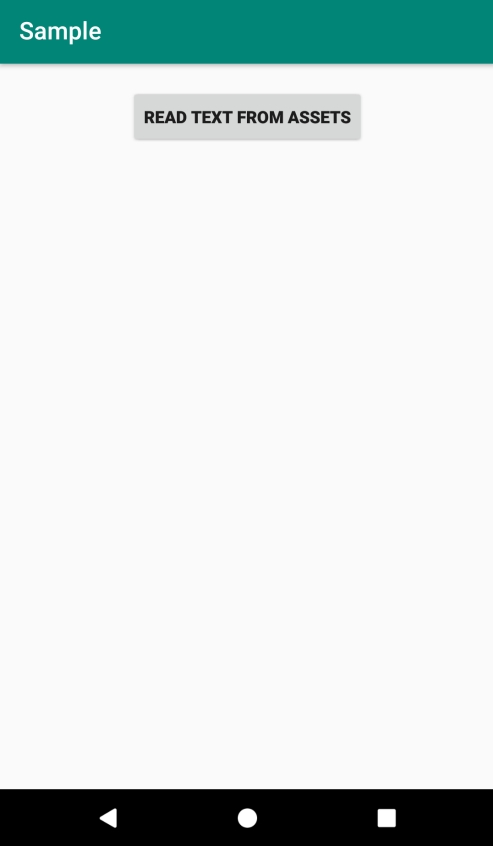
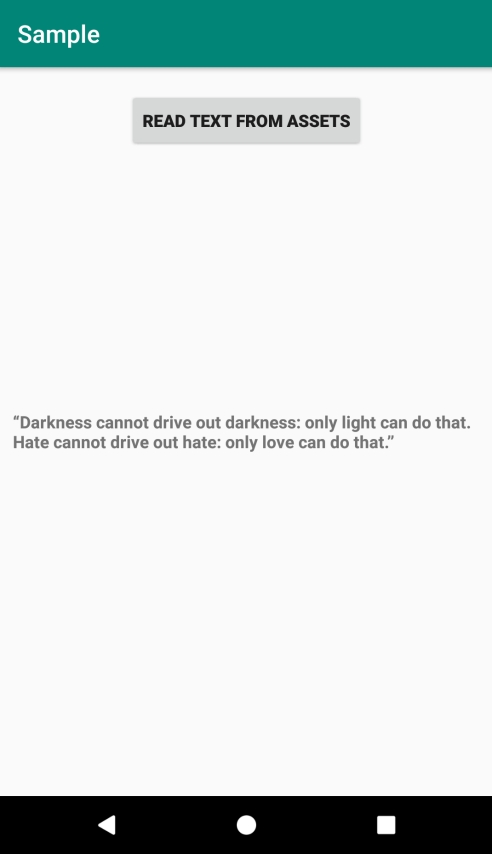
点击 这里 下载项目代码。

更新于:2020年7月3日
浏览量:10K+

广告