
 数据结构
数据结构 网络
网络 关系数据库管理系统(RDBMS)
 操作系统
操作系统 Java
Java MS Excel
 iOS
iOS HTML
HTML CSS
CSS Android
 Python
 C语言编程
C语言编程 C++
C++ C#
C# MongoDB
 MySQL
MySQL Javascript
 PHP
PHP 物理学
物理学 化学
化学 生物学
生物学 数学
数学 英语
英语 经济学
经济学 心理学
心理学 社会学
社会学 服装学
服装学 法学
法学C++二叉树中叶节点的成对交换
给定一棵二叉树。任务是成对交换叶节点,例如:
输入:
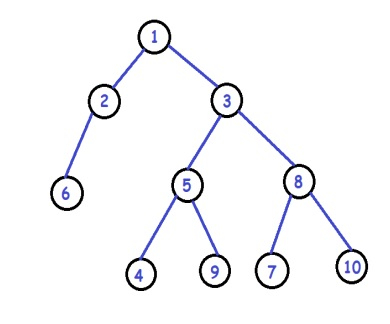
输出:
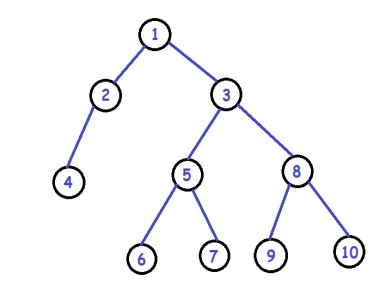
我们将跟踪指向两个相邻叶节点的两个指针,并在给定问题中交换它们的值。
寻找解决方案的方法
在这种方法中,我们遍历树,找到叶节点,并跟踪计数器以检查当前计数。主要的技巧是我们的计数器是奇数,所以我们的第一个指针现在指向该节点。当我们的计数器变为偶数时,我们交换数据,因此我们的叶节点被交换。
示例
上述方法的C++代码
#include <bits/stdc++.h>
using namespace std;
struct Node{ // structure of our tree node
    int data;
    struct Node *left, *right;
};
void Swap(Node **a, Node **b){ // the swapping utility function
    Node * temp = *a;
    *a = *b;
    *b = temp;
}
/********Pointers for leaf nodes for swapping********/
Node **firstleaf;
Node **secondleaf;
void SwapTheLeafNodes(Node **root, int &count){//recursive function for
//Swapping leaf nodes
    if (!(*root)) // if root is null we return
        return;
    if(!(*root)->left &&!(*root)->right){ // condition for leaf node
        secondleaf = root; // now we firstly make our second pointer point to this node
        count++; // we also increment the count
        if (count%2 == 0) // now if our count is even that means we have a pair so we can swap them
            Swap(firstleaf, secondleaf);
        else // if count is odd so that means we only got first node yet
            firstleaf = secondleaf;
    }
    if ((*root)->left)
        SwapTheLeafNodes(&(*root)->left, count);
    if ((*root)->right)
        SwapTheLeafNodes(&(*root)->right, count);
}
Node* newNode(int data){ // function for initializing new node
    Node *temp = new Node;
    temp->data = data;
    temp->left = temp->right = NULL;
    return temp;
}
void printInorder(Node* node){ // inorder traversal function
    if (node == NULL)
       return;
    printInorder(node->left);
    printf("%d ", node->data);
    printInorder(node->right);
}
int main(){
   /* Creating binary tree*/
    Node *root = newNode(1);
    root->left = newNode(2);
    root->right = newNode(3);
    root->left->left = newNode(4);
    root->right->left = newNode(5);
    root->right->right = newNode(8);
    root->right->left->left = newNode(6);
    root->right->left->right = newNode(7);
    root->right->right->left = newNode(9);
    root->right->right->right = newNode(10);
    cout << "Inorder traversal before swap:\n";
    printInorder(root);
    cout << "\n";
    int count = 0; // out counter for keeping track of leaf nodes
    SwapTheLeafNodes(&root, count); // swapping the nodes
    cout << "Inorder traversal after swap:\n";
    printInorder(root);
    cout << "\n";
    return 0;
}
输出
Inorder traversal before swap:
4 2 1 6 5 7 3 9 8 10
Inorder traversal after swap:
6 2 1 4 5 9 3 7 8 10
上述代码的解释
在上述方法中,我们只是创建了两个指针,它们将跟踪我们的叶节点。当我们遇到叶节点时,我们遍历树。我们首先使我们的第二个指针指向该节点,现在我们增加一个计数变量,如果我们的计数是偶数,那么我们交换节点,如果计数是奇数,那么这意味着我们只找到了我们对的第一个元素,所以我们将该值存储在第一个指针中,这就是我们的函数的工作方式。
结论
在本教程中,我们解决了二叉树中成对交换叶节点的问题。我们还学习了这个问题的C++程序以及我们解决这个问题的完整方法(普通和高效)。我们可以用C、Java、Python和其他语言编写相同的程序。我们希望您觉得本教程有所帮助。

更新于:2021年11月25日
247 次浏览

广告