- Objective-C 基础
- Objective-C - 首页
- Objective-C - 概述
- Objective-C - 环境设置
- Objective-C - 程序结构
- Objective-C - 基本语法
- Objective-C - 数据类型
- Objective-C - 变量
- Objective-C - 常量
- Objective-C - 运算符
- Objective-C - 循环
- Objective-C - 决策
- Objective-C - 函数
- Objective-C - 块
- Objective-C - 数字
- Objective-C - 数组
- Objective-C - 指针
- Objective-C - 字符串
- Objective-C - 结构体
- Objective-C - 预处理器
- Objective-C - Typedef
- Objective-C - 类型转换
- Objective-C - 日志处理
- Objective-C - 错误处理
- 命令行参数
- 高级 Objective-C
- Objective-C - 类和对象
- Objective-C - 继承
- Objective-C - 多态
- Objective-C - 数据封装
- Objective-C - 分类
- Objective-C - 模拟
- Objective-C - 扩展
- Objective-C - 协议
- Objective-C - 动态绑定
- Objective-C - 复合对象
- Obj-C - Foundation 框架
- Objective-C - 快速枚举
- Obj-C - 内存管理
- Objective-C 有用资源
- Objective-C - 快速指南
- Objective-C - 有用资源
- Objective-C - 讨论
Objective-C - if 语句
一个if语句由一个布尔表达式后跟一个或多个语句组成。
语法
Objective-C 编程语言中 if 语句的语法如下:
if(boolean_expression) {
   /* statement(s) will execute if the boolean expression is true */
}
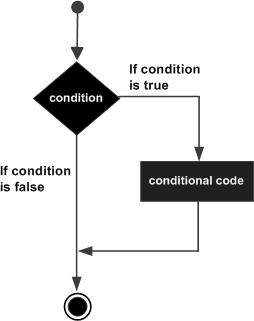
如果布尔表达式计算结果为true,则将执行 if 语句内的代码块。如果布尔表达式计算结果为false,则将执行 if 语句结束后的第一组代码(在闭合花括号之后)。
Objective-C 编程语言将任何非零和非空值视为true,如果值为零或空,则将其视为false值。
流程图
示例
#import <Foundation/Foundation.h>

int main () {

   /* local variable definition */
   int a = 10;

   /* check the boolean condition using if statement */
   if( a < 20 ) {
      /* if condition is true then print the following */
      NSLog(@"a is less than 20\n" );
   }

   NSLog(@"value of a is : %d\n", a);
   return 0;
}
当以上代码被编译并执行时,它会产生以下结果:
2013-09-07 22:07:00.845 demo[13573] a is less than 20
2013-09-07 22:07:00.845 demo[13573] value of a is : 10
objective_c_decision_making.htm
广告