
- D 语言基础
- D 语言 - 首页
- D 语言 - 概述
- D 语言 - 环境配置
- D 语言 - 基本语法
- D 语言 - 变量
- D 语言 - 数据类型
- D 语言 - 枚举
- D 语言 - 字面量
- D 语言 - 运算符
- D 语言 - 循环
- D 语言 - 条件判断
- D 语言 - 函数
- D 语言 - 字符
- D 语言 - 字符串
- D 语言 - 数组
- D 语言 - 关联数组
- D 语言 - 指针
- D 语言 - 元组
- D 语言 - 结构体
- D 语言 - 共用体
- D 语言 - 范围
- D 语言 - 别名
- D 语言 - 混合宏
- D 语言 - 模块
- D 语言 - 模板
- D 语言 - 不可变对象
- D 语言 - 文件 I/O
- D 语言 - 并发
- D 语言 - 异常处理
- D 语言 - 合约编程
- D 语言 - 条件编译
- D 语言 - 面向对象
- D 语言 - 类与对象
- D 语言 - 继承
- D 语言 - 重载
- D 语言 - 封装
- D 语言 - 接口
- D 语言 - 抽象类
- D 语言 - 有用资源
- D 语言 - 快速指南
- D 语言 - 有用资源
- D 语言 - 讨论
D 语言 if...else 语句
一个if语句可以后跟一个可选的else语句,当布尔表达式为假时执行。
语法
D 编程语言中if...else语句的语法如下:
if(boolean_expression) {
   /* statement(s) will execute if the boolean expression is true */
} else {
   /* statement(s) will execute if the boolean expression is false */
}
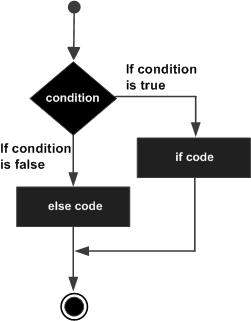
如果布尔表达式计算结果为true,则执行if 块中的代码;否则,执行else 块中的代码。
D 编程语言将任何非零和非空值视为true,如果值为零或空,则视为false值。
流程图
示例
import std.stdio;

int main () {
   /* local variable definition */
   int a = 100;

   /* check the boolean condition */
   if( a < 20 ) {
      /* if condition is true then print the following */
      writefln("a is less than 20" );
   } else {
      /* if condition is false then print the following */
      writefln("a is not less than 20" );
   }
   writefln("value of a is : %d", a);

   return 0;
}
编译并运行以上代码后,将产生以下结果:
a is not less than 20;
value of a is : 100
if...else if...else 语句
一个if语句可以后跟一个可选的else if...else语句,这对于使用单个 if...else if 语句测试各种条件非常有用。
使用 if、else if、else 语句时,需要注意以下几点:
一个if语句可以有零个或一个else语句,并且必须放在任何else if语句之后。
一个if语句可以有零个或多个else if语句,并且必须放在else语句之前。
一旦一个else if语句成功,就不会测试任何剩余的else if语句或else语句。
语法
D 编程语言中if...else if...else语句的语法如下:
if(boolean_expression 1) {
   /* Executes when the boolean expression 1 is true */
} else if( boolean_expression 2) {
   /* Executes when the boolean expression 2 is true */
} else if( boolean_expression 3) {
   /* Executes when the boolean expression 3 is true */
} else {
   /* executes when the none of the above condition is true */
}
示例
import std.stdio;

int main () {
   /* local variable definition */
   int a = 100;

   /* check the boolean condition */
   if( a == 10 ) {
      /* if condition is true then print the following */
      writefln("Value of a is 10" );
   } else if( a == 20 ) {
      /* if else if condition is true */
      writefln("Value of a is 20" );
   } else if( a == 30 ) {
      /* if else if condition is true  */
      writefln("Value of a is 30" );
   } else {
      /* if none of the conditions is true */
      writefln("None of the values is matching" );
   }
   writefln("Exact value of a is: %d", a );

   return 0;
}
编译并运行以上代码后,将产生以下结果:
None of the values is matching
Exact value of a is: 100
d_programming_decisions.htm
广告