- Java 数据结构与算法 教程
- Java 数据结构与算法 - 首页
- Java 数据结构与算法 - 概述
- Java 数据结构与算法 - 环境搭建
- Java 数据结构与算法 - 算法
- Java 数据结构与算法 - 数据结构
- Java 数据结构与算法 - 数组
- Java 数据结构与算法 - 链表
- Java 数据结构与算法 - 双向链表
- Java 数据结构与算法 - 循环链表
- Java 数据结构与算法 - 栈
- 数据结构与算法 - 表达式解析
- Java 数据结构与算法 - 队列
- Java 数据结构与算法 - 优先队列
- Java 数据结构与算法 - 树
- Java 数据结构与算法 - 哈希表
- Java 数据结构与算法 - 堆
- Java 数据结构与算法 - 图
- Java 数据结构与算法 - 搜索技术
- Java 数据结构与算法 - 排序技术
- Java 数据结构与算法 - 递归
- Java 数据结构与算法 有用资源
- Java 数据结构与算法 - 快速指南
- Java 数据结构与算法 - 有用资源
- Java 数据结构与算法 - 讨论
Java 数据结构与算法 - 栈
概述
栈是一种数据结构,它只允许在一端进行数据操作。它只允许访问最后插入的数据。栈也被称为后进先出 (LIFO) 数据结构,并且 Push 和 Pop 操作以这样一种方式相关联:只有最后一个被 Push(添加到栈中)的项目才能被 Pop(从栈中移除)。
栈的表示
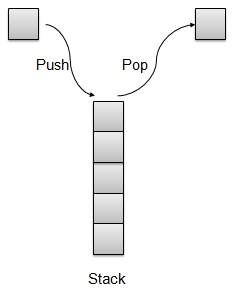
我们将在本文中使用数组来实现栈。
基本操作
以下是栈的两个主要操作。
Push − 将元素推入栈顶。
Pop − 从栈顶弹出元素。
栈还支持其他一些操作。
Peek − 获取栈顶元素。
isFull − 检查栈是否已满。
isEmpty − 检查栈是否为空。
Push 操作
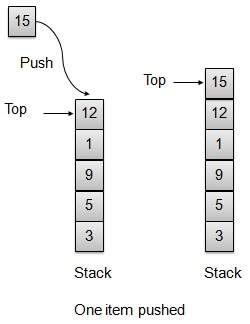
每当一个元素被推入栈时,栈会将该元素存储在存储区的顶部,并递增顶部索引以备后用。如果存储区已满,则通常会显示错误消息。
// push item on the top of the stack
public void push(int data) {

   if(!isFull()){
      // increment top by 1 and insert data
      intArray[++top] = data;
   }else{
      System.out.println("Cannot add data. Stack is full.");
   }
}
Pop 操作
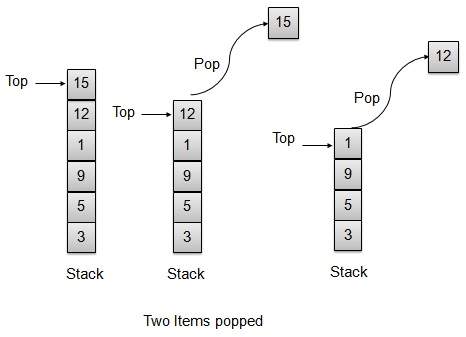
每当需要从栈中弹出元素时,栈会从存储区的顶部检索该元素,并递减顶部索引以备后用。
// pop item from the top of the stack
public int pop() {
   // retrieve data and decrement the top by 1
   return intArray[top--];
}
栈的实现
Stack.java
package com.tutorialspoint.datastructure;

public class Stack {
   private int size;           // size of the stack
   private int[] intArray;     // stack storage
   private int top;            // top of the stack

   // Constructor
   public Stack(int size){
      this.size = size;
      intArray = new int[size];   //initialize array
      top = -1;                   //stack is initially empty
   }

   // Operation : Push
   // push item on the top of the stack
   public void push(int data) {

      if(!isFull()){
         // increment top by 1 and insert data
         intArray[++top] = data;
      }else{
         System.out.println("Cannot add data. Stack is full.");
      }
   }

   // Operation : Pop
   // pop item from the top of the stack
   public int pop() {
      //retrieve data and decrement the top by 1
      return intArray[top--];
   }

   // Operation : Peek
   // view the data at top of the stack
   public int peek() {
      //retrieve data from the top
      return intArray[top];
   }

   // Operation : isFull
   // return true if stack is full
   public boolean isFull(){
      return (top == size-1);
   }

   // Operation : isEmpty
   // return true if stack is empty
   public boolean isEmpty(){
      return (top == -1);
   }
}
演示程序
StackDemo.java
package com.tutorialspoint.datastructure;

public class StackDemo {
   public static void main (String[] args){

      // make a new stack
      Stack stack = new Stack(10);

      // push items on to the stack
      stack.push(3);
      stack.push(5);
      stack.push(9);
      stack.push(1);
      stack.push(12);
      stack.push(15);

      System.out.println("Element at top of the stack: " + stack.peek());
      System.out.println("Elements: ");

      // print stack data
      while(!stack.isEmpty()){
         int data = stack.pop();
         System.out.println(data);
      }

      System.out.println("Stack full: " + stack.isFull());
      System.out.println("Stack empty: " + stack.isEmpty());
   }
}
如果我们编译并运行上述程序,则会产生以下结果:
Element at top of the stack: 15
Elements:
15
12
1
9
5
3
Stack full: false
Stack empty: true
广告