
- HTML Canvas 教程
- HTML Canvas - 首页
- HTML Canvas - 简介
- 环境设置
- HTML Canvas - 第一个应用程序
- HTML Canvas - 绘制二维形状
- HTML Canvas - 路径元素
- 使用路径元素绘制二维形状
- HTML Canvas - 颜色
- HTML Canvas - 添加样式
- HTML Canvas - 添加文本
- HTML Canvas - 添加图像
- HTML Canvas - 画布时钟
- HTML Canvas - 变换
- 合成和剪裁
- HTML Canvas - 基本动画
- 高级动画
- HTML Canvas API 函数
- HTML Canvas - 元素
- HTML Canvas - 矩形
- HTML Canvas - 直线
- HTML Canvas - 路径
- HTML Canvas - 文本
- HTML Canvas - 颜色和样式
- HTML Canvas - 图像
- HTML Canvas - 阴影和变换
- HTML Canvas 有用资源
- HTML Canvas - 快速指南
- HTML Canvas - 有用资源
- HTML Canvas - 讨论
HTML Canvas - arc() 方法
HTML Canvas 的arc() 方法是CanvasRenderingContext2D 接口的一部分,用于在 Canvas 元素的当前路径中添加弧线。
语法
以下是 HTML Canvas arc() 方法的语法:
CanvasRenderingContext2D.arc(x, y, radius, start_angle, end_angle, anti_clockwise);
参数
以下是此方法的参数列表:
| 序号 | 参数及描述 |
|---|---|
| 1 | x
Canvas 元素中当前可用的路径,用于添加弧线。 |
| 2 | y
应用于正在添加的路径的变换。 |
| 3 | radius
要在画布元素上绘制的弧线的半径。 |
| 4 | start_angle
以弧度为单位测量的,从 X 轴开始的弧线角度。 |
| 5 | end_angle
以弧度为单位测量的,从 Y 轴开始的弧线角度。(原文描述有误,应是从X轴开始) |
| 6 | anti_clockwise
布尔值,如果为 false,则表示顺时针方向;如果为 true,则表示逆时针方向。默认值为 false。 |
返回值
根据传递的参数值,在画布元素上绘制一个弧线。
示例
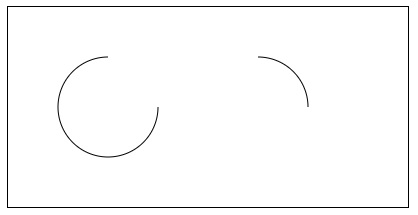
以下示例使用 HTML Canvas arc() 方法在 Canvas 元素上绘制简单的弧线。
<!DOCTYPE html>
<html lang="en">
   <head>
      <title>Reference API</title>
      <style>
         body {
            margin: 10px;
            padding: 10px;
         }
      </style>
   </head>
   <body>
      <canvas id="canvas" width="400" height="200" style="border: 1px solid black;"></canvas>
      <script>
         var canvas = document.getElementById('canvas');
         var context = canvas.getContext('2d');
         context.beginPath();
         context.arc(100, 100, 50, 0, 1.5 * Math.PI);
         context.stroke();
         context.closePath();
         context.beginPath();
         context.arc(250, 100, 50, 1.5 * Math.PI, 2 * Math.PI, false);
         context.stroke();
         context.closePath();
      </script>
   </body>
</html>
输出
上述代码在网页上返回的输出为:
示例
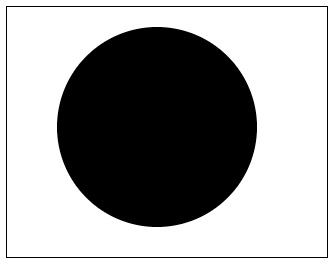
以下示例使用 arc() 方法在 Canvas 元素上绘制一个填充的圆形。
<!DOCTYPE html>
<html lang="en">
   <head>
      <title>Reference API</title>
      <style>
         body {
            margin: 10px;
            padding: 10px;
         }
      </style>
   </head>
   <body>
      <canvas id="canvas" width="320" height="250" style="border: 1px solid black;"></canvas>
      <script>
         var canvas = document.getElementById('canvas');
         var context = canvas.getContext('2d');
         context.beginPath();
         context.arc(150, 120, 100, 0, 2 * Math.PI);
         context.fill();
         context.closePath();
      </script>
   </body>
</html>
输出
上述代码在网页上返回的输出为:
示例
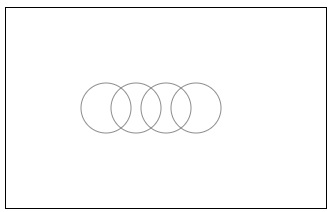
以下示例使用 arc() 方法在 Canvas 元素上绘制奥迪汽车标志。
<!DOCTYPE html>
<html lang="en">
   <head>
      <title>Reference API</title>
      <style>
         body {
            margin: 10px;
            padding: 10px;
         }
      </style>
   </head>
   <body>
      <canvas id="canvas" width="320" height="200" style="border: 1px solid black;"></canvas>
      <script>
         var canvas = document.getElementById('canvas');
         var context = canvas.getContext('2d');
         context.beginPath();
         context.strokeStyle = '#8A8D8F';
         context.lineWidth = 4;
         context.arc(100, 100, 25, 0, 2 * Math.PI);
         context.stroke();
         context.closePath();
         context.beginPath();
         context.strokeStyle = '#8A8D8F'
         context.arc(130, 100, 25, 0, 2 * Math.PI);
         context.stroke();
         context.closePath();
         context.beginPath();
         context.strokeStyle = '#8A8D8F'
         context.arc(160, 100, 25, 0, 2 * Math.PI);
         context.stroke();
         context.closePath();
         context.beginPath();
         context.strokeStyle = '#8A8D8F'
         context.arc(190, 100, 25, 0, 2 * Math.PI);
         context.stroke();
         context.closePath();
      </script>
   </body>
</html>
输出
上述代码在网页上返回的输出为:
html_canvas_paths.htm
广告