
- 数据结构与算法
- DSA - 首页
- DSA - 概述
- DSA - 环境设置
- DSA - 算法基础
- DSA - 渐近分析
- 数据结构
- DSA - 数据结构基础
- DSA - 数据结构和类型
- DSA - 数组数据结构
- 链表
- DSA - 链表数据结构
- DSA - 双向链表数据结构
- DSA - 循环链表数据结构
- 栈与队列
- DSA - 栈数据结构
- DSA - 表达式解析
- DSA - 队列数据结构
- 搜索算法
- DSA - 搜索算法
- DSA - 线性搜索算法
- DSA - 二分搜索算法
- DSA - 插值搜索
- DSA - 跳跃搜索算法
- DSA - 指数搜索
- DSA - 斐波那契搜索
- DSA - 子列表搜索
- DSA - 散列表
- 排序算法
- DSA - 排序算法
- DSA - 冒泡排序算法
- DSA - 插入排序算法
- DSA - 选择排序算法
- DSA - 归并排序算法
- DSA - 希尔排序算法
- DSA - 堆排序
- DSA - 桶排序算法
- DSA - 计数排序算法
- DSA - 基数排序算法
- DSA - 快速排序算法
- 图数据结构
- DSA - 图数据结构
- DSA - 深度优先遍历
- DSA - 广度优先遍历
- DSA - 生成树
- 树数据结构
- DSA - 树数据结构
- DSA - 树的遍历
- DSA - 二叉搜索树
- DSA - AVL树
- DSA - 红黑树
- DSA - B树
- DSA - B+树
- DSA - 伸展树
- DSA - 字典树 (Trie)
- DSA - 堆数据结构
- 递归
- DSA - 递归算法
- DSA - 使用递归的汉诺塔
- DSA - 使用递归的斐波那契数列
- 分治法
- DSA - 分治法
- DSA - 最大最小问题
- DSA - Strassen矩阵乘法
- DSA - Karatsuba算法
- 贪心算法
- DSA - 贪心算法
- DSA - 旅行商问题(贪心法)
- DSA - Prim最小生成树
- DSA - Kruskal最小生成树
- DSA - Dijkstra最短路径算法
- DSA - 地图着色算法
- DSA - 分数背包问题
- DSA - 带截止期限的作业排序
- DSA - 最优合并模式算法
- 动态规划
- DSA - 动态规划
- DSA - 矩阵链乘法
- DSA - Floyd-Warshall算法
- DSA - 0-1背包问题
- DSA - 最长公共子序列算法
- DSA - 旅行商问题(动态规划法)
- 近似算法
- DSA - 近似算法
- DSA - 顶点覆盖算法
- DSA - 集合覆盖问题
- DSA - 旅行商问题(近似算法)
- 随机化算法
- DSA - 随机化算法
- DSA - 随机化快速排序算法
- DSA - Karger最小割算法
- DSA - Fisher-Yates洗牌算法
- DSA有用资源
- DSA - 问答
- DSA - 快速指南
- DSA - 有用资源
- DSA - 讨论
广度优先搜索 (BFS) 算法
广度优先搜索 (BFS) 算法
广度优先搜索 (BFS) 算法以广度优先的方式遍历图数据结构,以搜索满足一组条件的节点。它使用队列来记住下次搜索的起始顶点,当任何迭代中出现死锁时。
广度优先搜索 (BFS) 算法从树根开始,在移动到下一深度级别的节点之前,探索当前深度级别上的所有节点。
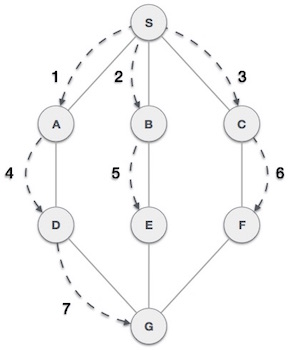
如上例所示,BFS算法首先从A到B到E到F遍历,然后到C和G,最后到D。它采用以下规则。
规则1 - 访问相邻的未访问顶点。将其标记为已访问。显示它。将其插入队列。
规则2 - 如果找不到相邻顶点,则从队列中移除第一个顶点。
规则3 - 重复规则1和规则2,直到队列为空。
| 步骤 | 遍历 | 描述 |
|---|---|---|
| 1 | 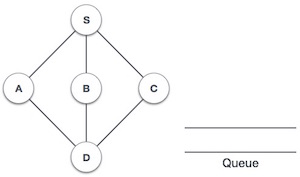 |
初始化队列。 |
| 2 | 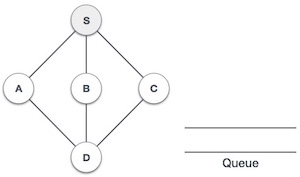 |
我们从访问S(起始节点)开始,并将其标记为已访问。 |
| 3 | 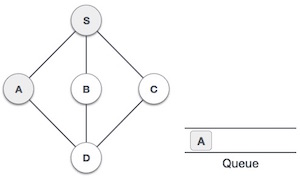 |
然后我们看到S的未访问相邻节点。在这个例子中,我们有三个节点,但按字母顺序我们选择A,将其标记为已访问并将其入队。 |
| 4 | 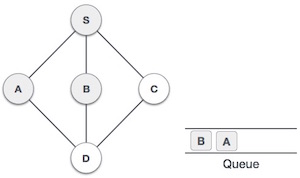 |
接下来,S的未访问相邻节点是B。我们将其标记为已访问并将其入队。 |
| 5 | 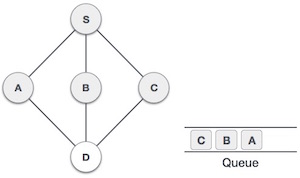 |
接下来,S的未访问相邻节点是C。我们将其标记为已访问并将其入队。 |
| 6 | 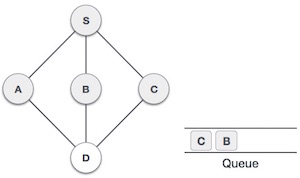 |
现在,S没有未访问的相邻节点了。因此,我们出队并找到A。 |
| 7 | 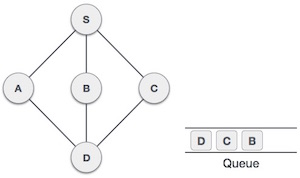 |
从A我们有D作为未访问的相邻节点。我们将其标记为已访问并将其入队。 |
在这个阶段,我们没有未标记(未访问)的节点了。但是根据算法,我们继续出队以获得所有未访问的节点。当队列为空时,程序结束。
示例
以下是各种编程语言中广度优先搜索 (BFS) 算法的实现:
#include <stdio.h>
#include <stdlib.h>
#include <stdbool.h>
#define MAX 5
struct Vertex {
   char label;
   bool visited;
};
//queue variables
int queue[MAX];
int rear = -1;
int front = 0;
int queueItemCount = 0;
//graph variables
//array of vertices
struct Vertex* lstVertices[MAX];
//adjacency matrix
int adjMatrix[MAX][MAX];
//vertex count
int vertexCount = 0;
//queue functions
void insert(int data) {
   queue[++rear] = data;
   queueItemCount++;
}
int removeData() {
   queueItemCount--;
   return queue[front++];
}
bool isQueueEmpty() {
   return queueItemCount == 0;
}
//graph functions
//add vertex to the vertex list
void addVertex(char label) {
   struct Vertex* vertex = (struct Vertex*) malloc(sizeof(struct Vertex));
   vertex->label = label;
   vertex->visited = false;
   lstVertices[vertexCount++] = vertex;
}
//add edge to edge array
void addEdge(int start,int end) {
   adjMatrix[start][end] = 1;
   adjMatrix[end][start] = 1;
}
//display the vertex
void displayVertex(int vertexIndex) {
   printf("%c ",lstVertices[vertexIndex]->label);
}
//get the adjacent unvisited vertex
int getAdjUnvisitedVertex(int vertexIndex) {
   int i;

   for(i = 0; i<vertexCount; i++) {
      if(adjMatrix[vertexIndex][i] == 1 && lstVertices[i]->visited == false)
         return i;
   }
   return -1;
}
void breadthFirstSearch() {
   int i;
   //mark first node as visited
   lstVertices[0]->visited = true;
   //display the vertex
   displayVertex(0);
   //insert vertex index in queue
   insert(0);
   int unvisitedVertex;
   while(!isQueueEmpty()) {
      //get the unvisited vertex of vertex which is at front of the queue
      int tempVertex = removeData();
      //no adjacent vertex found
      while((unvisitedVertex = getAdjUnvisitedVertex(tempVertex)) != -1) {
         lstVertices[unvisitedVertex]->visited = true;
         displayVertex(unvisitedVertex);
         insert(unvisitedVertex);
      }
   }
   //queue is empty, search is complete, reset the visited flag
   for(i = 0;i<vertexCount;i++) {
      lstVertices[i]->visited = false;
   }
}
int main() {
   int i, j;

   for(i = 0; i<MAX; i++) { // set adjacency
      for(j = 0; j<MAX; j++) // matrix to 0
         adjMatrix[i][j] = 0;
   }
   addVertex('S');   // 0
   addVertex('A');   // 1
   addVertex('B');   // 2
   addVertex('C');   // 3
   addVertex('D');   // 4
   addEdge(0, 1);    // S - A
   addEdge(0, 2);    // S - B
   addEdge(0, 3);    // S - C
   addEdge(1, 4);    // A - D
   addEdge(2, 4);    // B - D
   addEdge(3, 4);    // C - D
   printf("\nBreadth First Search: ");
   breadthFirstSearch();
   return 0;
}
输出
Breadth First Search: S A B C D
//C++ code for Breadth First Traversal
#include <iostream>
#include <stdlib.h>
#include <stdbool.h>
#define MAX 5
struct Vertex {
   char label;
   bool visited;
};
//queue variables
int queue[MAX];
int rear = -1;
int front = 0;
int queueItemCount = 0;
//graph variables
//array of vertices
struct Vertex* lstVertices[MAX];
//adjacency matrix
int adjMatrix[MAX][MAX];
//vertex count
int vertexCount = 0;
//queue functions
void insert(int data) {
   queue[++rear] = data;
   queueItemCount++;
}
int removeData() {
   queueItemCount--;
   return queue[front++];
}
bool isQueueEmpty() {
   return queueItemCount == 0;
}
//graph functions
//add vertex to the vertex list
void addVertex(char label) {
   struct Vertex* vertex = (struct Vertex*) malloc(sizeof(struct Vertex));
   vertex->label = label;
   vertex->visited = false;
   lstVertices[vertexCount++] = vertex;
}
//add edge to edge array
void addEdge(int start,int end) {
   adjMatrix[start][end] = 1;
   adjMatrix[end][start] = 1;
}
//display the vertex
void displayVertex(int vertexIndex) {
   std::cout << lstVertices[vertexIndex]->label << " ";
}
//get the adjacent unvisited vertex
int getAdjUnvisitedVertex(int vertexIndex) {
   int i;
   for(i = 0; i<vertexCount; i++) {
      if(adjMatrix[vertexIndex][i] == 1 && lstVertices[i]->visited == false)
         return i;
   }
   return -1;
}
void breadthFirstSearch() {
   int i;
   //mark first node as visited
   lstVertices[0]->visited = true;
  //display the vertex
   displayVertex(0);
   //insert vertex index in queue
   insert(0);
   int unvisitedVertex;
   while(!isQueueEmpty()) {
      //get the unvisited vertex of vertex which is at front of the queue
      int tempVertex = removeData();
      //no adjacent vertex found
      while((unvisitedVertex = getAdjUnvisitedVertex(tempVertex)) != -1) {
         lstVertices[unvisitedVertex]->visited = true;
         displayVertex(unvisitedVertex);
         insert(unvisitedVertex);
      }

   }
   //queue is empty, search is complete, reset the visited flag
   for(i = 0;i<vertexCount;i++) {
      lstVertices[i]->visited = false;
   }
}
int main() {
   int i, j;
   for(i = 0; i<MAX; i++) { // set adjacency
      for(j = 0; j<MAX; j++) // matrix to 0
         adjMatrix[i][j] = 0;
   }
   addVertex('S');   // 0
   addVertex('A');   // 1
   addVertex('B');   // 2
   addVertex('C');   // 3
   addVertex('D');   // 4
   addEdge(0, 1);    // S - A
   addEdge(0, 2);    // S - B
   addEdge(0, 3);    // S - C
   addEdge(1, 4);    // A - D
   addEdge(2, 4);    // B - D
   addEdge(3, 4);    // C - D
   std::cout << "Breadth First Search: ";
   breadthFirstSearch();
   return 0;
}
输出
Breadth First Search: S A B C D
//Java code for Breadth First Traversal
import java.util.LinkedList;
import java.util.Queue;
class Vertex {
    char label;
    boolean visited;
    public Vertex(char label) {
        this.label = label;
        visited = false;
    }
}
public class Graph {
    private static final int MAX = 5;
    private Vertex[] lstVertices;
    private int[][] adjMatrix;
    private int vertexCount;
    public Graph() {
        lstVertices = new Vertex[MAX];
        adjMatrix = new int[MAX][MAX];
        vertexCount = 0;
    }
    private void addVertex(char label) {
        Vertex vertex = new Vertex(label);
        lstVertices[vertexCount++] = vertex;
    }
    private void addEdge(int start, int end) {
        adjMatrix[start][end] = 1;
        adjMatrix[end][start] = 1;
    }
    private void displayVertex(int vertexIndex) {
        System.out.print(lstVertices[vertexIndex].label + " ");
    }
    private int getAdjUnvisitedVertex(int vertexIndex) {
        for (int i = 0; i < vertexCount; i++) {
            if (adjMatrix[vertexIndex][i] == 1 && !lstVertices[i].visited)
                return i;
        }
        return -1;
    }
    private void breadthFirstSearch() {
        lstVertices[0].visited = true;
        displayVertex(0);
        Queue<Integer> queue = new LinkedList<>();
        queue.add(0);
        while (!queue.isEmpty()) {
            int tempVertex = queue.poll();
            int unvisitedVertex;
            while ((unvisitedVertex = getAdjUnvisitedVertex(tempVertex)) != -1) {
                lstVertices[unvisitedVertex].visited = true;
                displayVertex(unvisitedVertex);
                queue.add(unvisitedVertex);
            }
        }
        // Reset the visited flag
        for (int i = 0; i < vertexCount; i++) {
            lstVertices[i].visited = false;
        }
    }
    public static void main(String[] args) {
        Graph graph = new Graph();
        for (int i = 0; i < MAX; i++) {
            for (int j = 0; j < MAX; j++)
                graph.adjMatrix[i][j] = 0;
        }
        graph.addVertex('S');   // 0
        graph.addVertex('A');   // 1
        graph.addVertex('B');   // 2
        graph.addVertex('C');   // 3
        graph.addVertex('D');   // 4
        graph.addEdge(0, 1);    // S - A
        graph.addEdge(0, 2);    // S - B
        graph.addEdge(0, 3);    // S - C
        graph.addEdge(1, 4);    // A - D
        graph.addEdge(2, 4);    // B - D
        graph.addEdge(3, 4);    // C - D
        System.out.print("Breadth First Search: ");
        graph.breadthFirstSearch();
    }
}
输出
Breadth First Search: S A B C D
#Python program for Breadth First Search
# defining MAX 5
MAX = 5
class Vertex:
   def __init__(self, label):
      self.label = label
      self.visited = False
# queue variables
queue = [0] * MAX
rear = -1
front = 0
queueItemCount = 0
# graph variables
#array of vertices
lstVertices = [None] * MAX
#adjacency matrix
adjMatrix = [[0] * MAX for _ in range(MAX)]
#vertex count
vertexCount = 0
# queue functions
def insert(data):
   global rear, queueItemCount
   rear += 1
   queue[rear] = data
   queueItemCount += 1
def removeData():
   global front, queueItemCount
   queueItemCount -= 1
   data = queue[front]
   front += 1
   return data
def isQueueEmpty():
   return queueItemCount == 0
# graph functions
#add vertex to the vertex list
def addVertex(label):
   global vertexCount
   vertex = Vertex(label)
   lstVertices[vertexCount] = vertex
   vertexCount += 1
#add edge to edge array
def addEdge(start, end):
   adjMatrix[start][end] = 1
   adjMatrix[end][start] = 1
#Display the vertex
def displayVertex(vertexIndex):
   print(lstVertices[vertexIndex].label, end=" ")
#Get the adjacent unvisited vertex
def getAdjUnvisitedVertex(vertexIndex):
   for i in range(vertexCount):
      if adjMatrix[vertexIndex][i] == 1 and not lstVertices[i].visited:
         return i
   return -1
def breadthFirstSearch():
    #mark first node as visited
   lstVertices[0].visited = True
   #Display the vertex
   displayVertex(0)
   #insert vertex index in queue
   insert(0)
   while not isQueueEmpty():
    #get the unvisited vertex of vertex which is at front of the queue
      tempVertex = removeData()
      #no adjacent vertex found
      unvisitedVertex = getAdjUnvisitedVertex(tempVertex)
      while unvisitedVertex != -1:
         lstVertices[unvisitedVertex].visited = True
         displayVertex(unvisitedVertex)
         insert(unvisitedVertex)
         unvisitedVertex = getAdjUnvisitedVertex(tempVertex)
    #queue is empty, search is complete, reset the visited flag
   for i in range(vertexCount):
      lstVertices[i].visited = False
# main function
if __name__ == "__main__":
    #set adjacency
   for i in range(MAX):
       #matrix to 0
       for j in range(MAX):
         adjMatrix[i][j] = 0
   addVertex('S')
   addVertex('A')
   addVertex('B')
   addVertex('C')
   addVertex('D')
   addEdge(0, 1)
   addEdge(0, 2)
   addEdge(0, 3)
   addEdge(1, 4)
   addEdge(2, 4)
   addEdge(3, 4)
   print("Breadth First Search: ", end="")
   breadthFirstSearch()
输出
Breadth First Search: S A B C D
BFS算法的复杂度
时间复杂度
BFS算法的时间复杂度表示为O(V + E),其中V是节点数,E是边数。
空间复杂度
BFS算法的空间复杂度为O(V)。
广告